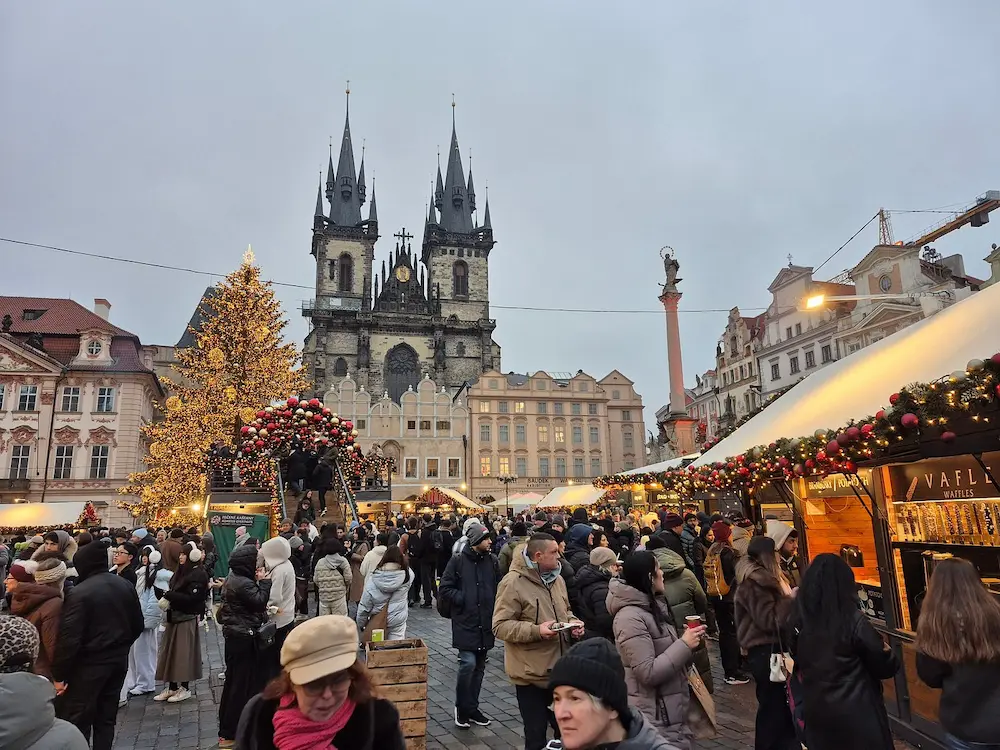
Czechia runs the longest Christmas market season in Europe and charges the least for it. The stalls open around 21 November, Prague pours svařák until 6 January, entry is free at every market in the country, and the prices come in korunas, which means your mulled wine costs two to four euros in a week when Vienna is asking €4.50 to start. No other country on this site keeps Christmas going that long for that little.
The catch is that most visitors never find out. They land in Prague, shuffle through Old Town Square at six in the evening, pay the capital's prices, and go home believing they have seen Czech Christmas.
They saw the front door. The house is bigger, and the best rooms are one cheap train away.
Start in Prague, and play it in halves
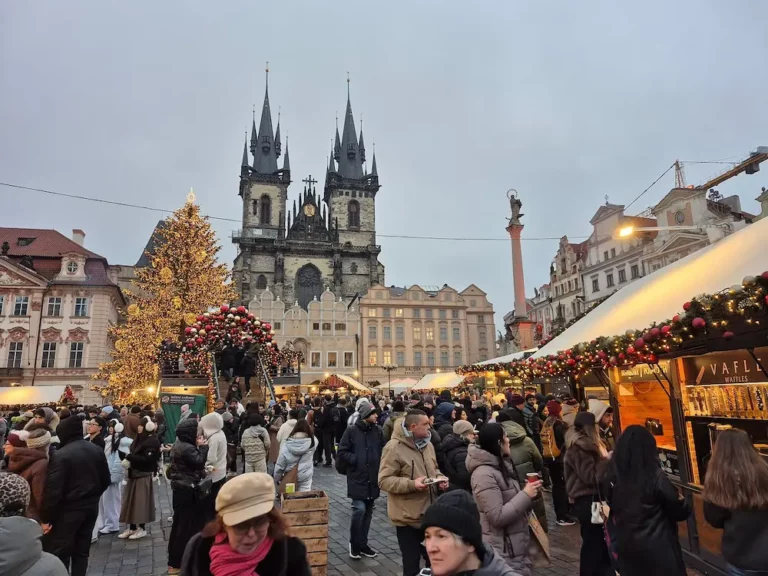
Prague runs seven markets from 28 November 2026 to 6 January 2027, and the spectacle is real: a 26-metre spruce on Old Town Square carrying 95,000 lights, lit six times each evening in front of the Gothic spires. Stand mid-square for one lighting. You will not regret it.
Then use the clock. The big squares belong to the morning and to lighting time, when the crowd is part of the show. The evenings belong to the neighbourhood markets, where Vinohrady locals drink after work and the queue for a klobása is four people instead of forty. A 120 CZK day pass covers every tram between them.
Budget 500 to 1,000 CZK a head for a proper market evening of eating and drinking in the capital. On Old Town Square the svařák runs about 100 CZK. Hold that number, because it is about to be undercut.
The second city out-pours the first
If you have done market trips before, skip straight to Moravia and let Prague be your airport.
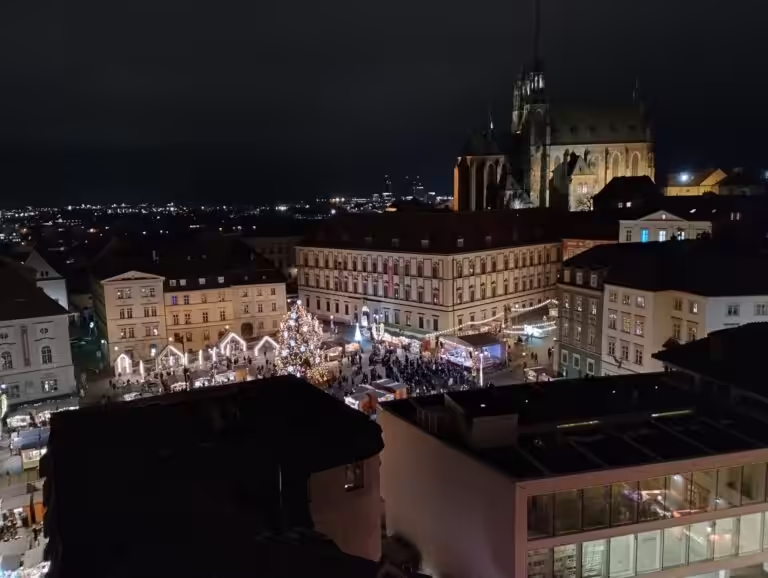
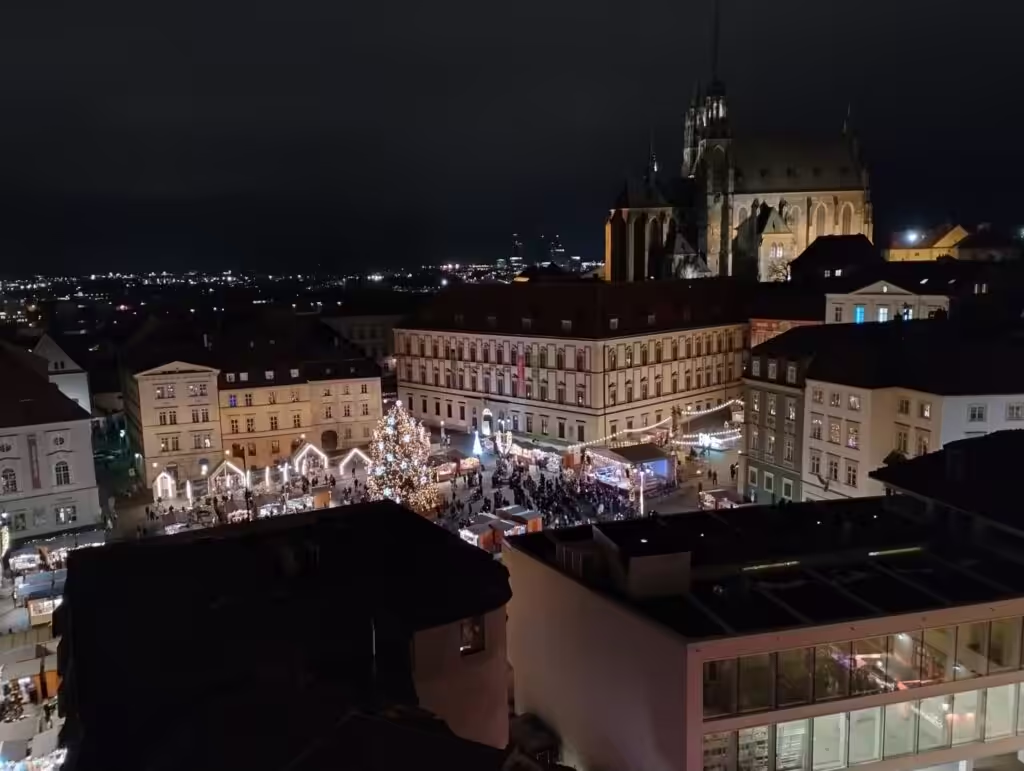
Brno spreads its market across five linked squares from 27 November to 23 December, keeps a hundred-year-old tree tradition going, and stays lively after dark in a way tourist markets never quite manage. Its signature drink is turbomošt, hot organic cider spiked with apple brandy, and the stalls that invented it pour fifteen thousand litres of the stuff each season. Svařák here costs 50 to 70 CZK, half the Old Town Square rate for a better crowd.
Olomouc answers with 110 stalls on two linked squares under the UNESCO Holy Trinity Column, the country's deepest punch list with an annual collector mug and its own punch trail, a historic carousel and a free ice rink. It has Prague's looks at a fraction of the crowd, and the fast train from the capital does it in just over two hours.
The two are 1h15 apart by train, so a two-night loop covers both. Trains leave Prague roughly every half hour and start at 99 CZK. The price of leaving the capital is a coffee.
The country that stays open through Christmas
Here is the fact that decides trips: German markets pack up on the 23rd and 24th of December, and most Austrian ones follow. Czechia does not.
Prague's main squares trade on the 24th, 25th and 26th and keep pouring to Epiphany. Karlovy Vary reopens its colonnade stalls from the 25th to New Year's Day. Český Krumlov has taken to keeping its square lit into January, with the castle above it and advent raft rides below.
So if your only free week is Christmas week itself, the choice makes itself. The famous German names will be dark before you land. Czechia will be open, and quieter than it was on the second Saturday of Advent.
December here still belongs to the folk calendar
Come on 5 December and you get the country's strangest, best evening: Mikuláš, an angel and a devil working every square in the country while children negotiate for sweets with performed bravery. In the week before Christmas, carp tubs appear on street corners, because the Czech Christmas dinner still swims until the 23rd. Presents come from Ježíšek after dinner on the 24th, not from Santa in the morning.
With kids, build the trip around that. The 5th anywhere, Olomouc's carousel and free rink, Český Krumlov's living nativity, and Prague's weekend craft workshops on Old Town Square fill the daylight hours the markets don't.
The one-week play
Fly into Prague and give it three nights, split-day style: spectacle in the morning, neighbourhood squares after dark. Take the train to Brno for a night, loop to Olomouc for another, and come back. If an advent Sunday falls in your week, Kutná Hora's UNESCO churches sit an hour out, with stalls on the first two December Sundays only. Plzeň runs a full market from 21 November to 23 December if you are routing west toward Bavaria.
That week costs less than four nights of market-going in Vienna or Munich, covers five different Christmases, and ends in a country still open when everywhere else has swept up.
Bring korunas, not euros. Everything else is already cheaper.