Perchten or Krampus, and how to tell them apart
A Perchten run looks like a Krampus run at first glance, with the same fur suits, carved wooden masks and racket of bells. The difference is who the figures are and when they come out. The Krampus belongs to St Nicholas and to the evening of 5 December, when he deals with the naughty children. Perchten come from an older, pre-Christian custom and have nothing to do with St Nicholas. They belong to the Rauhnächte, the long nights around the turn of the year, and their job is to drive the winter out.
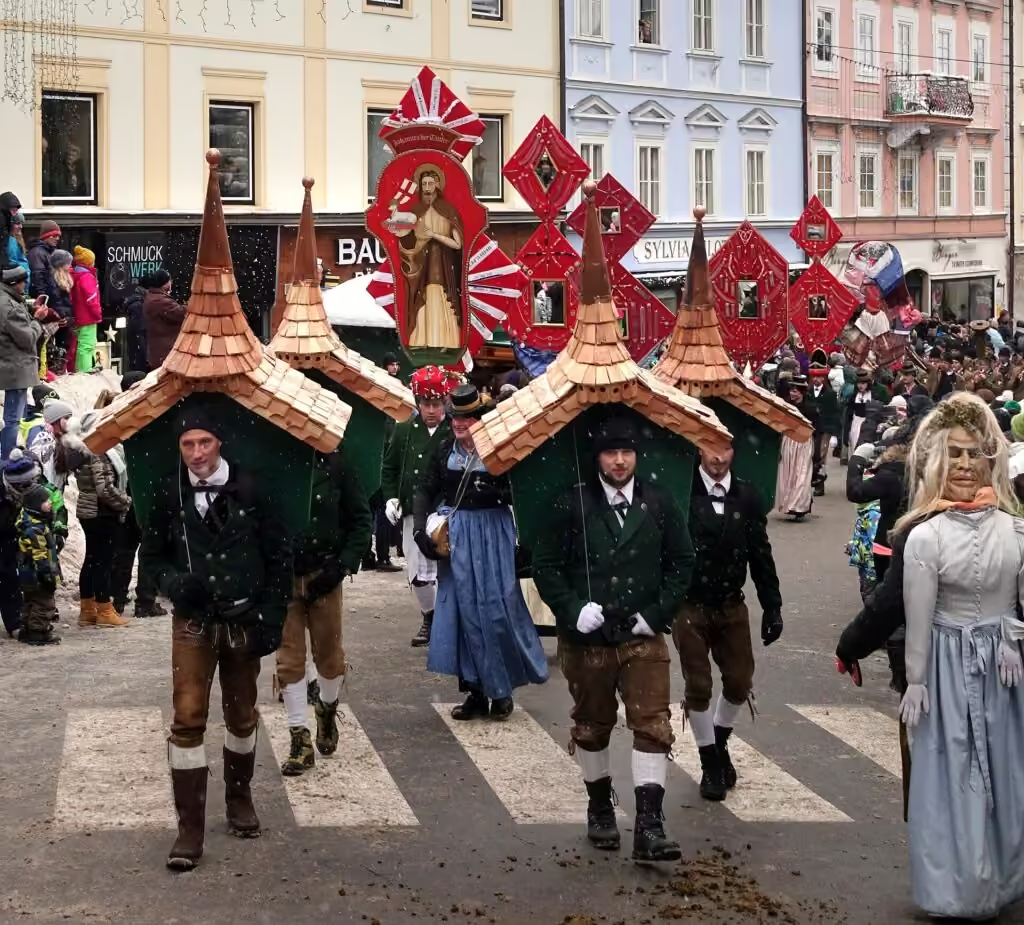
Perchten come in two kinds. The Schiachperchten are the ugly ones, in fur and frightening hand-carved masks, and they are the ones people mistake for the Krampus. The Schönperchten are the beautiful ones, who bring good wishes for the new year. In the Gastein valley their cap wearers carry headdresses several metres high and bow to the crowd at their captain’s command, though that run is only held every four years and isn’t on this season. To tell a Percht from a Krampus by the mask, count the horns. A Krampus has two, and a Percht has anything from four to ten.
The calendar has blurred over the years. By custom Perchten only appeared in the Rauhnächte, between the winter solstice on 21 December and Epiphany on 6 January, and Salzburg still holds its run on the 21st. These days Perchten runs happen all through December as well, often side by side with the Krampus, which is why Vienna’s Perchten are out as early as 29 November.
How a run feels depends on which kind you pick. Vienna’s is fenced, free and set up for families. Salzburg’s ends at a stage in the middle of the Christmas market. Kirchseeon’s club walks through ordinary streets, and in Rauris and Unken the Perchten still go from house to house and farm to farm with no stage at all. For the custom more than the show, go to one of the last three.
The Rauhnächte and Frau Perchta
The Rauhnächte are the nights between Christmas and Epiphany on 6 January. How many there are depends on the region, from three nights to twelve, and in the older Alpine reckoning the season began on Thomasnacht, 21 December, the longest night of the year, which is why Salzburg calls the 21st its first Rauhnacht. Whichever count you follow, the last one is the night of 5 January, and that is when the Salzkammergut sends out its Glöckler, runners in white with lit paper caps on their heads and bells on their belts.
Rauh once meant fur, which is what the Perchten wear, and Rauch is smoke, because these are the nights when houses and stables are smoked out with incense so that bad spirits find no way in. In parts of Austria nobody hangs washing out during the Rauhnächte either. The Wild Hunt, a ghostly troop said to ride through the air on these nights, could get caught in it.
Frau Perchta is the figure the Perchten are said to take their name from. In Alpine folk belief she goes about on these nights, punishes the lazy and rewards hard work and kindness, and she is close kin to the Frau Holle of the Grimm fairy tales. Her name most likely comes from an old German word for bright or beautiful.
Planning a Perchten trip
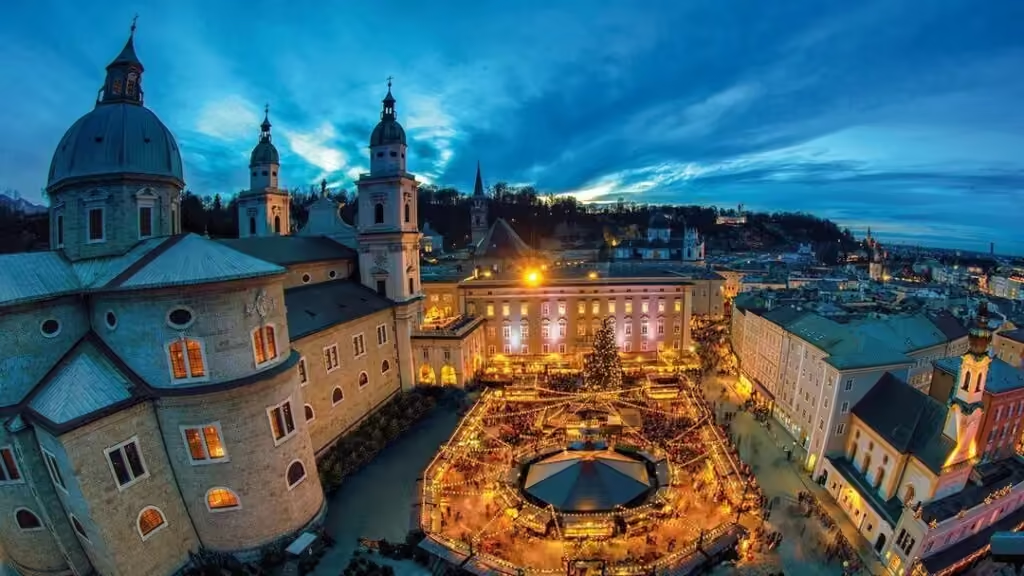
Monday 21 December is the date to build a trip around. Salzburg’s run starts at 19:00 at the Christkindlmarkt, and the stalls close at 20:30 while it’s still going, so eat and drink first.
Christmas week is thin. The only dates on this list between 22 December and 1 January are both in the Bavarian Forest, a Perchten run through the Pullman City theme park on Saturday 26 December and the Lamer Rauhnacht on Sunday 27 December. For most trips between Christmas and New Year the plan is to stretch to Saturday 2 January, the main evening that Kirchseeon’s club calls its big Rauhnacht, or to Tuesday 5 January for the Glöckler.
For the finish, the Glöckler run on Tuesday 5 January and the Pongau Perchten run is in Altenmarkt on Wednesday 6 January. From Salzburg, bus 150 goes from the main station to Bad Ischl, and Ebensee is the one to see if you can get there. The Glöckler run after dark, so check the last bus or train back before you set off, or book a room in the town for the night. If 6 January is your only day, pick Altenmarkt over the others, because the run only comes there once every four years.
Munich has the widest choice of dates. Kirchseeon is a stop on the S6 towards Ebersberg, and the Perschtenbund Soj goes out on fourteen dates between 28 November and 6 January, most of them starting between 15:00 and 16:00. Each date covers a different part of town, so look up the starting street in the club’s run schedule, the Laufplan. Check the MVV, Munich’s transport network, before you travel, because building work cuts the S6 short on some dates, the weekend of 28 and 29 November among them.
With children, pick a run that has rules. At Vienna’s Prater the Perchten stay behind fences, nobody may touch them, and the organisers ask adults to let children through to the front. In Baden the advice is to hold small children by the hand, because the masks, the movement and the bells can be a lot for them.