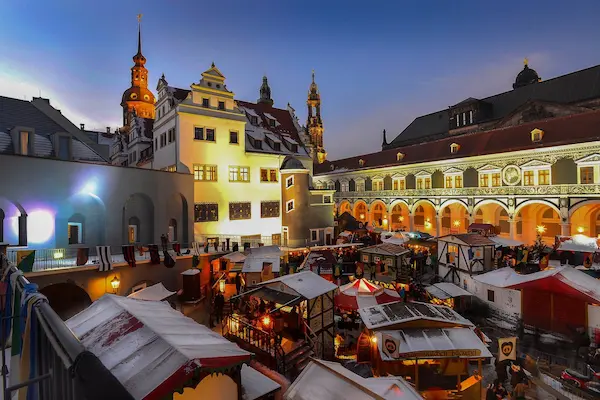
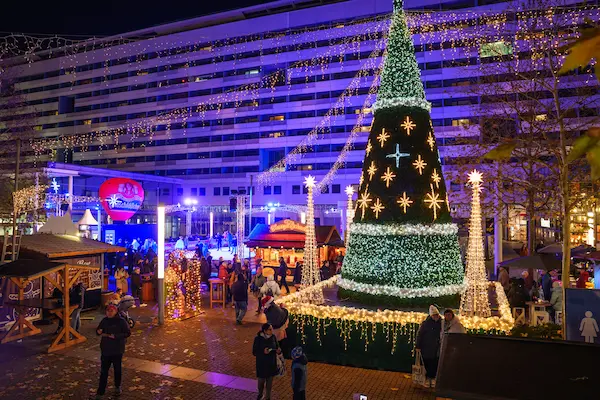
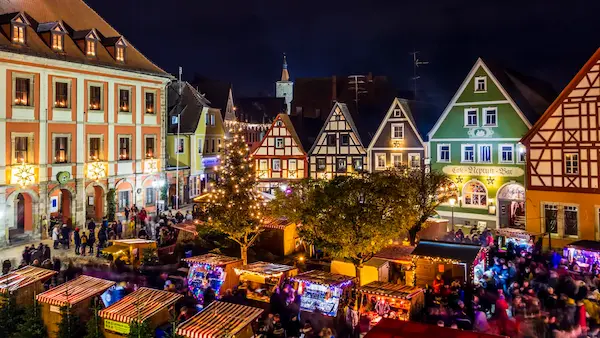
If you’ve been chasing the perfect European Christmas market (you know, the kind with half a millennium of history, hand-carved wooden stalls, and the smell of cinnamon and roasting almonds drifting down cobbled lanes), you’re going to want to put Dresden on your list.
The reason why is because the Dresden Striezelmarkt was first held in 1434, making it one of the first genuine Christmas markets in the world and older than most of the countries that now copy the format.
“Striezelmarkt” comes from Strüzel (or Stroczel) which is the old word for a type of cake sold at the market, which you now know as Stollen, or Christstollen. So yes, the entire market is quite literally named after a fruit bread. Only in Germany. 😅
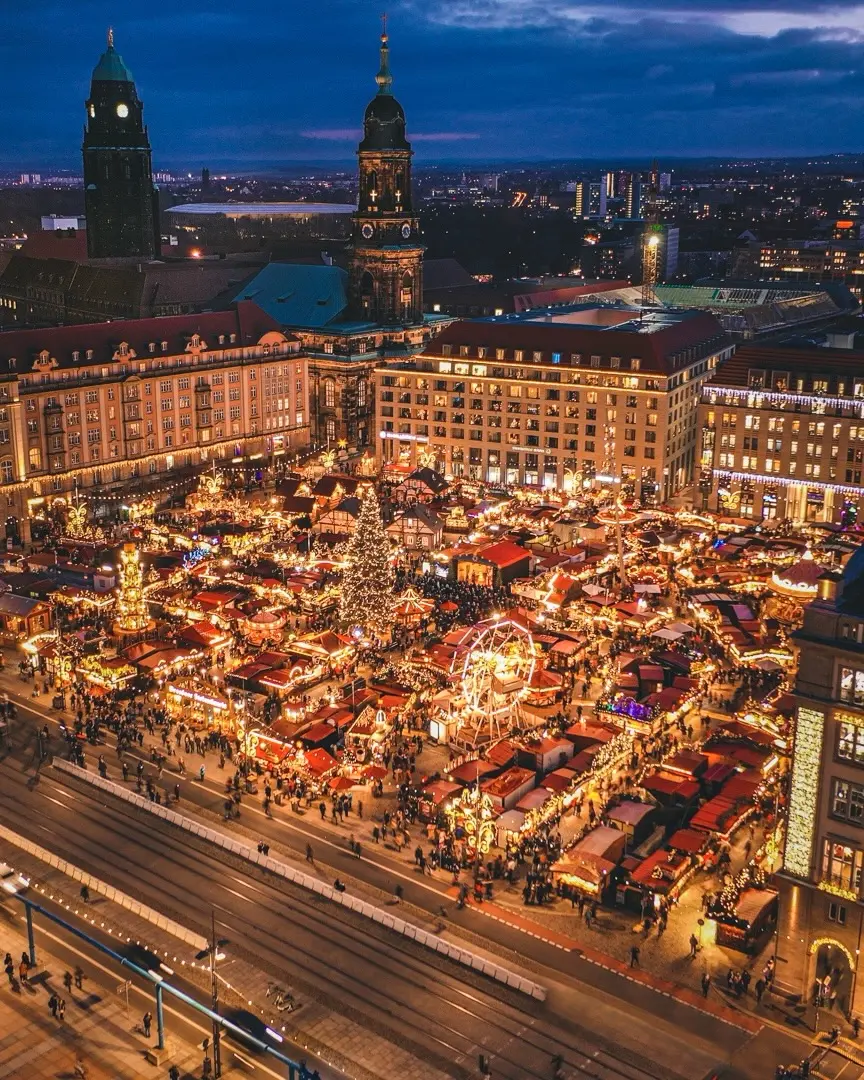
The market was first mentioned in 1434, under Elector Friedrich II of Saxony, when it was a single-day meat market held on the Monday before Christmas on the Altmarkt square. It was a practical stop for citizens to buy meat for the Christmas meal after the Advent fast. From that humble one-day butcher’s market, it grew into a roughly 200-plus-stall event that pulls in about 3 million visitors a year and swallows a big chunk of Dresden’s old town for the whole of Advent.
And unlike the slick, Instagram-optimized markets that have popped up everywhere in the last decade, this one still leans on a deep, very Saxon set of traditions with a giant cake, miners turned woodcarvers, and a fruit bread the Pope once had to personally approve butter for.
So when someone tells you Christmas markets are a “new” travel trend, you can politely point out that Dresden’s has been going for nearly 600 years (it celebrated its 590th anniversary in 2024).
The Big Show: The Dresden Stollen Festival
If there’s one thing you should try to time your whole trip around, it’s the Dresdner Stollenfest, a tradition so gloriously over-the-top it’s worth the cold fingers.
Here’s the history that makes it fun: in 1730, Elector Augustus II the Strong (a man who very much liked a spectacle) ordered Dresden’s bakers’ guild to bake a giant 1.7-tonne stollen big enough to feed all 24,000 guests at a legendary party known as the Zeithainer Lustlager.
The court architect even built an oversized oven for it, and a comically large silver knife was forged just to cut the thing.
The tradition died out with the monarchy in 1918 and came back in 1994 and today it’s an annual event on the Saturday before the second Sunday of Advent (so usually the first or second weekend of December).
What happens is that a colossal 3- to 4-tonne Christstollen is paraded through the streets of Dresden on a horse-drawn carriage, accompanied by bakers, fanfare players, and historical figures, all the way to the Altmarkt.
There it’s ceremoniously sliced with the Grand Dresden Stollen Knife, a 1.60 m, 12 kg silver-plated copy of the lost 1730 original, and pieces are sold to the crowd, with the money going to charity.
It’s ridiculous in the best way, and it’s the single most “Dresden” thing you can witness. I’d build the whole weekend around it if you can.
What to Eat and Drink at the Striezelmarkt
For a lot of people (myself included) half the reason to brave a cold German market is the food, and the Striezelmarkt does not disappoint. Here’s your hit list:
- Dresdner Christstollen. The obvious one. This is the real deal. A moist, heavy, low-sugar fruit bread loaded with raisins, almonds, candied citrus, and spices, then drowned in butter and rolled in sugar while still warm. Only about 110 bakeries in Dresden are allowed to produce the official stollen, stamped with a seal depicting King Augustus II the Strong. Look for that seal because it’s the difference between the genuine article and a supermarket knock-off.
- Pulsnitzer Pfefferkuchen. Don’t call it gingerbread (or at least know it’s its own thing). This spiced cake comes from the town of Pulsnitz, about 50 km away, where it’s been made since 1558. The dough matures for up to six months and uses nutmeg, cinnamon, cloves, and allspice (notably no ginger and no fat) and it’s usually filled with marmalade and dipped in chocolate.
- Pflaumentoffel. The quirkiest souvenir-snack on the market: little chimney-sweep figures made of prunes, with a top hat and a brush. The name literally means “plum devil” (they’re also called Feuerrüpel or “Fiery Santa”), though they’re meant to be chimney sweeps, a bringer of good luck. They were historically sold off trays carried by children, until that got banned in 1910.
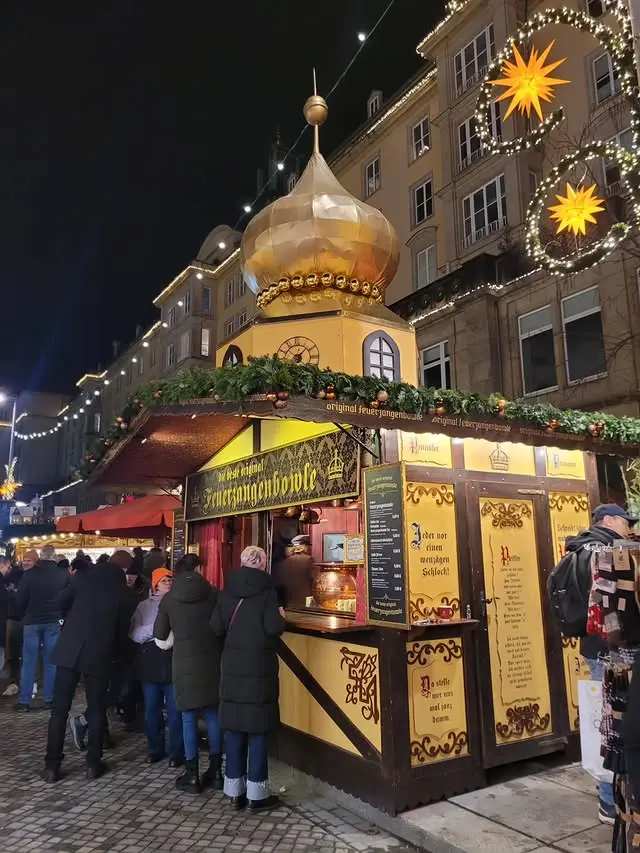
- Glühwein. The non-negotiable cold-hand warmer. Hot red wine spiced with cloves and cinnamon, served in a specially decorated ceramic mug. You pay a small deposit, and if you return the mug you get it back. If you fall in love with the year’s design (many people do), you just keep it as a souvenir. Budget a few euros per mug and you’ll be set.
- Bratwurst, roast almonds (gebrannte Mandeln), and Quarkbällchen (little fried quark doughnuts). The classics, done well. Follow your nose.
It’s easy to fill up before you’ve made it halfway down the stalls. Pace yourself. There’s a lot of food at German’s Christmas markets.
Erzgebirge Crafts: What to Actually Buy
This is the part most visitors sleep on and it’s the part that makes the Striezelmarkt genuinely special.
Dresden is the biggest city near the Erzgebirge, the Ore Mountains, where silver and tin were discovered around 1168. When the mines eventually declined, hammered by the German Peasants’ War and cheaper competition from abroad, the unemployed miners did something brilliant: they picked up woodcarving, folding mining symbols and religious motifs into their designs. Those same motifs are still carved and sold on the Striezelmarkt today.
If you’re going to buy one proper souvenir, make it one of these:
- Nutcrackers. The red-coated soldier nutcracker you see everywhere is an Ore Mountains invention, first carved in that iconic form by Wilhelm Friedrich Füchtner, and popularized worldwide by Tchaikovsky’s Nutcracker. Yes, that one.
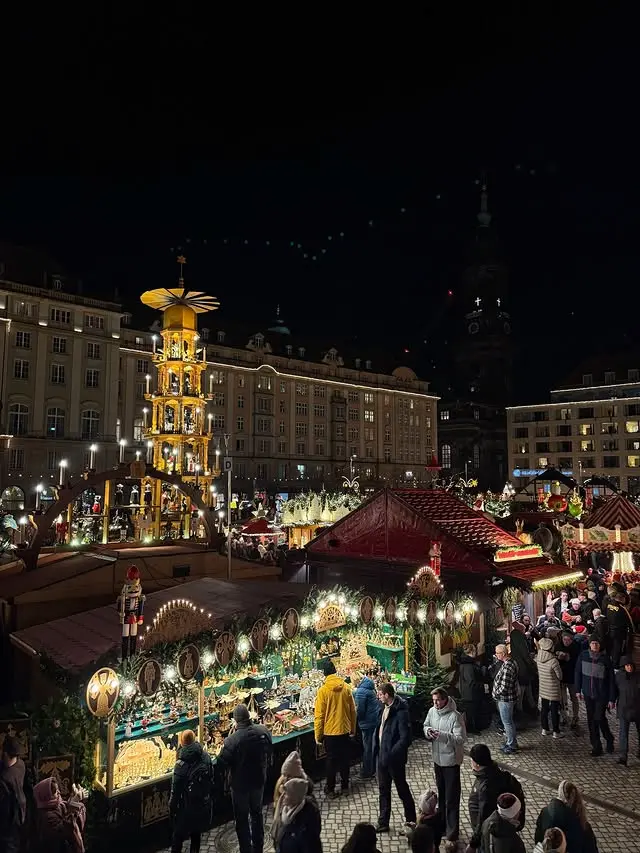
- Christmas pyramids (Lichtepyramide). Tiered wooden carousers that spin when the heat from their candles rises into a little rotor at the top. They’re mesmerizing, and they’re the reason a 14-metre version towers over the Striezelmarkt every year, the tallest in the world.
- Schwibbogen (candle arches). Arched candle-holders that represent the lit entrance to a mine tunnel which is another nod to the miners’ past. The Striezelmarkt shows off the world’s largest usable Christmas arch, over 13.5 metres wide.
- Räuchermann (smoking men). Hollow wooden figures with a pipe and a little incense cone inside, so they appear to smoke as it burns. They come in every occupation imaginable and are absurdly charming.
These aren’t cheap trinkets because the good pieces are genuinely made by hand in the Ore Mountains, and the price reflects that.
If you want the full experience, the woodcraft capital is the storybook village of Seiffen, a scenic drive into the Ore Mountains, and absolutely worth a day trip if you’re already in Saxony for the market.
The Striezelmarkt’s Most Magical Sights (Beyond the Stalls)
Even if you never buy a thing, the market is a free-to-wander spectacle. A few things to keep your eyes peeled for:
- The 14-metre Christmas pyramid – the tallest in the world, spinning slowly above the crowds, with the Kreuzkirche rising behind it. Best seen after dark when the candle-heat (and the lights) really show it off.
- The 13.5-metre Schwibbogen – the world’s largest usable Christmas arch, glowing at the edge of the square.
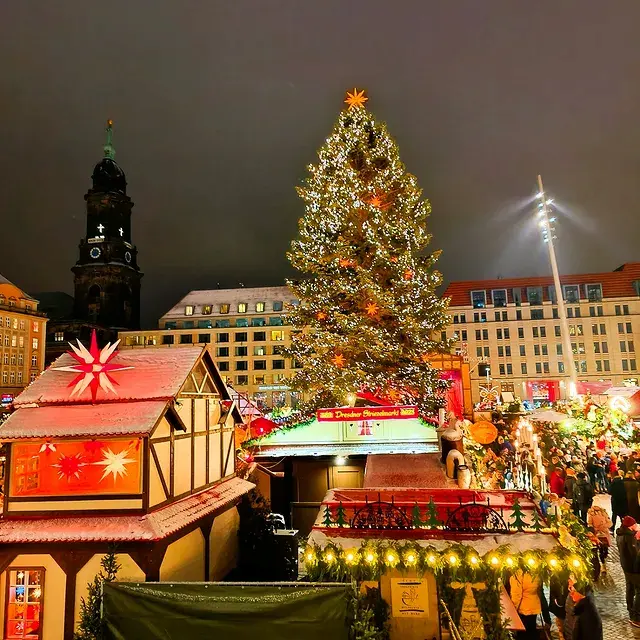
- A towering Christmas tree at the centre of the market, at least 23 metres tall, chosen fresh each year and strung with lights.
- The giant Advent calendar – a painted wooden fairy-tale castle at the back of the square. A new “door” opens each day with a puppet show, and Father Christmas himself visits on Fridays (yes, really).
- The Große Bergparade (Miners’ Parade) – usually the Saturday late in Advent (check the Striezelmarkt site for the 2026 date), when more than 400 costumed miners, musicians, and flag-bearers from the Ore Mountains march through Dresden’s Old Town in a blaze of brass and traditional dress. It’s the market’s most emotional moment and a direct link to the woodcarvers who started all of this.
- The Striezelkinder children’s world – a prune chimney-sweep’s cottage, a little bakery where kids can knead and craft, a puppet theatre, a merry-go-round, and a children’s railway. If you’re traveling with small humans, this is your base camp.
Beyond the Striezelmarkt: Dresden’s Other Christmas Markets
The Striezelmarkt might be the headline act, but Dresden runs several Christmas markets at once, and hopping between them is half the fun. Each has its own vibe:
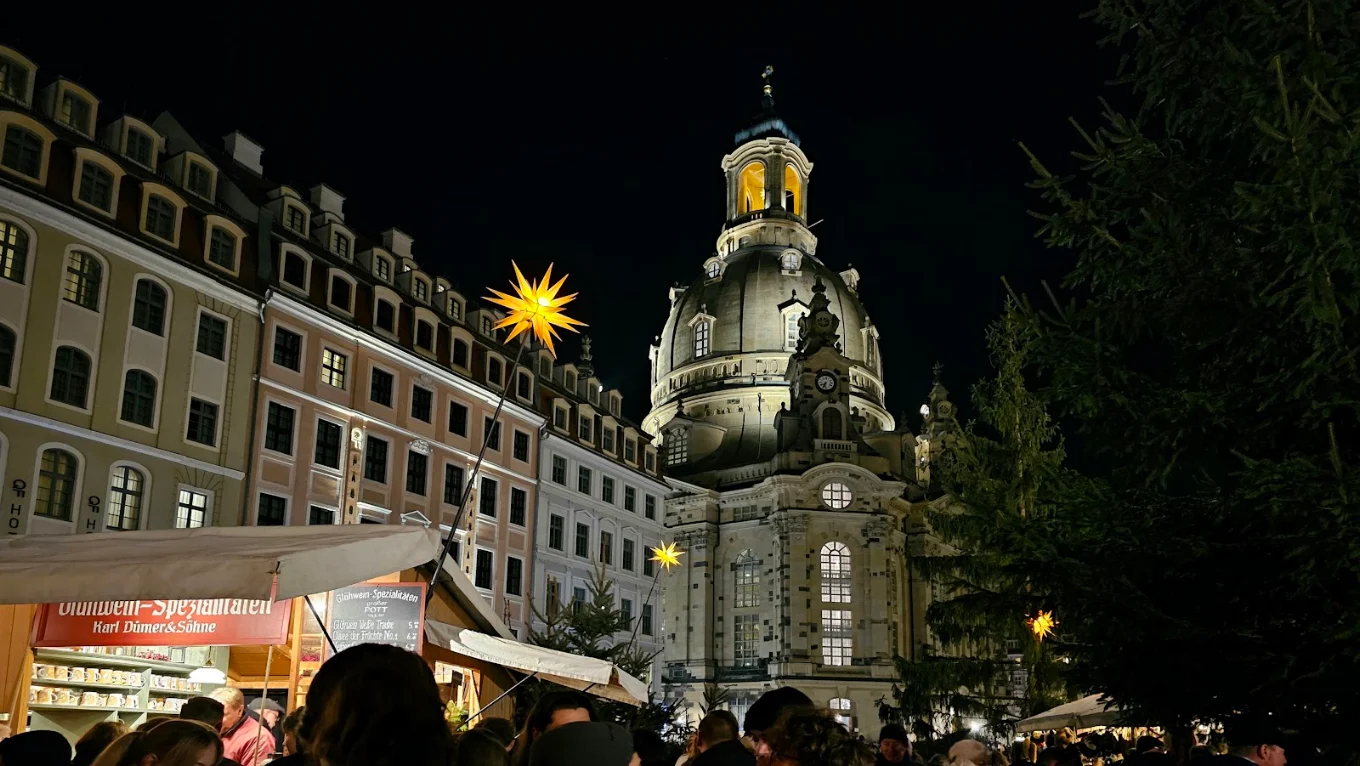
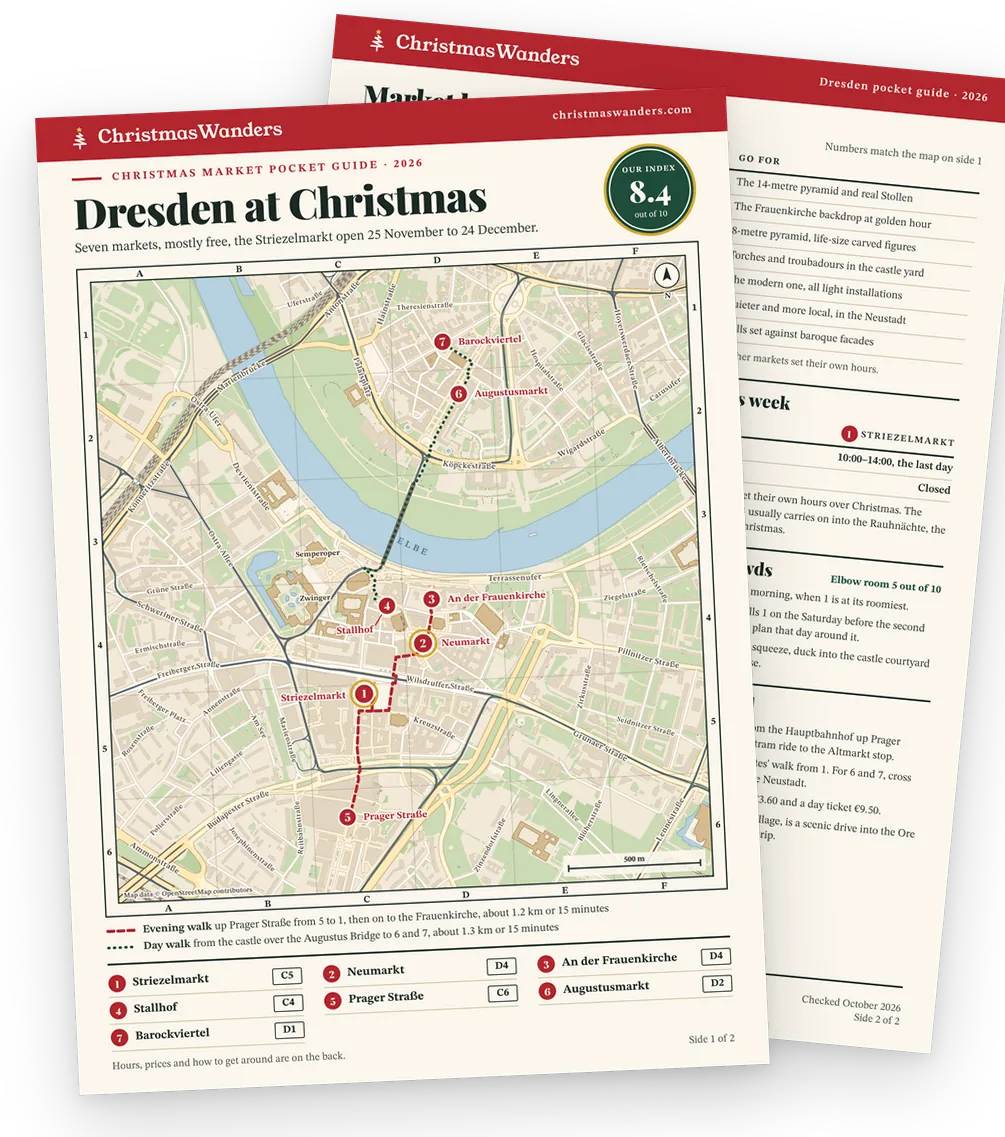
- Advent auf dem Neumarkt – set on the Neumarkt right beside the Frauenkirche, this is the prettiest backdrop in the city and arguably the most photogenic market of the lot. Go for golden hour.
- Mittelalter-Weihnachtsmarkt – a medieval-themed market in the Stallhof with torches, troubadours, and a grungier, theatrical feel. Completely different energy from the Striezelmarkt, and it usually spills into the “Dresdner Rauhnächte” (the Twelve Nights) after Christmas.
- Dresdner Winterlichter – on the Prager Straße, the more modern, light-installation-heavy counterpoint to the old-town markets.
- Augustusmarkt – along the Hauptstraße on the New Town side, a slightly quieter, more local affair.
And then there’s Dresden itself. Nicknamed the “Jewel Box” for its Baroque and Rococo center, the city gives you the Frauenkirche (reborn between 1994 and 2005 after WWII destruction), the Zwinger, the Semperoper, and Dresden Castle, all a short walk from the Altmarkt.
Do yourself a favor and book at least one non-market afternoon to just wander the old town and the banks of the Elbe. The markets are the reason to come but the city is the reason to stay, if I am being honest.
Is the Dresden Christmas Market Worth It?
Honestly? Yes, and I’d say it earns its spot in the top tier of European Christmas markets precisely because it doesn’t feel manufactured.
You’re not standing in a pop-up village of generic stalls shipped in for the season.
You’re standing in a market that’s been running since 1434, in a square named after a 600-year-old fruit bread, surrounded by crafts carved by the descendants of out-of-work miners, watching a 3-tonne cake get paraded down the street with a 12-kilogram silver knife.
That’s not a theme-park version of Christmas. That’s just Christmas, the Saxon way, and it’s been doing it longer than almost anyone else.
Come for the stollen, stay for the wooden pyramids and try to leave with at least one nutcracker you didn’t plan on buying. (You will.)
Just go on a weekday morning if you can!