Can the best Christmas market in Europe be one you are struggling to point to on a map?
I keep coming back to Wrocław in December, and I think the answer is closer to YES than any city this cheap has any right to allow.
First, I want to discuss the map part, because a lot of people (like myself) don’t know where Wrocław is.
Wrocław is the big city in Poland’s far west corner, closer to Berlin than Warsaw is, and it’s only a two-hour drive from the German border (we’ll discuss why that matters later on).
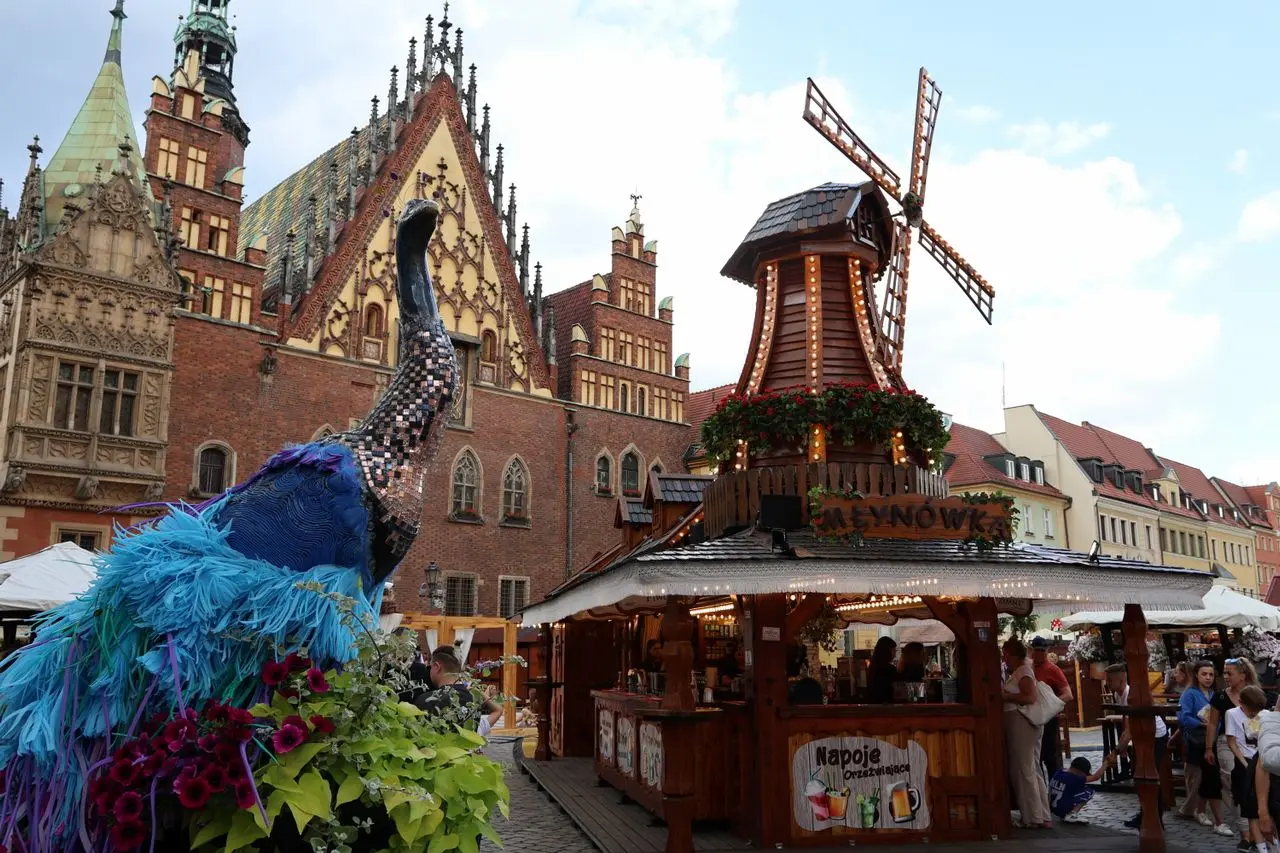
It’s Poland’s fourth-largest city, and it is considered a university town with one of the grandest medieval squares in Europe, lined in painted burgher houses that look slightly like someone let a candy shop design a city.
As for the Christmas market itself, Wrocław does what a bunch of other famous Christmas markets do, but only for like half the money??
Its season also runs to January 7th, which is three weeks past the point where most of the German Christmas markets pack up.
And the crowd is still almost entirely Polish with not as many tourists. The market crossed one million visitors for the first time last season, and about 9/10 were locals or domestic tourists.
So that means if you visit Wrocław in December, you are going to be crashing a Polish party. In my opinion, that’s good and since the market itself costs much less and has plenty to offer, it’s definitely worth your consideration.
But should it be your base or a second (maybe third) Christmas market in your next Christmas itinerary?
Well, let’s get into it.
A Short History of the Wrocław Christmas Market
Wrocław’s Christmas market has a paper trail leading back to 1566, when the city was still called Breslau and the Christmas fair was a German one (of course it was), and the trading square it stands on was medieval. So, technically, the tourism board’s “oldest in Poland” claim has something real behind it.
I am still reading that claim the way I read most of the city’s “oldest” claim… which is with a raised eyebrow.
The city only became Polish in 1945, when Breslau’s German population left and took the market tradition with it for the next several decades.
The modern Jarmark Bożonarodzeniowy, for all that paper-trail pedigree… only returned permanently in 2008, which actually makes it younger than the iPhone.
What has happened since is the interesting part you should know about. Last season was the first ever past a million, at 1,025,887 visitors, up 26% on the year before, which indicates that there’s a growing demand for a well built Christmas market in Poland and that the locals continue to enjoy it.
And on top of that, it has a very interesting opening!
On opening day a brass band marches around all four sides of the square, and the afternoon concert includes “Last Christmas.”
I know a German market would sooner admit a craft stall sells plastic than open with Wham!, but honestly, I love Wrocław for it!
The Gnomes (Wrocław’s Secret Weapon)
If you only take one weird, wonderful detail away from this piece, then let’s make it this…Wrocław is defended by gnomes.
The story starts in the 1980s, when the anti-communist Orange Alternative protested the regime by painting dwarves wherever the police had painted over anti-regime slogans.
Arresting people for painting dwarves made the government look ridiculous, which was the entire point, and it helped. In 2001 the city put up the first bronze gnome, Papa Dwarf, on Świdnicka Street, about thirty seconds from where the Christmas market chalets now stand.
In 2005 a sculptor named Tomasz Moczek added the first five of what then became a city-wide invasion.
How many are there now? Nobody knows exactly. Wikipedia’s count passed 800 in 2024 and estimates over a thousand today. I also found a hotel group’s guide that says around 700.
All in all… a lot!
Anyway, you’ll see them scattered across the whole old town, palm-sized, doing gnomish jobs: fencing, washing the Oder, guarding the bank. As soon as you spot one, you’ll spot a dozen.
And if you are travelling with kids, there’s a good chance it becomes a treasure hunt.
What to Eat and Drink at the Wrocław Christmas Market
The drink: grzaniec
Wait, what is that word again? Ah, doesn’t matter much, grzaniec is, as you might’ve guessed yourself already, Polish mulled wine (or grzane wino, as locals like to call it).
On the main square, you can usually find it for about 20 zł, or around €4.70. The move that locals make, however, is walking thirty seconds off that square, where they end up buying for only 12 zł in a normal bar!
The flavour menu for grzaniec might honestly be the deepest I’ve seen at any market, with plum, cherry, raspberry, blueberry, a white mulled wine, hot chocolate with amaretto, and the house “Wrocław mulled wine,” which arrives with a rum shot in it and the question “with rum?” is the only question anyone at these stalls asks you.
I say yes to the rum, for the record. Plum is my flavour if you’re interested in copying my order (it’s good, you should).
Same as for every other Christmas market, you pay a 20 zł deposit for the mug (some stands ask 30), it’s refundable anywhere, and you should do what I do and every market veteran does, which is keep the mug!
Wrocław’s is boot-shaped by the way, which is different from all German Christmas markets, and that makes a shelf of mismatched European mugs even more of a proper souvenir collection!
The food: eat your way down this list
- Grilled oscypek with cranberry – smoked Tatra mountain sheep cheese, grilled, with the sharp jam against the salt. The texture is a cousin of halloumi, and a plate of two pieces runs about 12 zł.
- Kielbasa from the grill – with grilled onions and peppers in a bun the German markets would envy. Around 10–15 zł.
- Pajda chleba – my favourite thing here. It’s an inch-thick slab off a giant loaf, baked with cheese, thick-sliced kielbasa, pickles and onion. In my opinion, this is the closest thing this market has to a signature dish, and costs about 20 zł.
- Pierogi – the obvious pick, done well at several stalls, 15–25 zł.
- Potato pancakes, bigos, skewers – the honest Polish heart of the food rows. A big skewer is the most expensive thing on the list and it still barely clears 50 zł.
- For pudding: chimney cakes, perniki (Polish gingerbread), waffles with everything. And there’s usually a Georgian dumpling stall somewhere, which is not Polish, and which I make an exception for anyway.
The one piece of criticism I’d love to give is that the biggest food rows have gone a bit mass-market in recent years, and too many stalls under one operator sell the same fries-and-currywurst menu.
What to Buy (and What’s Honestly Junk)
You’re asking the right question. Some of it is tat, really, and you’ll know it when you see it. The phone-case-and-city-name-socks stalls have colonised Wrocław exactly like they’ve colonised nearly every market from Budapest to Edinburgh.
Just walk past those if you are searching for something more… domestic?
There’s also a proper ferris wheel, a carousel, little roller coasters, and the Fairy Tale Forest with its animatronic dioramas. I’ve heard one local describe these as charmingly creepy, and I have thought about that description more than I’ve thought about most art criticism this year. Go. Report back. I can’t settle the question for you.
What’s worth your money are following things:
- Bolesławiec pottery – THE Polish souvenir. Hand-stamped stoneware in those blue-on-cream patterns, sold at several stalls and made a couple of hours west. If you fall for it hard, the town of Bolesławiec is a 1.5–2 hour detour with factory shops.
- Hand-painted glass baubles – the stalls with the long queues are the good ones. Poland has a real glass-painting tradition, and a box of six baubles costs less than one dinner.
- Amber – real Baltic amber, sold from proper jewellery stalls. The fakes exist at the funfair end but the rule is very simple. Don’t buy precious things from the stall also selling light-up reindeer antlers.
- Wool slippers and knitwear – the highland-góralskie wool things look brilliant and cost half what they’d cost in a Vienna gift shop.
- Gnome merchandise – obviously, right, you’re in the gnome capital. It would be rude not to.
A Perfect Evening at the Wrocław Christmas Market
If you only have one evening, here’s the flow I’d build:
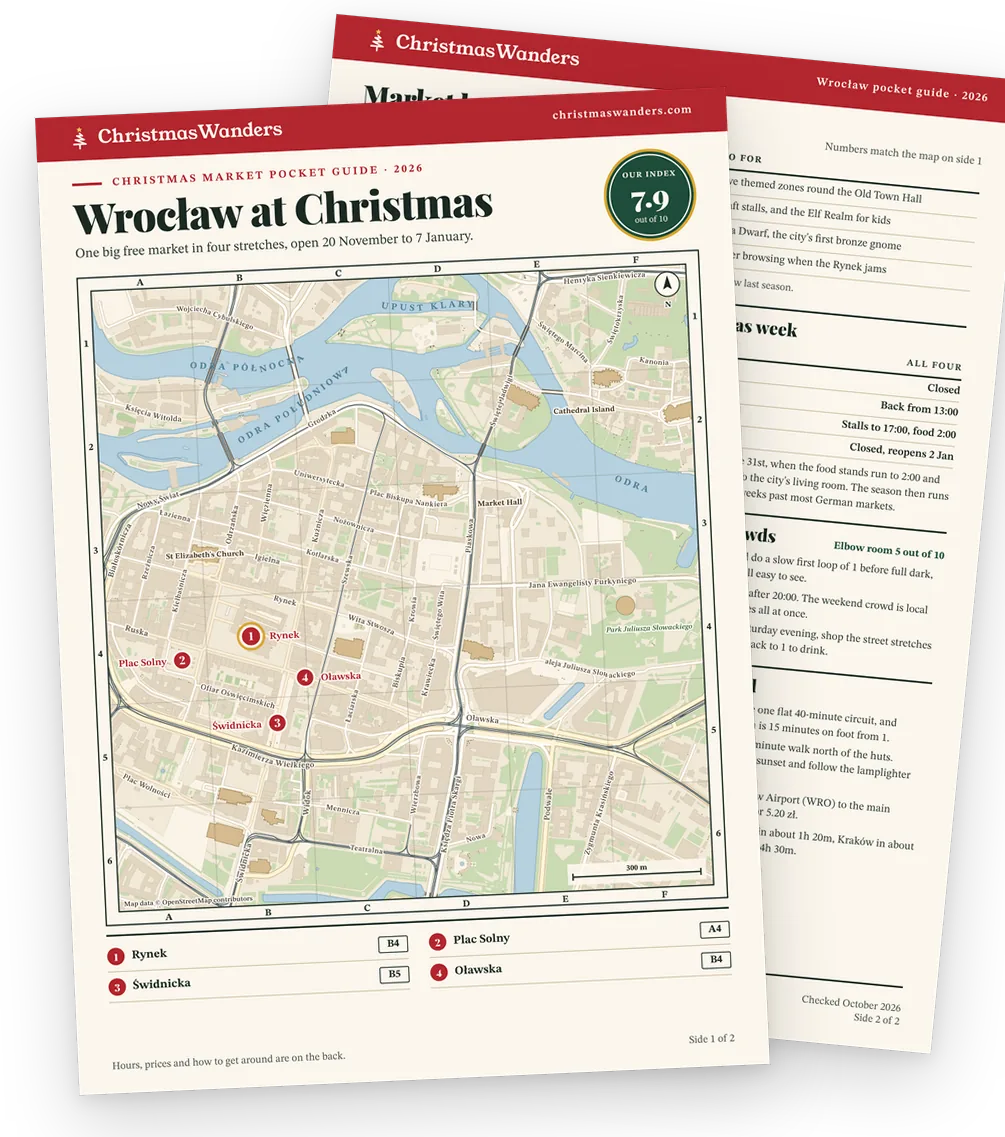
- Arrive by 15:30, before full dark, and do a slow first loop of the Rynek while you can still see the craft.
- Grzaniec first. Plum, with the rum. Get the mug.
- Pajda chleba from the first slab-of-bread stall you smell. It keeps you going.
- Plac Solny second where the stalls you’ll actually buy from live.
- Work Oławska toward the rides at the end, and pick between the ferris wheel view or just watching other people scream on the roller coasters. Both are correct.
- Stop at Papa Dwarf on Świdnicka on the way out. He’s been there since 2001 and he has watched a lot of people end perfect evenings.
- Finish in the middle of the Rynek facing St. Elizabeth’s. The towers behind the chalet lights is the postcard shot, and it’s better in person than in any of the thousand photos you’ll take.
Wrocław Beyond the Market (the Other Half of the Trip)
A Christmas market trip is only half about the market, and Wrocław is the rare market city where the other half might actually win.
The lamplighter of Ostrów Tumski is my favourite thing in the city. Every evening at dusk, a man in a black cape and a top hat walks Cathedral Island and lights 102 gas lamps by hand, one of the last municipal lamplighters in Europe.
There’s no fixed time though so make sure you turn up twenty minutes before sunset, find the cloak, and follow him. This entire experience costs nothing and it can honestly be one of the most magical hours of your whole trip.
You should also visit the Tumski Bridge with its love locks between the island and the old town, and the cathedral itself, on the oldest corner of a city that dates back to the 10th century.
If the weather turns or you want the full second day:
- Panorama Racławicka – a colossal 360° painting of a 1794 battle, viewed from a raised platform in the round. There are only a handful of these panorama buildings left in the world and this is the one Poles bring their visiting relatives to. It sits 100 metres from the National Museum, which is free on Saturdays.
- Afrykarium – the zoo’s huge aquarium complex, the best kids’ rainy-afternoon in the city.
- Hydropolis – a water museum in a restored waterworks, more interesting than “water museum” sounds, I promise.
- Hala Targowa – the covered market hall, from 8am, for pastries, local sausages and cheeses. The breakfast before the market opens at 10:00.
Wrocław vs Kraków (and the Rest of Poland)
The most-asked question I hear about Wrocław is how it stacks up against Krakow and the rest of Poland when it comes to Christmas markets and otherwise.
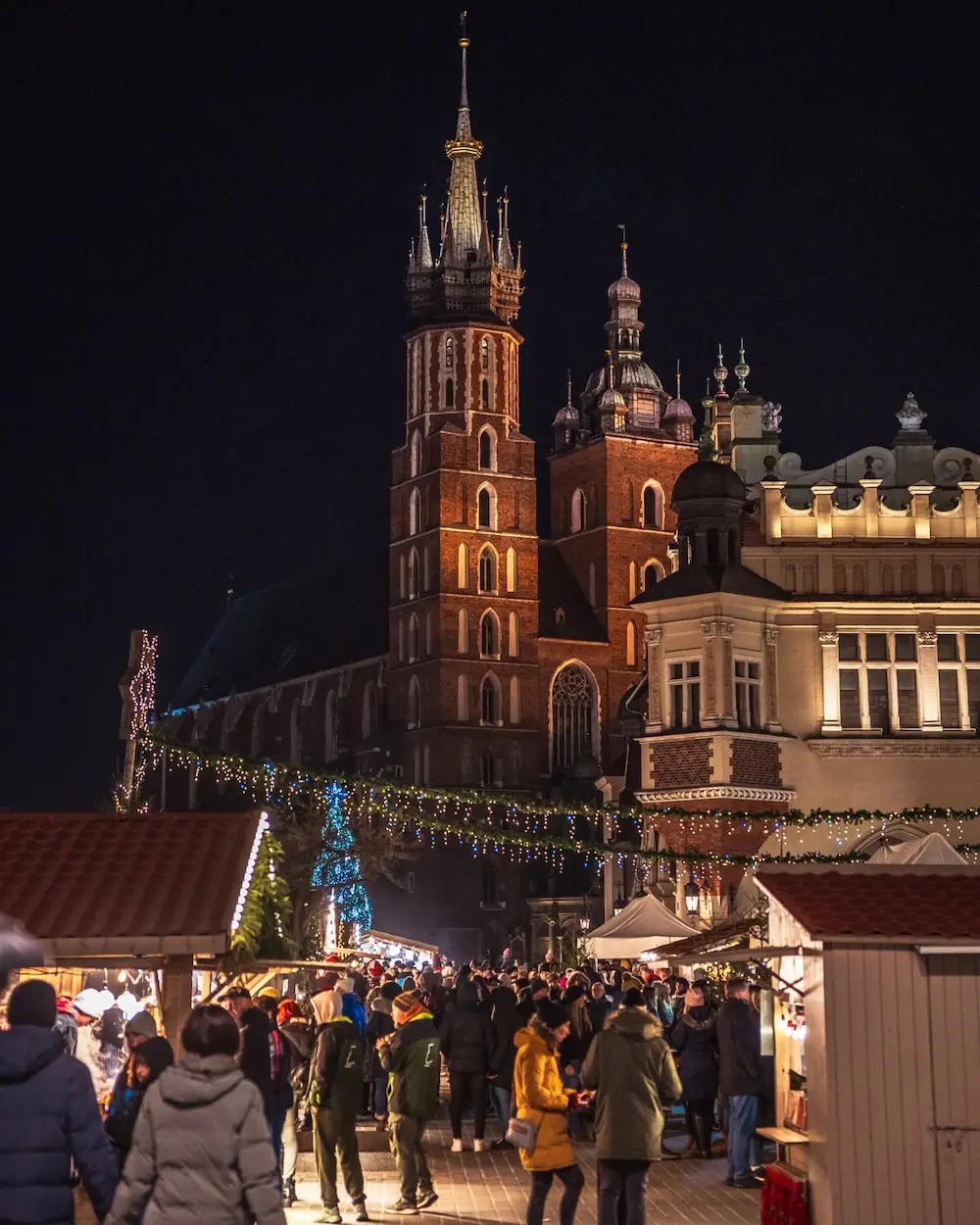
My honest verdict is that Kraków has the single best Christmas square in Poland. Rynek Główny is the largest medieval square in Europe, the market sits in the middle of it with room to spare, and the trumpeter cutting off mid-note every hour from the church tower is a tradition I’d cross a country for.
On atmosphere-per-square-metre, Kraków wins and in my opinion, it isn’t very close.
But Kraków’s market closes on New Year’s Day, and Wrocław runs to 7 January.
For most travellers, Kraków is the trip you build around the market with Wrocław being the city you’ll still be liking at 2pm on day three, when the market’s charms are resting and the gnomes, the lamplighter and an unreasonable number of excellent cafés are still working.
If you want the once-in-a-lifetime square, Kraków. If you want a weekend where the market is one highlight of several, Wrocław.
As for the rest of the Poland:
- Gdańsk – this is a quiet pick with Baltic light and beautiful main street. But it closes around 23 December, so it’s an early-December play.
- Warsaw – easiest to fly to, has the best light displays in the country, but it is the smallest of the three big markets. Fine if you’re already there or you combine it with another base.
- Poznań – 1h 20m away by train, and a good small market with an ice rink. The natural pairing.
Combining Wrocław With Other Christmas Markets
Wrocław sits in the middle of Europe’s most underused Christmas-market rail network:
| Pairing | Time |
| Wrocław → Kraków | ~3h 20m |
| Wrocław → Dresden | 3h 15m–4h |
| Wrocław → Berlin | ~4h 30m direct EC |
| Wrocław → Leipzig | ~3h 30m (new Eurocity) |
| Wrocław → Poznań | 1h 20m |
| Wrocław → Prague | ~4h 30m by bus |
The stack to go for is Berlin → Dresden → Wrocław → Kraków.
Every leg is under four and a half hours with two countries, four markets. You could run it in 8 days or stretch it to 12 with a slower pace.
I’d also be looking to start in Germany or Prague in mid-December, then move east as the western markets close.
The pottery detour: Bolesławiec, 1.5–2 hours west, factory shops for the stoneware, and the single heaviest souvenir decision of your life. Bring a spare bag.
How Long Should You Stay in Wrocław?
I’d say that two nights is the floor. Three may be the sweet spot, if you really want to explore the city.
The market itself fills one evening with one slow loop, the drinks, the food, the ferris wheel, done.
But three nights buys you the market, the lamplighter at dusk, a morning of gnome-hunting, Panorama Racławicka without rushing, and lunch somewhere on the old town’s excellent restaurant row without checking your watch once.
If your dates fall between Christmas and New Year, stay for the turn of the year because on the 31st the market stalls close at 17:00, the food stands go to 2am, and the Rynek becomes the city’s living room.
Tips for the Wrocław Christmas Market (+ Being a Decent Guest)
- Carry złoty. The grzaniec stalls are mostly cash-only, the mug deposit comes back in coins, and the cashpoint at the train station beats the one on the square on both queue length and rate, in my experience. Cards are fine almost everywhere else.
- Dress for standing still. It’s around 0°C after dark and the square funnels wind between the chalets. Real coat, real gloves, and you’ll be out for four hours without noticing. You can spot the fashion-coat crowd by 20:00, doing the frozen shuffle between chalets. Don’t be the frozen shuffle.
- Weekdays, or after 20:00. The single biggest lever on how much you’ll enjoy the Rynek, same as every market on this site, but Wrocław rewards it more because the weekend crowd is families, not tour groups, and it arrives all at once.
- Book the hotel early. December weekends fill, and the between-holidays week fills worst. The “from” prices above are base rates and they only hold if you’re not booking in November for December.
- Being a decent guest, the part I’d stress: this is a market where nine in ten visitors are Polish. It’s their Advent, their squares, their grzaniec. Queue like a local, don’t haggle at craft stalls, learn one word, Wesołych Świąt (Merry Christmas), and use it when you’re handed your mug.
Wrocław is not the oldest, not the most solemn, and not the postcard you’ve seen a hundred times.
It’s the market for people who want the German-market feeling without the German prices, with room to breathe, maybe on the week Germany goes dark, in a city with a lamplighter, a thousand gnomes, and a brass band that opens the season with Wham!.
If Poland is your Christmas-country discovery this year, the guide to every Polish market is the next stop, and the Index scores for the whole country land soon. The newsletter is how you find out first.