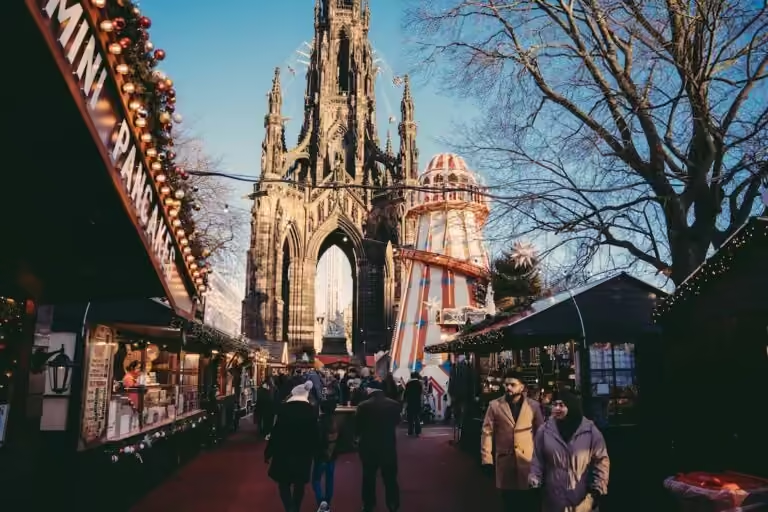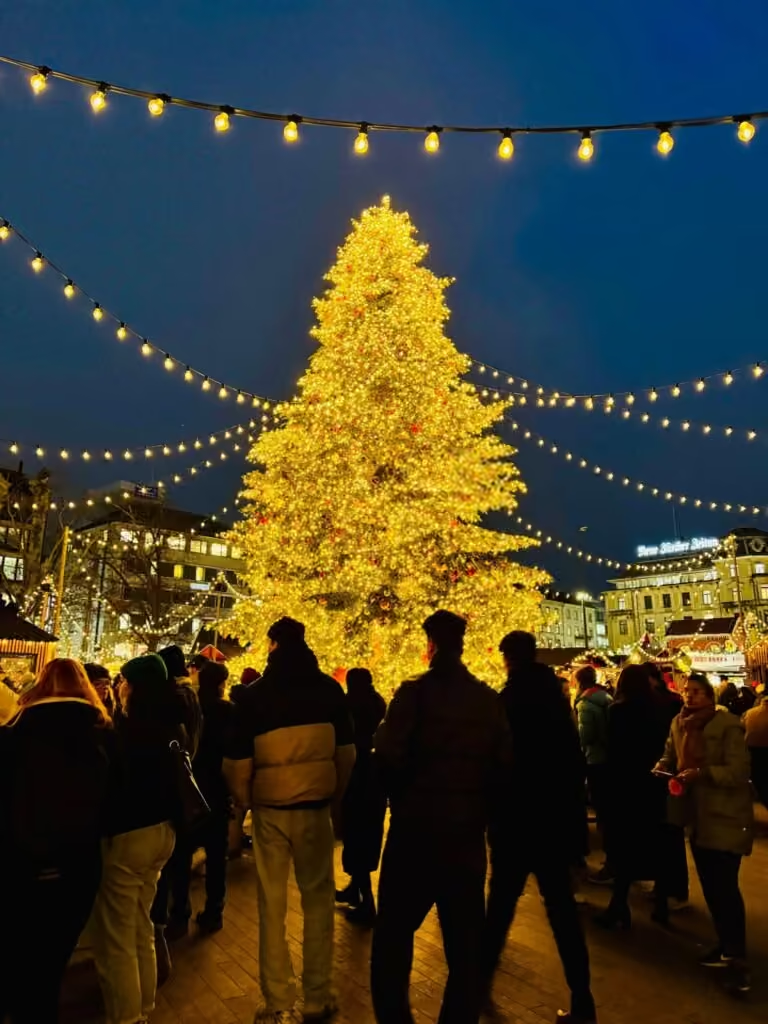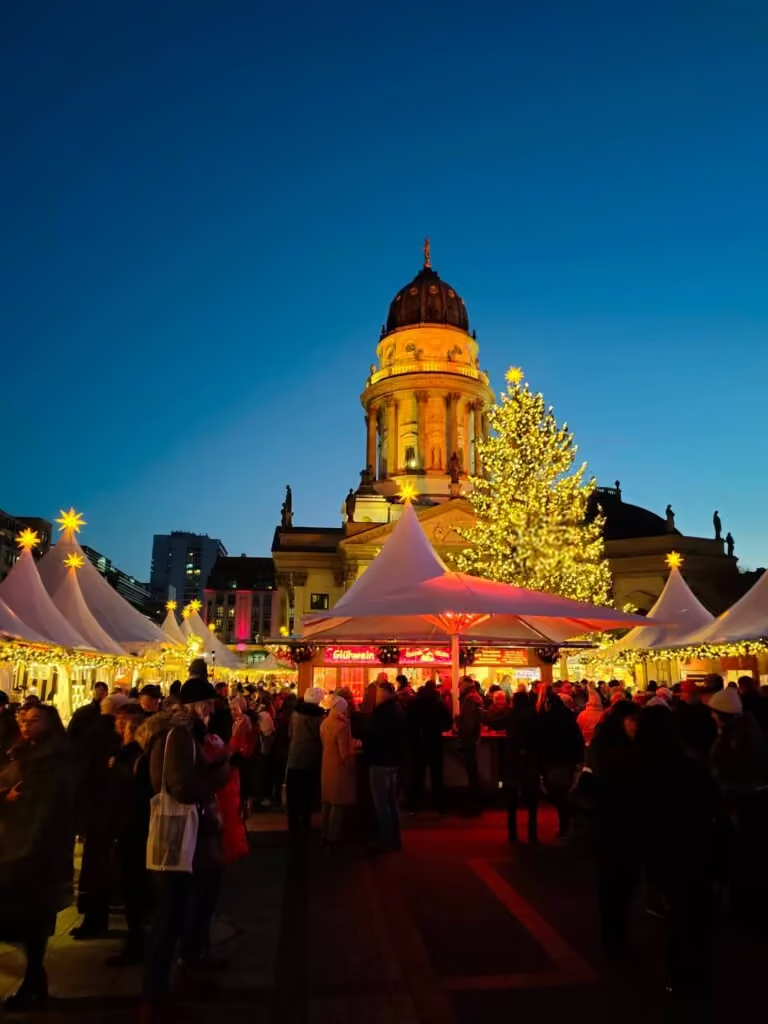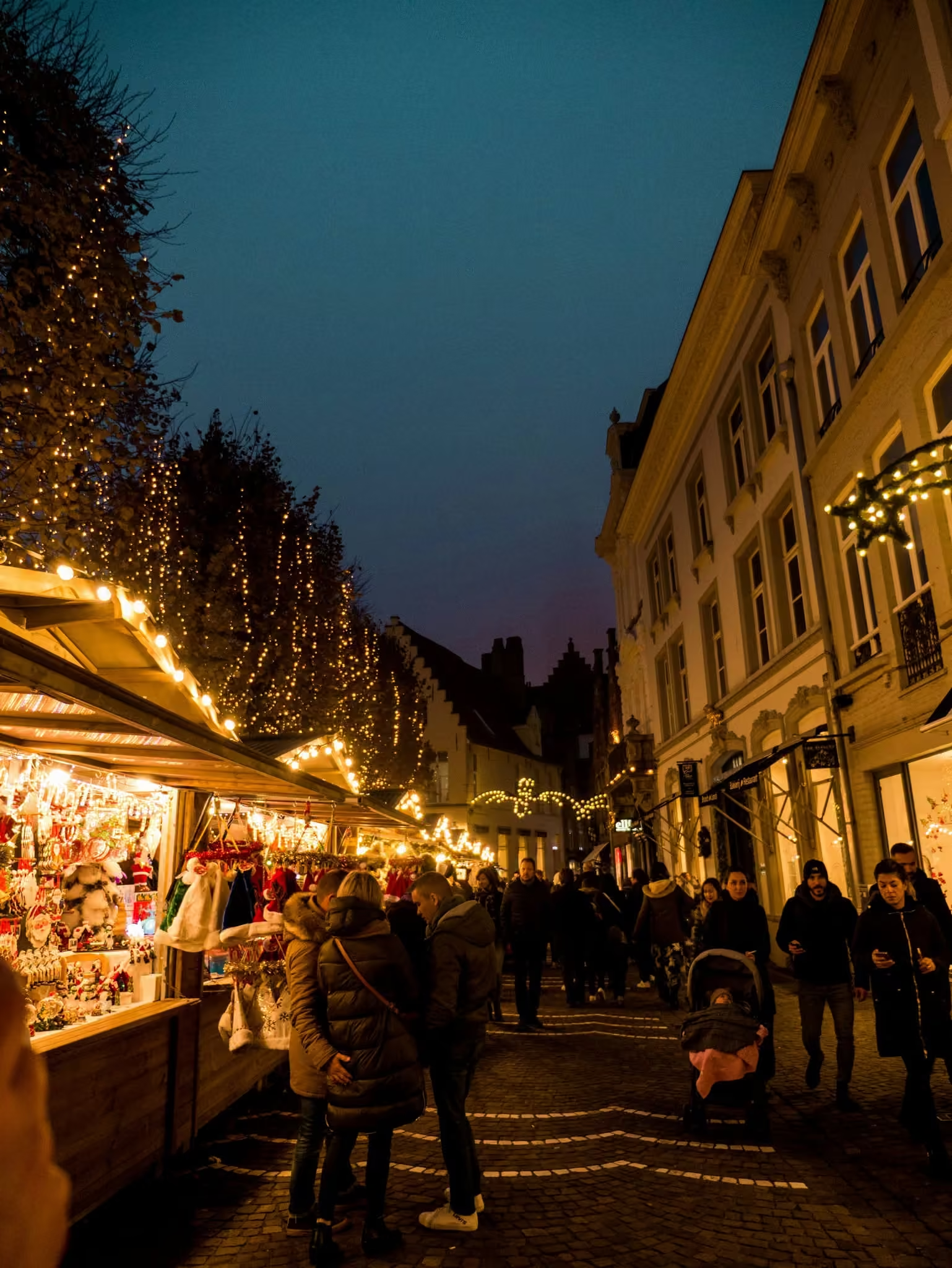
I went to the Ghent Christmas market last year, and it’s really more of a winter festival than a craft market.
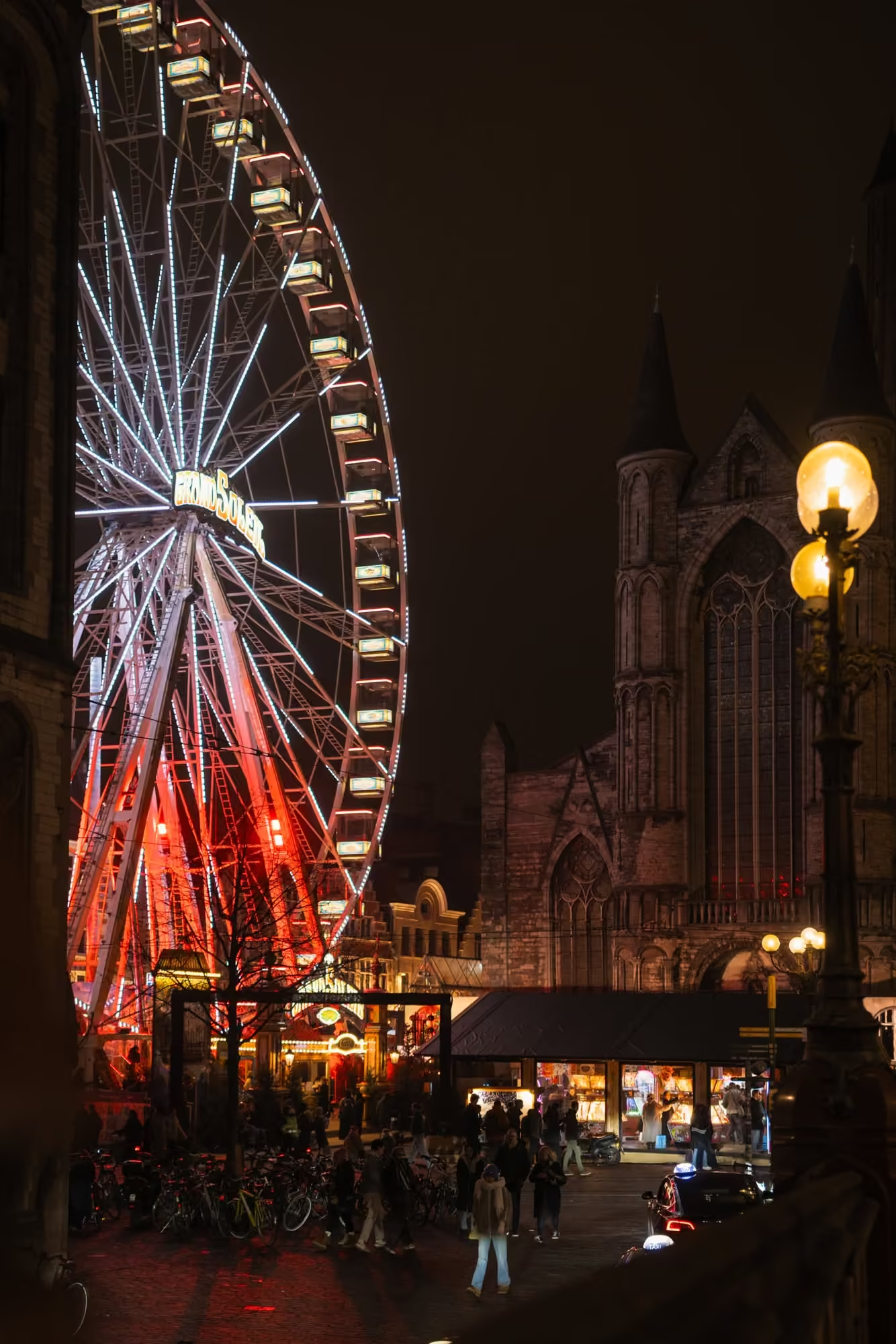
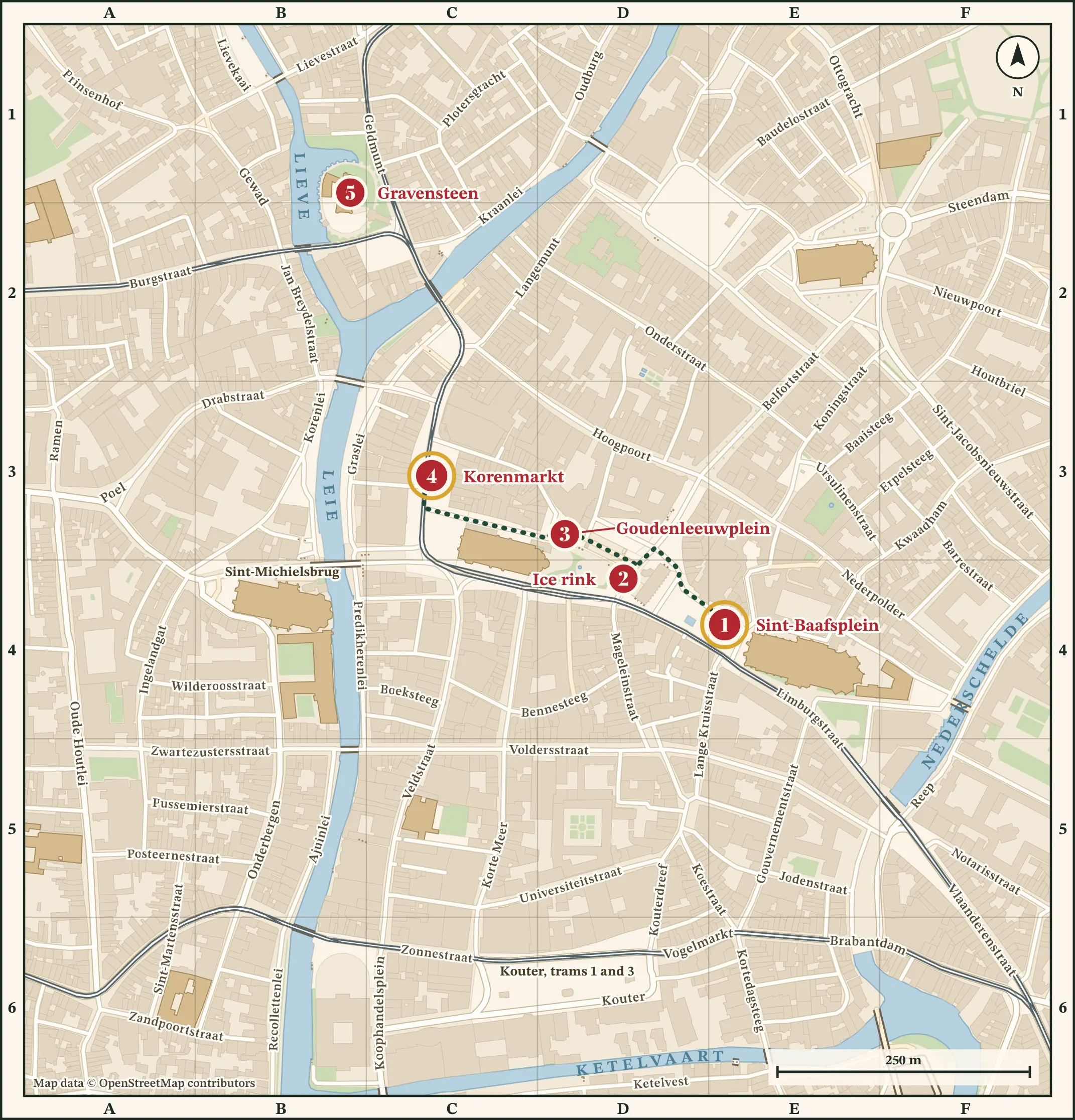
Its official name is the Gentse Winterfeesten, the Ghent Winter Festival, which fits it better than “Christmas market” does, with more than 150 chalets across seven squares in one line from St Bavo’s Cathedral to the Korenmarkt, plus a Ferris wheel, a real-ice rink and around ten pop-up bars.
What made it worth my time was the setting.
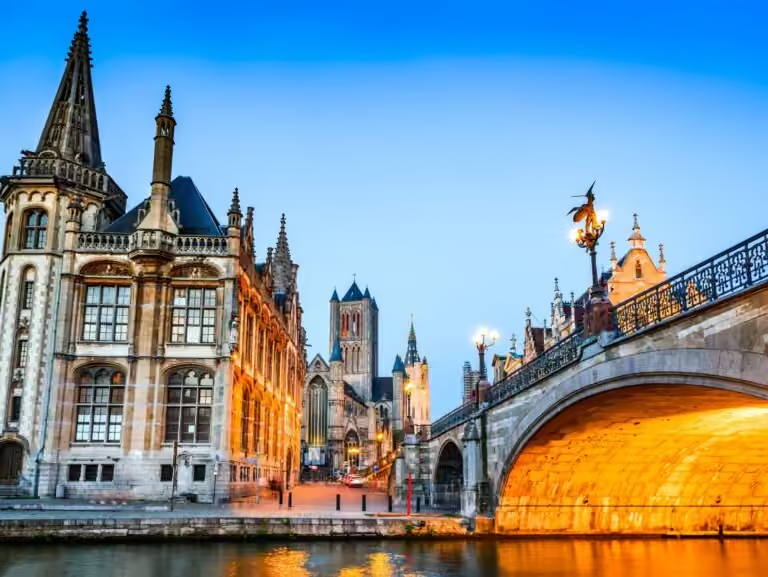
The Belfry, St Bavo’s and St Nicholas’ Church stand in a row along the market, all three lit up after dark, and the Graslei, the old guild houses on the river, is a minute’s walk from the Ferris wheel.
I’ve seen bigger markets, but very few of them sit in a city this good-looking.
The stalls themselves are really the weak part. Most of them sell food and drink, and the gift chalets lean on the same socks, leather goods and cheese you’ll find at any market, a lot of it mass-produced.
Under the market’s last contract with the city, food and drink were capped at 40% of the stalls, which is hard to believe once you’re walking through it. If shopping is the point of your trip, the Strasbourg Christmas market, with its Meisenthal glass and local producers, will make you much happier.
Where Ghent wins is after dark, which is why our Index (7.1 out of 10) calls it the best market for late nights and pop-up bars. It’s a student city, the bars on the squares fill up, and the market stays open until midnight most nights, and until 01:00 on Fridays and Saturdays. Half an hour down the line in Bruges, where most stalls shut at 20:00 last year.
So I’d split Ghent the way its hours do. Give the days to the castle, the canals and the Van Eyck altarpiece, and give the evenings to the squares.
Ghent Christmas Market 2026–2027 Dates and Opening Hours
The Ghent Christmas market runs from Thursday 3 December 2026 to Sunday 3 January 2027, and entry is free.
That’s a later start than its neighbours. Bruges opens on 20 November and Brussels on 27 November, so on a trip in the last week of November, Ghent will have its Christmas lights up (they go on from 27 November) but no market yet.
It makes up for the late start at the other end. For several years the market packed up on 31 December, but from this year it runs to the end of the Belgian Christmas school holidays again, so the weekend after New Year is part of the season.
Day to day, it’s open 12:00 to midnight Monday to Thursday, 12:00 to 01:00 on Fridays, 11:00 to 01:00 on Saturdays and 11:00 to midnight on Sundays. Those are the festival hours, though, and while the bars run right to the end, some of the gift chalets close earlier.
Over the holidays it closes at 17:00 on Christmas Eve and New Year’s Eve, but it’s open 12:00 to midnight on Christmas Day and 12:00 to 01:00 on New Year’s Day.
| Date | What’s on |
|---|---|
| Thu 3 Dec | The market opens (last year the first night started at 18:00) |
| Fri 4 Dec | Winter Wonder Castle opens at the Gravensteen |
| Thu 24 Dec | Market and rink close at 17:00, castle closed |
| Fri 25 Dec | Market open 12:00 to midnight, rink 12:00 to 22:00, castle closed |
| Thu 31 Dec | Market and rink close at 17:00, castle closed |
| Fri 1 Jan | Market open 12:00 to 01:00, castle closed |
| Sun 3 Jan | Last day of the market and the castle |
| From Mon 4 Jan | Closed until next season |
When to Go, and How to Time Your Evening
The best time for the stalls is a weekday afternoon, soon after the 12:00 opening.
You can actually see what’s on the counters then, because later on groups stand eating in the walkways and block the way between the chalets.
Saturdays are hard work. On the last Saturday before Christmas last year the car parks were full by noon, and on the busiest evenings you get shuffled along rather than walking. The week between Christmas and New Year is just as tight.
Our Elbow room score puts Ghent at 5 out of 10, a touch roomier than Bruges and Brussels (both 4) and tighter than Antwerp (6).
If you can choose your dates, go before Christmas, when the atmosphere is better anyway.
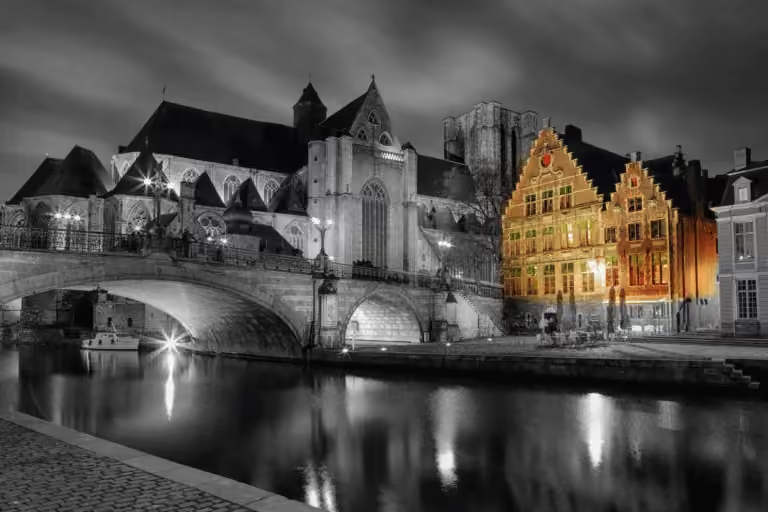
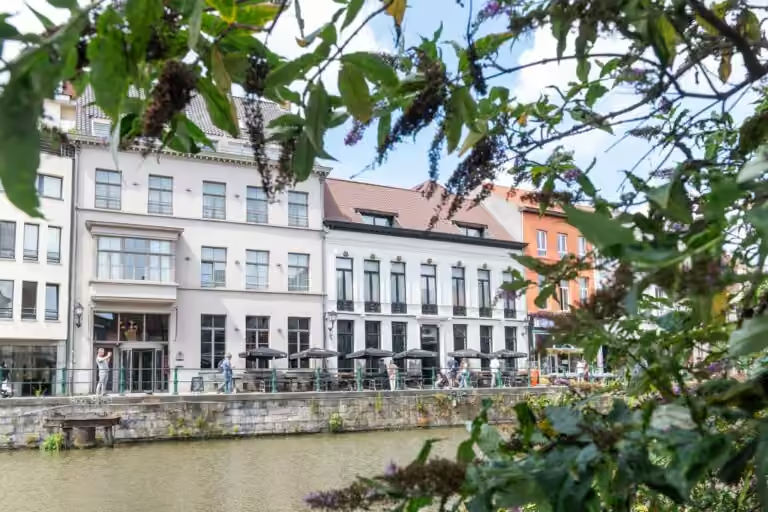
Whichever day you pick, plan the evening around the light. The sun sets at about 16:40 in December, so be on the Sint-Michielsbrug by about 16:30. That’s the bridge with the classic view of all three towers in a row, with the guild houses of the Graslei and the Korenlei lining the water below, and it’s the best free view in Ghent.
When it’s properly dark, walk back to the Korenmarkt for the Ferris wheel. A ride is €9 for adults and €6 for kids aged 12 and under, you get a few laps, and from the top the old town looks like a model village, with the towers lit up and the market glowing underneath. It’s the one paid ride I’d tell every first-timer to do.
By the time you’re off the wheel, the bars are filling up, and this is the part of Ghent that splits people.
I liked the buzz, but it does get loud, especially around the bar chalet by the Stadshal, the modern open hall next to the Belfry, where the bass ran from 20:00 until after midnight last year and a neighbour complained to the city.
Families, and anyone after a quiet mulled wine, should do the squares before 20:00 and leave the late shift to the students.
The Squares, From St Bavo’s to the Korenmarkt
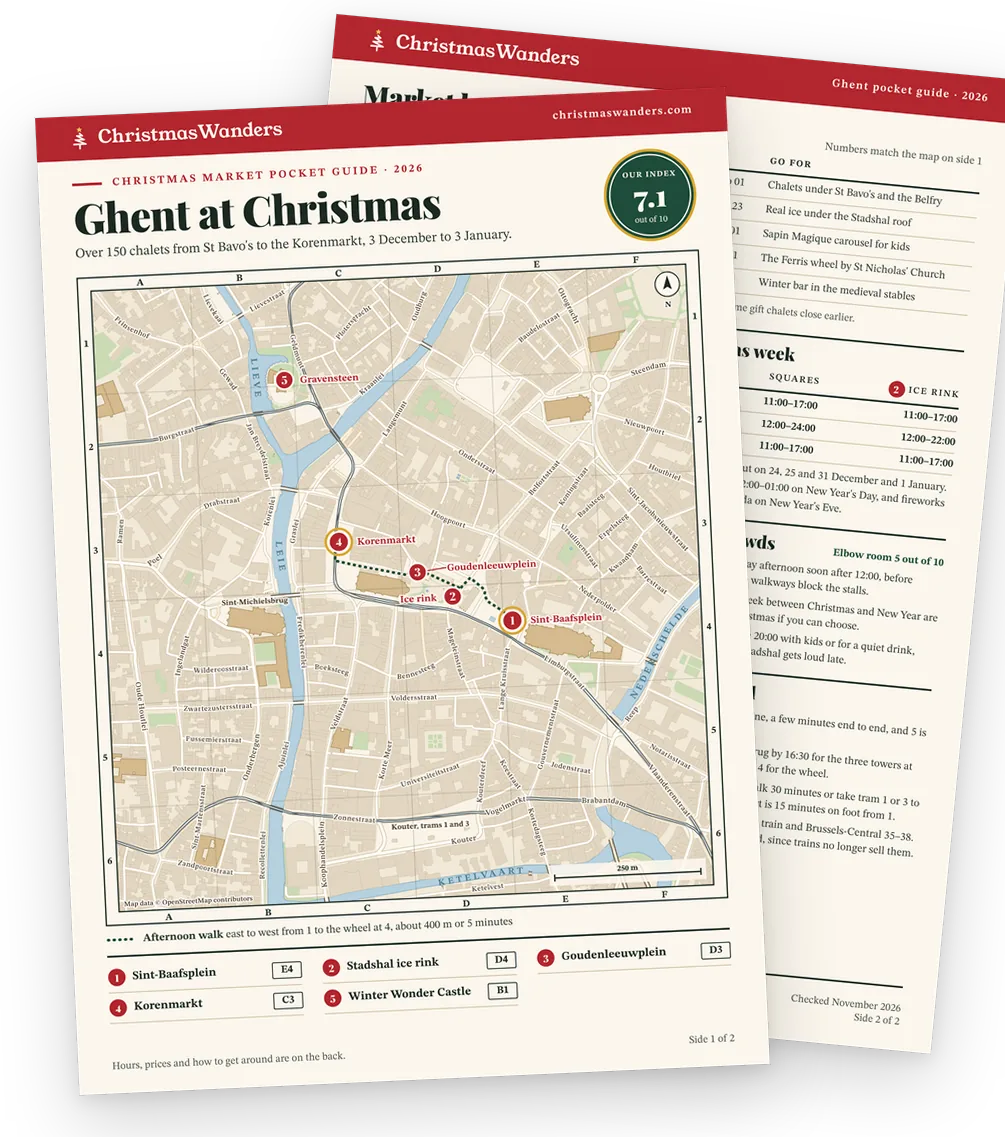
The seven squares run in one short line, so without the crowds you could walk the Ghent Christmas market end to end in a few minutes.
I’d walk it east to west in the afternoon, starting at Sint-Baafsplein, the closest end to Gent-Dampoort station (15 minutes on foot), so you reach the Korenmarkt and the river as the light goes.
Sint-Baafsplein is the grand end, with chalets right under St Bavo’s Cathedral and the Belfry.
Step into the cathedral while you’re there, because it’s free and last year it had a Christmas diorama of 16 Bible scenes.
From there the market squeezes past the Belfry onto Emile Braunplein, where the ice rink sits under the Stadshal.
The rink is real ice again, back last year after three winters of roller skating, and skating cost €12 with skate hire last year (€6 with your own).
New this year, six curling lanes are going in next to it.
The rink keeps its own hours, from 11:00 on weekdays and 10:00 at weekends until 22:00 (23:00 on Fridays and Saturdays), so a morning skate before the stalls open is the calm way to do it.
West of the rink, the market carries on over the Botermarkt, Poeljemarkt, Goudenleeuwplein and Klein Turkije.
If you’ve got kids with you, the Goudenleeuwplein is their stop, with the Sapin Magique, a carousel built like a Christmas tree, and free children’s entertainment moves around all the squares every day.
The Korenmarkt is the finale, with the Ferris wheel turning in front of St Nicholas’ Church and the river a minute’s walk away, where the market lights give way to the canals.
What to Eat and Drink (and What to Skip)
The drink to get is the homemade glühwein.
Last December it was €6 at the glühwein stalls against €5 for the standard stuff at the bars, and that extra euro is the best one you’ll spend on the squares.
Every cup comes with a deposit, and so does every plate and even the fork (€2, €2 and €1 last year). The refunds went straight back to your card when you returned them, with no cash back at all, so pay by card and hand everything back before you leave the squares.
Beyond the glühwein, the menu is more hit and miss.
- Christmas beers are what I’d come back for. Belgian breweries make them for winter only, usually darker and stronger than the regulars, and the bars on the squares pour them.
- Jenever, Belgium’s juniper spirit and the ancestor of gin, comes in flavours like vanilla and chocolate at the market. It’s strong, so one before the Ferris wheel is plenty, and if you like it, ‘t Dreupelkot on the Groentenmarkt pours around 200 of them.
- Hot chocolate cost about €3 last year plus the cup deposit, one stall let you pick white, milk or dark as the base, and Mayana’s 55% dark with speculoos stirred in is the one I’d look for.
- Raclette, melted and scraped onto bread, is the stall you’ll smell from a square away, and it’s worth following your nose to.
- Braadworst in a bread roll is where I’d hold back. It cost €9 to €10 last year, and that price annoyed me more than anything else on the squares.
So for dinner I’d leave the squares altogether. Find a brown café and order stoverij, Flemish beef stewed in beer, which is the meal the chalets can’t give you.
The food worth taking home is on the Groentenmarkt, a couple of minutes from the Korenmarkt.
Two rival stalls there sell cuberdons, the purple cone-shaped raspberry sweets the Gentenaars call neuzekes (little noses), and the sellers have been feuding for years over whose are better.
They’re sticky and sweet enough to make your teeth hum, and I’d buy a bag anyway, plus a pot of Ghent mustard from Tierenteyn-Verlent on the same square, which fills it straight from wooden barrels.
Both beat anything in the gift chalets.
Inside the market, the stalls I’d buy from are the food ones too, especially the dry sausage, macarons and hot sauce. This year’s organiser has also announced plans for a creative market, with makers renting a stall for a shorter stint than the whole month, so the gifts might get better.
Things to Do in Ghent in December
Winter Wonder Castle at the Gravensteen
If you only do one thing beyond the market, make it the Gravensteen. From 4 December to 3 January the Castle of the Counts becomes the Winter Wonder Castle, with decorated halls, stories from Flemish comedian Wouter Deprez playing in your ears as you go, and a view over the lit-up centre from the top of the keep.
The castle is €13, free for under-12s. It’s closed on 24, 25 and 31 December and 1 January.
Even if you skip the castle itself, go to its winter bar in the medieval stables. You don’t need a castle ticket, you order by QR code from your table, and drinking a Belgian beer inside a twelfth-century castle beats every bar on the squares.
Get to the winter bar before 17:00, though, because after that a seat is hard to find.
The Ghent Altarpiece, and the Half That’s at MSK
The Ghent Altarpiece, the Van Eyck brothers’ Adoration of the Mystic Lamb from 1432, is the reason I’d give Ghent a morning, and this winter it takes two visits.
Its seven upper panels are away being restored at MSK, the city’s fine arts museum, until they go back to St Bavo’s Cathedral in spring 2027.
The cathedral’s visitor centre is €12.50, or €16 with the augmented reality tour. At MSK, a museum ticket gets you into the restoration studio, where from Tuesday to Friday the restorers work behind glass, lifting 16th-century overpaint off a Van Eyck while you watch, and at weekends the panels are set out for visitors instead.
After 15 years of restoration, this is the last winter you can watch the restorers at work, so I’d plan a weekday around it. MSK is closed on Mondays, on 25 and 26 December and on 1 and 2 January.
The Belfry, and Whether the CityCard Is Worth It
For the view from above, climb the Belfry, 91 metres over Sint-Baafsplein. It’s €13 and there’s a lift from the first floor. The last tickets go at 17:00, but I’d climb the Belfry around 15:30, so you’re back down in time to walk to the Sint-Michielsbrug for sunset.
The Belfry, the castle and MSK add up quickly, and that’s where the CityCard Gent earns its money. It’s €49 for 48 hours and covers all three, plus trams, buses and a boat trip, and it takes €10 off the altarpiece if you book that online first, so it pays for itself with those four alone. You can’t buy the card online, so pick it up at the tourist office, a museum or your hotel.
When It Rains
It probably will at some point. December highs in Ghent are around 7°C and lows around 2°C, it rains on about half the days, and in our snow odds study Ghent had snow on the ground on just 7% of its market days. So pack waterproof shoes and a hood, and save the castle, the cathedral and MSK for the wet hours, along with the rink under the Stadshal roof.
Day Trips From Ghent (Make It Your Base)
Ghent makes the best base for the Belgian Christmas markets, because the trains are short and frequent, and you come back every night to the one that stays open latest.
- Bruges, 22 to 28 minutes away with four trains an hour, is a daytime trip. Its stalls shut hours before Ghent’s, so see it in daylight and come back here for the evening.
- Brussels works the other way round, because the Brussels Christmas market saves its best moment for after dark, the free sound-and-light show on the Grand-Place. Brussels-Central is 35 to 38 minutes away, so stay for the show and take a late train back.
- Antwerp takes about an hour, and the Antwerp Christmas market has the rink round the Rubens statue on the Groenplaats. It runs from 4 December to 3 January but closes on New Year’s Day.
For all three, buy your train tickets before you get on, because since July 2026 the Belgian railway doesn’t sell them on board. At weekends, adults aged 26 to 64 get 30% off.
Christmas and New Year in Ghent
If you’re spending Christmas abroad, Ghent is where I’d spend the 25th. Its squares stay open two hours longer than Brussels’ and Antwerp’s on Christmas Day, while the Cologne Christmas market and the Lille Christmas market are both shut and Strasbourg finishes on Christmas Eve.
The rest of the city is a different matter. Most shops, museums and plenty of restaurants close on Christmas Day, so book your Christmas dinners before you travel, Christmas Eve’s included.
New Year’s Eve needs the same planning, with the city’s fireworks at Portus Ganda that night, and since the market runs until Sunday 3 January, you get the weekend after New Year as well.
Is the Ghent Christmas Market Worth It?
Yes, for two or three nights. The stalls are more food and bars than crafts, but you’re drinking under three lit-up towers, the castle has a bar in its stables, and the squares are still going when Bruges and Brussels have shut.
It suits couples and friends who like a drink in a beautiful city, anyone travelling in the second half of December or over Christmas and New Year, and anyone using Belgium as a base for a few markets.
If you’re after a traditional craft market, the Dresden Christmas market or Strasbourg will suit you better, and if it’s Ghent or Bruges, I’d sleep in Ghent and see Bruges by day.
Either way, do the stalls on a weekday afternoon and save the squares for after dark, with the Sint-Michielsbrug at sunset in between.