Why Visit Strasbourg’s Christmas Markets
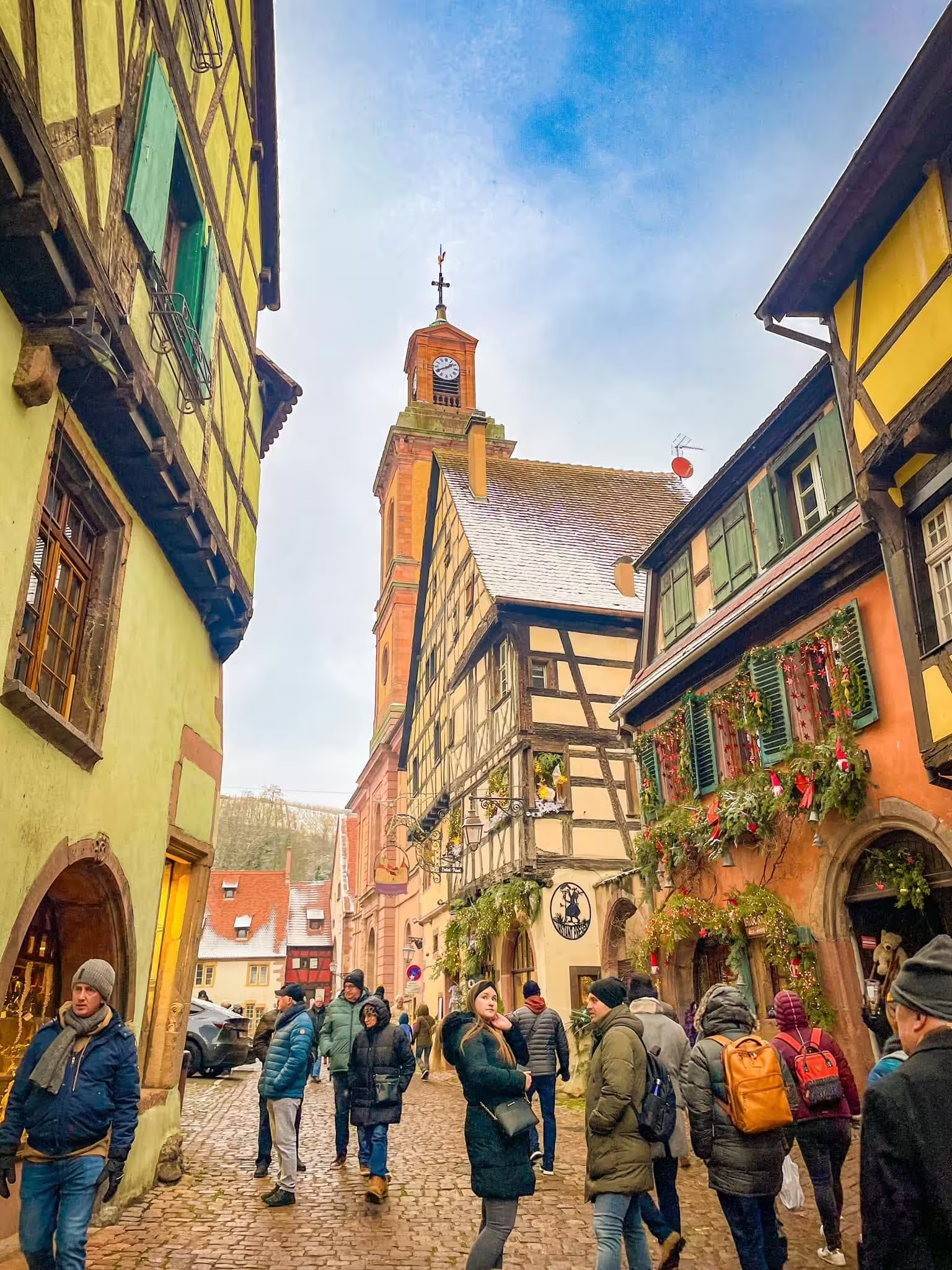
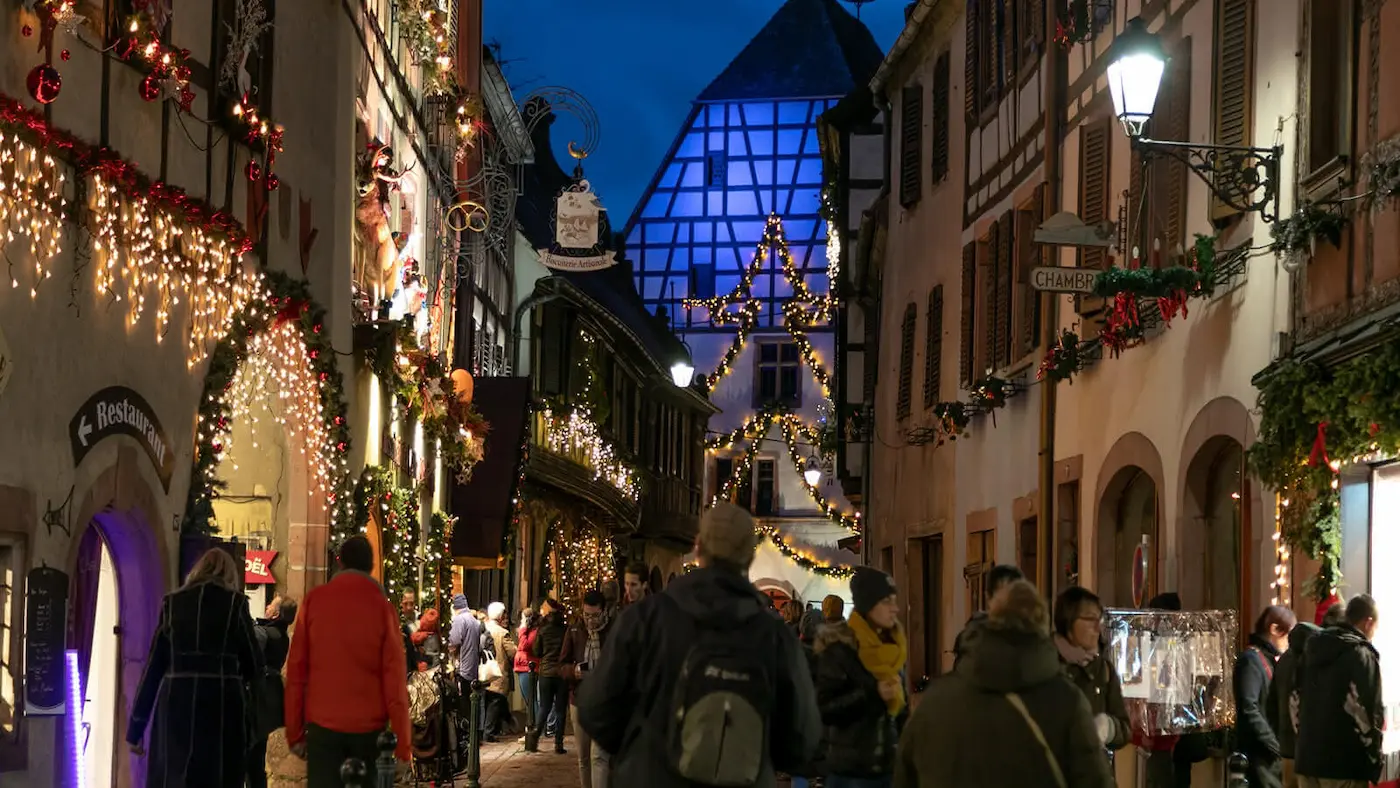
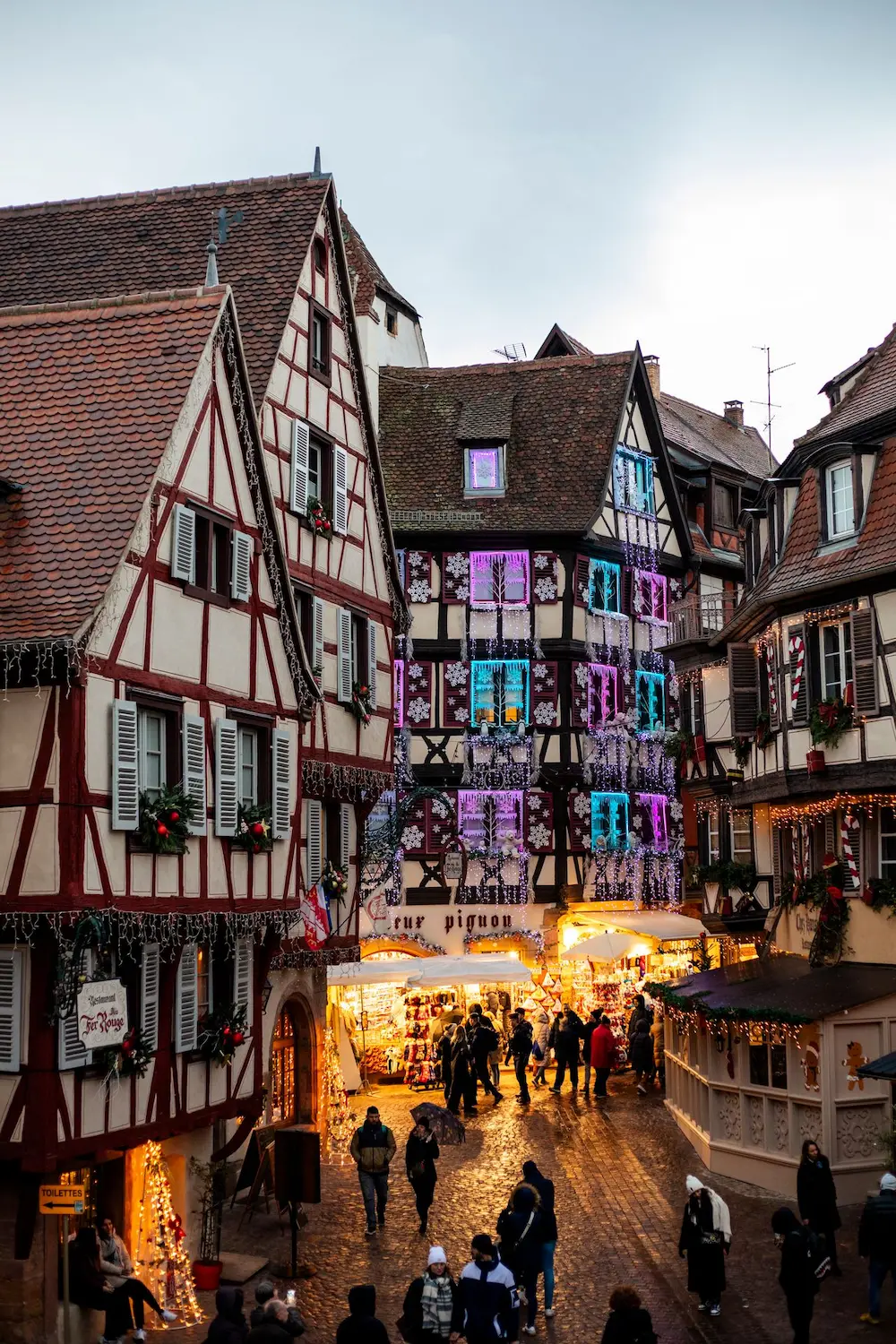
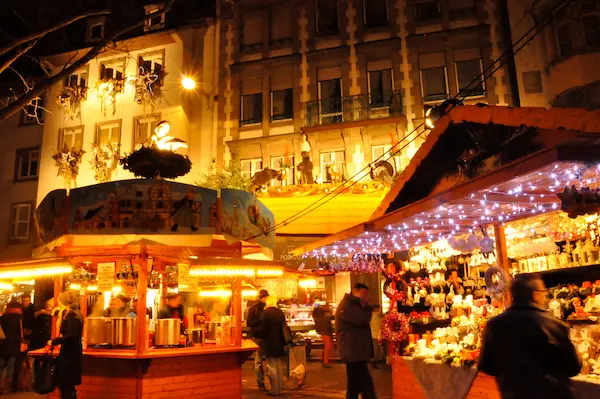
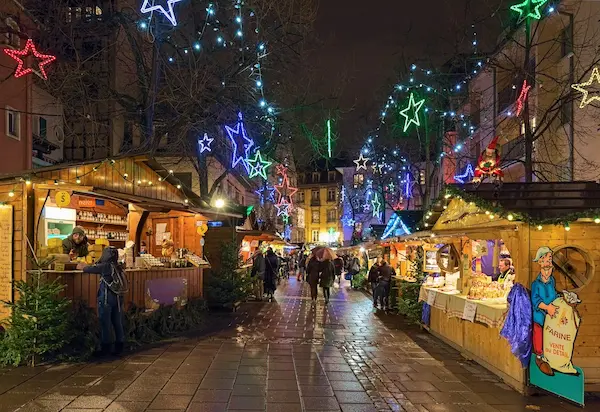
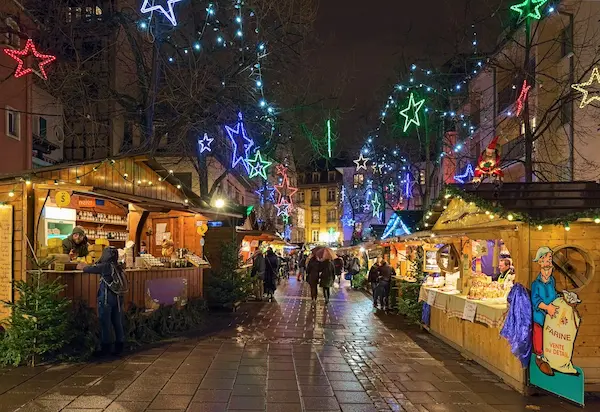
Strasbourg calls itself the Capital of Christmas, and for once, the marketing isn’t lying. The city has been doing this since 1570. That’s over 450 years of Christmas markets, and the old town transforms so completely in late November that you’d think the half-timbered houses were built specifically as a backdrop for vin chaud and gingerbread.
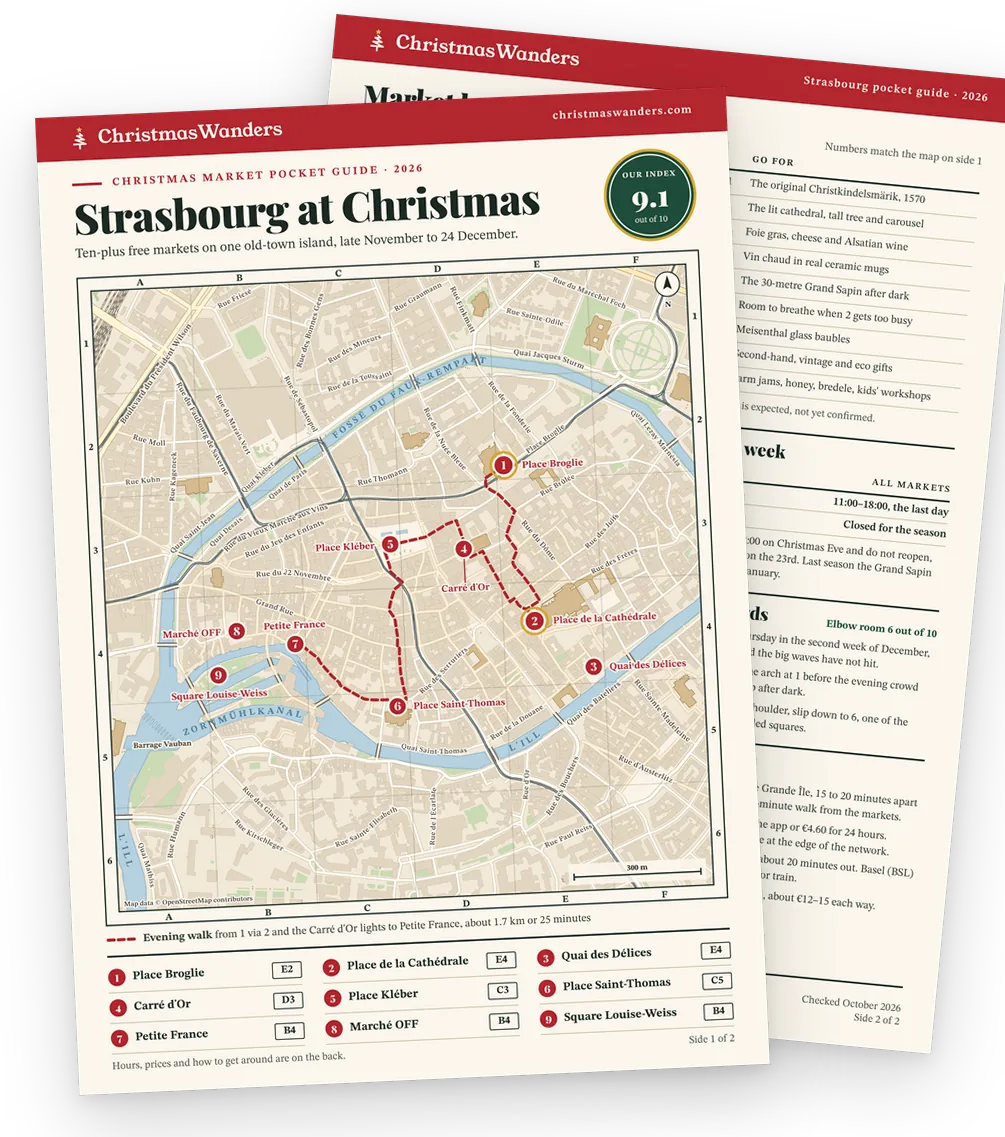
What makes Strasbourg different from, say, Cologne or Vienna is the density. Ten-plus markets are packed into the compact Grande Île, all walkable within 15-20 minutes of each other. You will not commuting between disconnected market squares. You are going to be wandering through a continuous web of decorated streets where one market blurs into the next.
Strasbourg Christmas market is best for first-timers who want the full European Christmas market experience in one city, couples looking for a long-weekend getaway, and foodies who want to go beyond bratwurst into Alsatian territory: tarte flambée, bredele, foie gras, and wines that don’t get enough international attention.
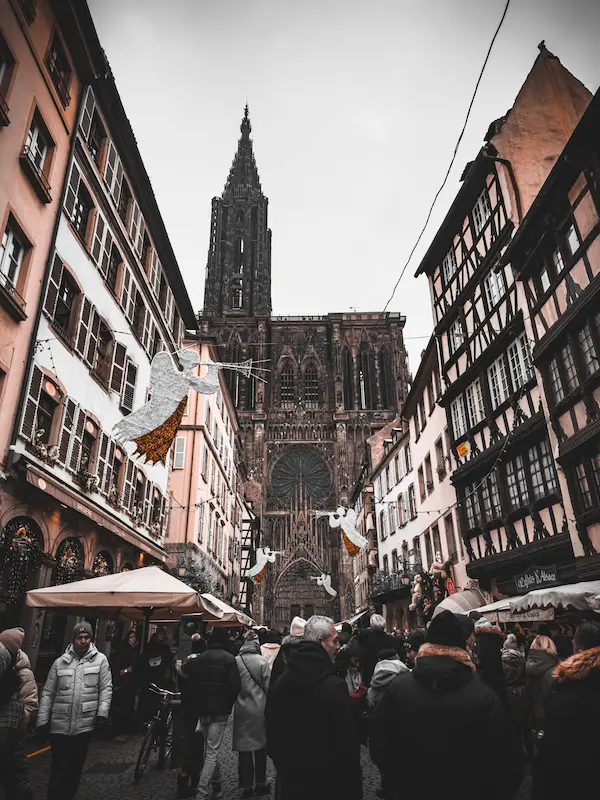
However, before you go, you need to know this: weekends are brutal. Strasbourg draws over 2 million visitors each season, and on a Saturday evening around the Cathedral, you’ll feel every single one of them. Come midweek if you possibly can.
What to Expect
Food & Drink
Strasbourg’s Christmas market food is Alsatian first, generic-Christmas-market second. And that’s a good thing, if you ask me.
The region sits on the French-German border, so the flavours lean hearty and Germanic but with French technique.
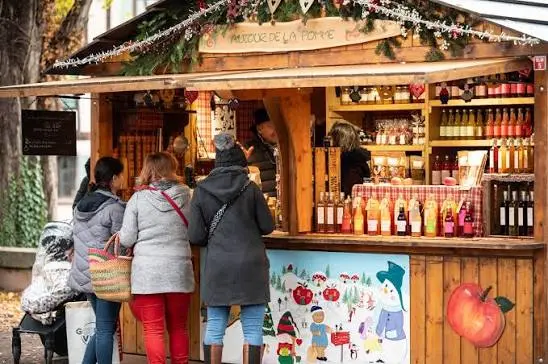
Vin chaud (mulled wine) is the default drink, obviously. Expect to pay around €3-5 per cup plus a €1-2 deposit for the reusable cup, which you can return or keep as a souvenir.
What’s worth knowing is that Strasbourg offers both red and white varieties, and some stalls stock over 20 flavour variations (don’t ask me how many I tried). The white vin chaud with citrus and cinnamon is underrated in my honesty opinion, although most tourists default to red.
For food, the essentials are tarte flambée (Alsatian flatbread with crème fraîche, onions, and lardons, roughly €8-12), fresh pretzels (€2-3, grab one hot off the tray at Place Broglie), bredele cookies (traditional Christmas biscuits in dozens of varieties: a mixed box runs €8-15), and pain d’épices (Alsatian gingerbread, denser and more spiced than what you’re used to).
The beignets, deep-fried doughnuts, some pretzel-shaped and chocolate-coated, are €5 and dangerous for your waist.
For something more substantial, head to Le Quai des Délices for foie gras, artisanal cheeses, and charcuterie. This is the market where locals actually eat.
Shopping
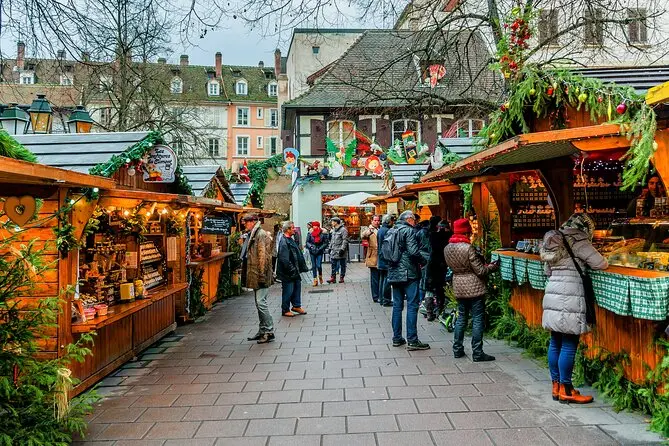
The range is wide, from genuinely handcrafted Meisenthal glass ornaments (Place Benjamin-Zix is the spot) to mass-produced trinkets you could buy on Amazon.
The general rule is that the smaller the market, the better the craft quality. Christkindelsmärik has some excellent artisan stalls on its west end, but also plenty of generic stuff to wade through. The OFF Market at Place Grimmeissen is where you’ll find the most original, non-standard gifts.
Some things worth buying include hand-blown glass baubles, Alsatian pottery, local honey and jams, bredele cookie boxes as gifts. What I would advise skipping is anything that says “handmade” but clearly isn’t, such as mass-produced wooden ornaments you’ll see at every European market.
Entertainment
Most markets have some form of live music: choirs, brass bands, acoustic performances. The Advent Village at Square Louise-Weiss runs a regular programme of children’s workshops and family performances. The Cathedral sometimes hosts special concerts during the market season.
Ice skating has been inconsistent in recent years (specifically from 2022), but it used to be at Place Kléber.
For Kids
The Advent Village (Square Louise-Weiss) is the family hub: craft workshops, performances, and the Irréductibles market with its local-producer focus feels less overwhelming for small children.
The carousel in front of the Cathedral is a classic. Place du Château has a more contained, family-friendly layout.
How to Get There
Strasbourg sits on the French-German border in the Alsace region, and it’s one of the better-connected Christmas market cities in Europe.
By Train (Best Option)
The TGV from Paris Gare de l’Est gets you to Strasbourg in under 2 hours. Book a few weeks ahead through Trainline or Omio and you can often find tickets for €25-35 each way in second class.
Prices climb steeply closer to travel dates, especially in December. Booking 4-6 weeks out is the sweet spot.
From Germany, regional trains connect directly from Stuttgart, Karlsruhe, and Offenburg. Basel and Zurich in Switzerland are also within easy reach.
If you’re combining Strasbourg with other Alsatian markets, look into the Alsa+ Groupe Journée pass (€45 on weekends, covers up to 5 people on all regional transport between Strasbourg and Basel).
From London, you can get to Strasbourg via Eurostar to Paris (2h15) then TGV to Strasbourg (1h45), total journey around 5 hours with the change. A Eurail or Interrail pass covers this route too, which is worth pricing up if Strasbourg is one stop on a longer market run.
By Air
Strasbourg Airport (SXB) is small and has limited routes. EuroAirport Basel-Mulhouse-Freiburg (BSL) is a better bet for budget flights, about 1.5 hours south by shuttle or train. Frankfurt Airport is another option, roughly 2 hours by train.
By Car
Driving is fine for reaching Strasbourg, but parking in the city centre during December is painful. Use one of the park-and-ride lots on the tram network outskirts and take the tram in.
Getting Around the Markets
Once you’re in the old town, everything is on foot. The Grande Île is compact. If you’re staying outside the centre, tram tickets cost €1.90 per ride (via the app) or €4.60 for a 24-hour pass.
Where to Stay
Book early. This isn’t a polite suggestion. Accommodation in Strasbourg during December books out months ahead. By late October, the best-located hotels are gone. Six months ahead is ideal. A year ahead isn’t unusual for the most popular spots.
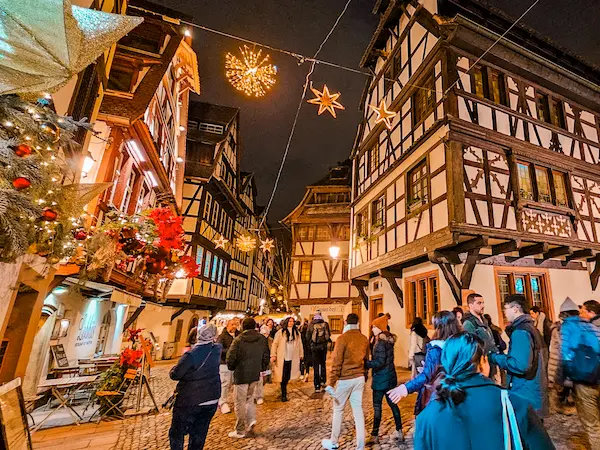
The best location is anywhere on or near the Grande Île (the old town island). Petite France is the most atmospheric neighbourhood: canal-side, half-timbered houses, short walk to every market. The area around the train station (Gare Centrale) is a solid practical choice: slightly cheaper, 10-minute walk to the markets.
Budget (€70-120/night): Hotels near the train station and just outside the Grande Île. Functional, walkable, won’t wow you but gets the job done. B&Bs and holiday rentals in this range book up fastest.
Mid-range (€120-200/night): Hotels within the old town. Expect a good location and decent breakfast. Hotel Hannong is a reliable option: central, 5-minute walk to both the station and the markets.
Splurge (€200+/night): Hotel & Spa Regent Petite France if you want canal views and half-timbered house aesthetics. Worth it for a special trip.
Tours & Experiences
Strasbourg’s markets are compact and well-signed enough that you don’t strictly need a guided tour.
You can see all 10+ markets on foot in a single day without any help. That said, a walking tour with a local can surface history and insider tips you’d otherwise miss.
The highest-rated option on GetYourGuide is a 2-hour Christmas market walking tour led by local guides (look for the one with Yves, consistently mentioned in reviews). It covers the major markets, Alsatian Christmas traditions, and food/drink recommendations. Book for early in your trip so you can use the tips for the rest of your stay.
If you want to combine Strasbourg with the Alsace wine route villages, there’s a full-day bus tour from Strasbourg that hits Colmar, Riquewihr, and one or two smaller villages (around 7 hours, departing mornings).
Worth it if you don’t have a car and want to see the smaller Alsatian markets.
A less obvious option that a lot of tourists miss are wine tastings. Alsace is a serious wine region. Cave Historique des Hospices de Strasbourg offers tastings in a 600-year-old cellar: free entry, affordable flights of local Riesling and crémant. Not technically a Christmas market activity, but a perfect afternoon break from the cold.
Insider Tips
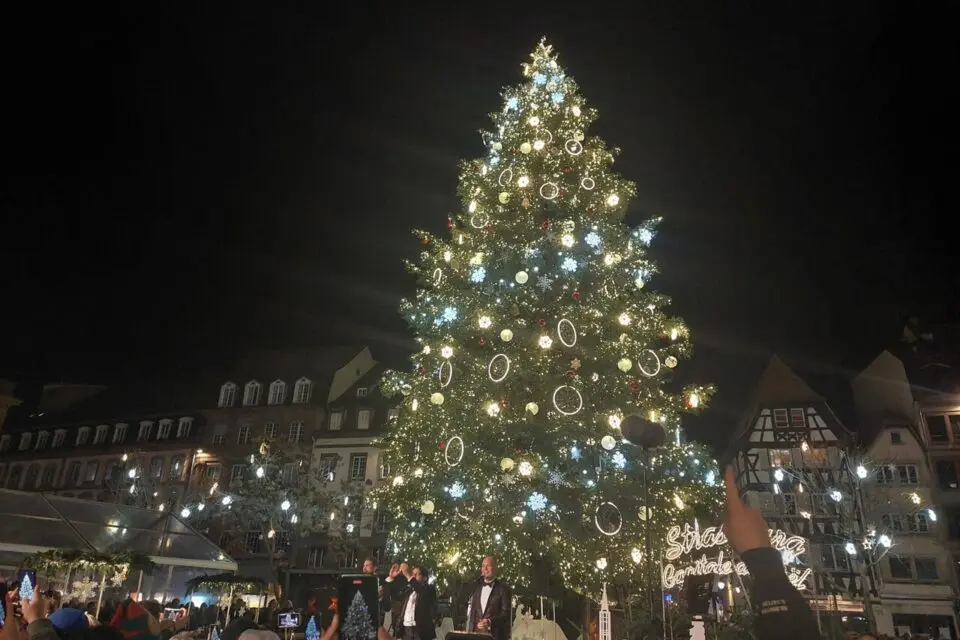
Timing is everything. The second week of December, Tuesday through Thursday, is the Goldilocks window: decorations are fully up, the tree is lit, but the heaviest tourist waves haven’t hit. Avoid the final weekend before Christmas unless you enjoy crowds as a contact sport.
Follow the Carré d’Or lights. From the Cathedral, look for the illuminated “Carré d’Or” signs leading down Rue des Orfèvres. This is one of the prettiest decorated streets in the city and leads to the underrated Carré d’Or market at Place du Temple-Neuf. Most visitors miss it entirely.
Eat at Quai des Délices, not the Cathedral market. The food stalls around the Cathedral are fine but generic. Walk five minutes to the Terrasse du Palais Rohan for the actual gourmet stuff: local producers, real Alsatian specialties, and fewer queues.
Keep or collect the cups. Vin chaud cups change design each year and have become collectors’ items. The ceramic mugs at Carré d’Or and Christkindelsmärik are nicer than the plastic ones elsewhere. Budget €2-3 per cup deposit if you’re keeping them.
Layer up properly. December in Strasbourg averages 1-6°C (34-43°F) with damp cold that cuts through thin jackets. Thermal base layers, waterproof outer shell, proper gloves (not fashion gloves), and warm footwear for cobblestones. A reusable hand warmer is worth €10 on Amazon. Bring a small backpack too. You will buy more than you planned.
Download the official app. StrasApp and the Ici Toilettes app (yes, a toilet-finding app) are both recommended by the city. The official market map is downloadable from noel.strasbourg.eu. Grab it before you arrive.
Nearby Markets & Day Trips
Strasbourg is the anchor of the Alsace Christmas market circuit, but the smaller towns nearby are arguably even more atmospheric: fewer crowds, more character.
Colmar (35 minutes by train, ~€12-15 each way) is the obvious day trip. Five markets of its own, famously photogenic half-timbered houses, and a more intimate scale than Strasbourg. Go early, as it gets packed too.
Kaysersberg (reachable by bus from Colmar) hosts a smaller, artisanal market that only runs on Advent weekends (Friday to Sunday). Traditional, authentic, and tiny. Worth combining with Colmar.
Riquewihr is a walled medieval village on the Alsace wine route with its own Christmas market. Feels like walking into a period film. Best visited as part of a wine route loop. Runs day tours from Strasbourg covering Colmar, Riquewihr, and one or two other villages.
Obernai (30 minutes by train) is less touristed than Colmar and has a charming small-town market. Good option if you want to escape the crowds entirely.
If you have a car, the Route des Vins d’Alsace connects dozens of decorated villages between Strasbourg and Colmar, each with its own small market or festive display.
History & Tradition
Strasbourg’s Christkindelsmärik was first documented in 1570, making it one of the oldest Christmas markets in Europe and the oldest in France.
The name translates roughly to “Christ Child market”. Originally, gifts were given on Christmas Day by the Christkindel (Christ Child), not by Saint Nicholas, as was the older tradition. The market was Strasbourg’s way of making this Protestant shift tangible.
The city’s position on the French-German border gives its Christmas traditions a dual identity. The food is Alsatian, a blend of French and Germanic influences. The decorations draw from both traditions. Even the language reflects it: locals use Alsatian dialect names for things (bredele, not biscuits, and Christkindel, not Père Noël).
One tradition visitors can still experience: the Meisenthal glass baubles sold at the Petite France market. Meisenthal is a glassmaking village in the Vosges mountains that has produced Christmas ornaments for over a century. Each year’s design is different and collected by locals.
They’re not cheap, but they’re the real thing.