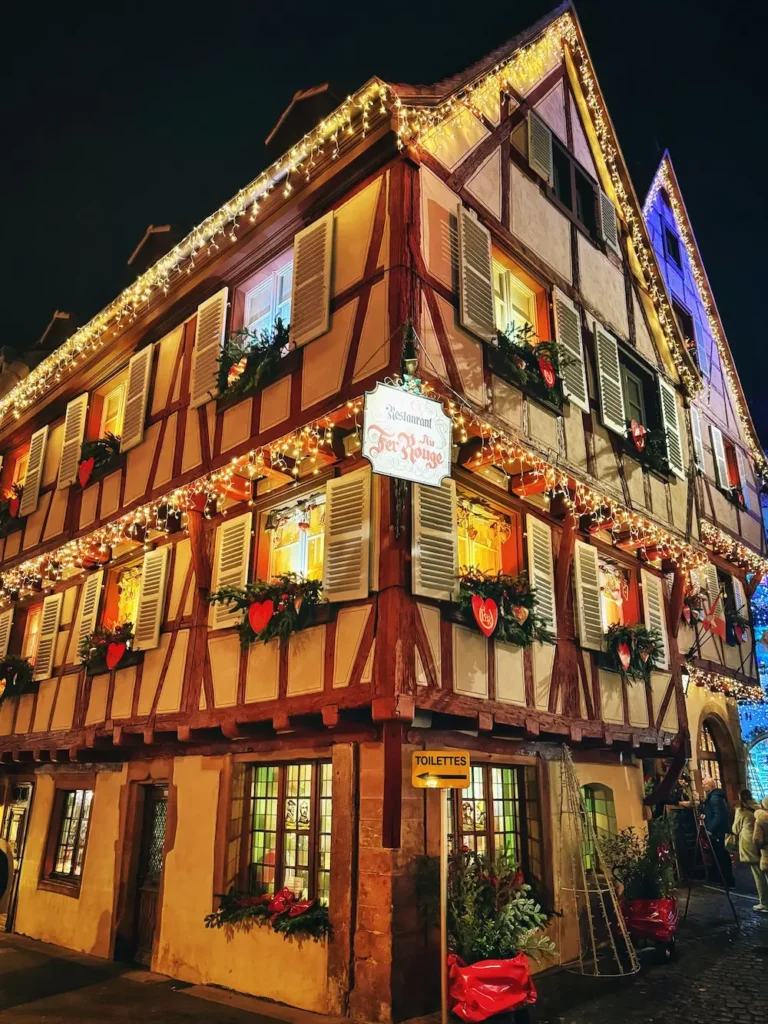
I gave Germany the Christmas market country crown a while back, and I stand by it, by the way. But I ended that guide with a confession that the SINGLE best Christmas market in Europe isn't German. It's French, actually.
So here's the guide where I show what I think about that.
The short version is that France doesn't really do Christmas markets the way Germany does, with hundreds of them spread across every region. France sort of… concentrates them.
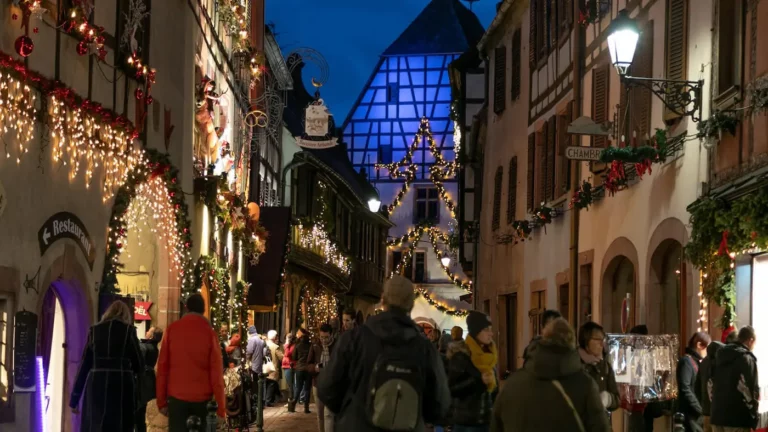
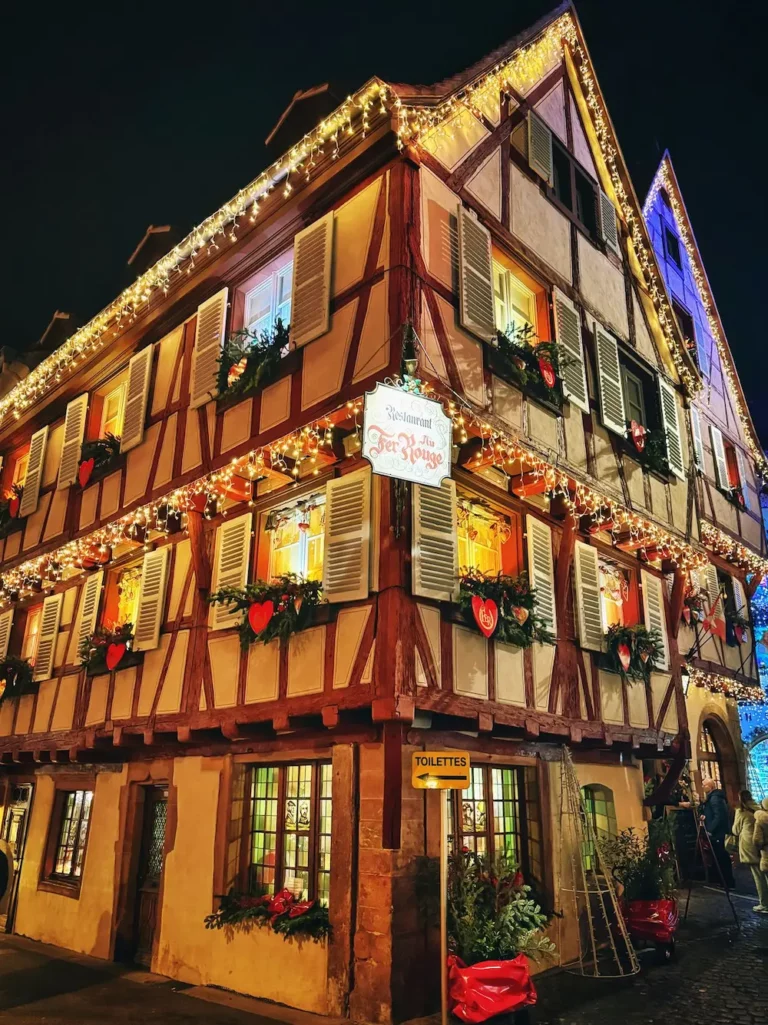
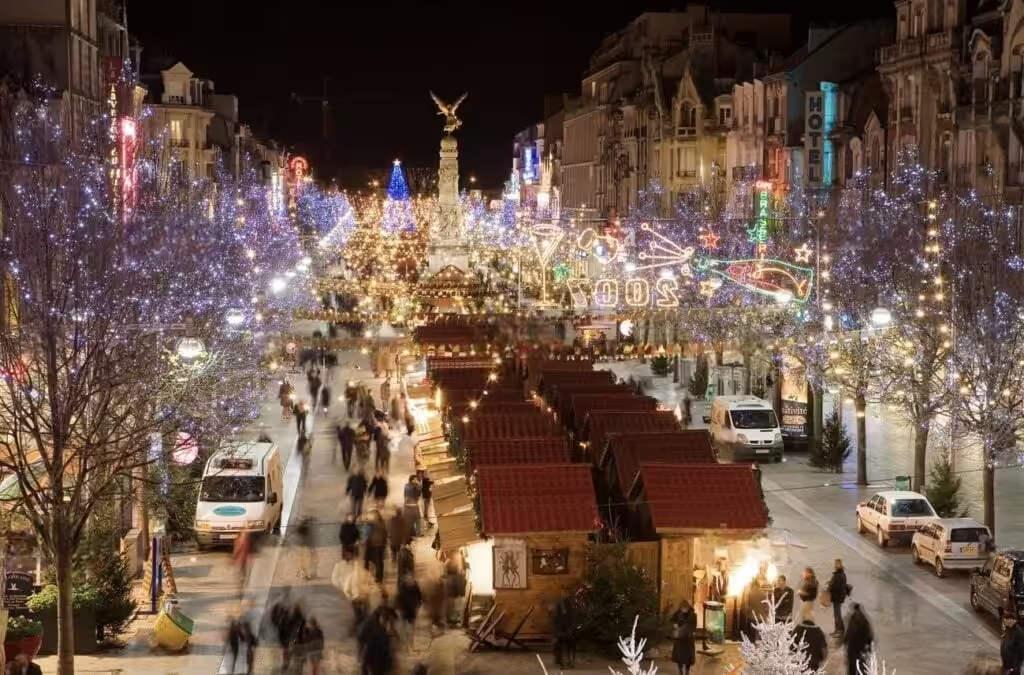
Almost everything worth the flight when it comes to France Christmas markets sits in one corner of the country, the Alsace stretch between Strasbourg and Colmar, where half-timbered towns spend six weeks under fairy lights and the whole thing is stitched together by trains that take half an hour, so you can visit them all in your trip.
I run the Christmas Market Index here at ChristmasWanders, which means I visit these markets and try to (objectively) score them on the same five measures.
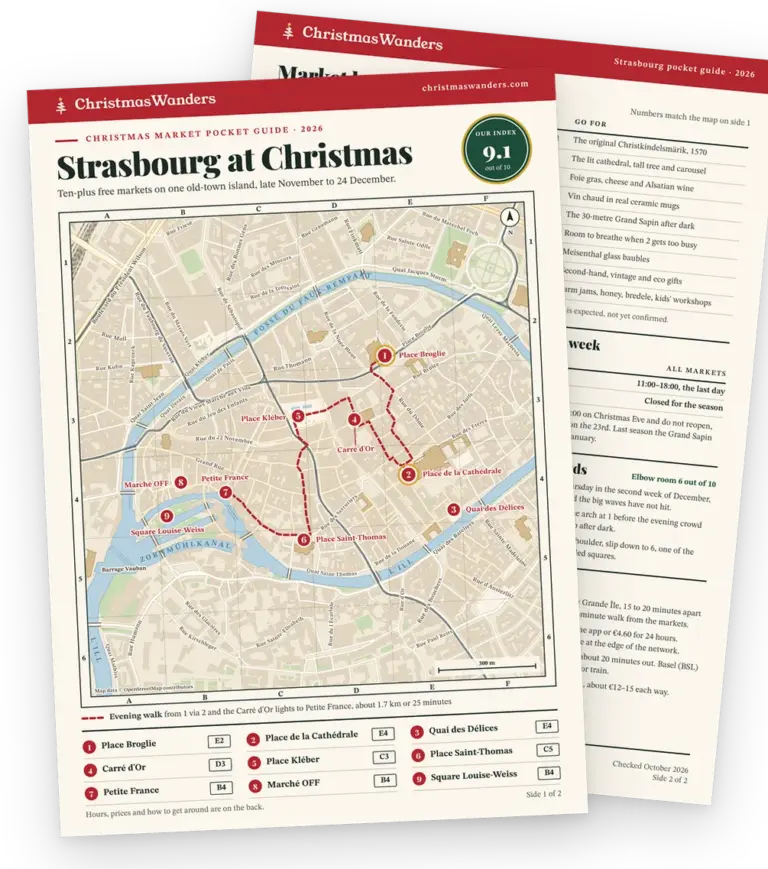
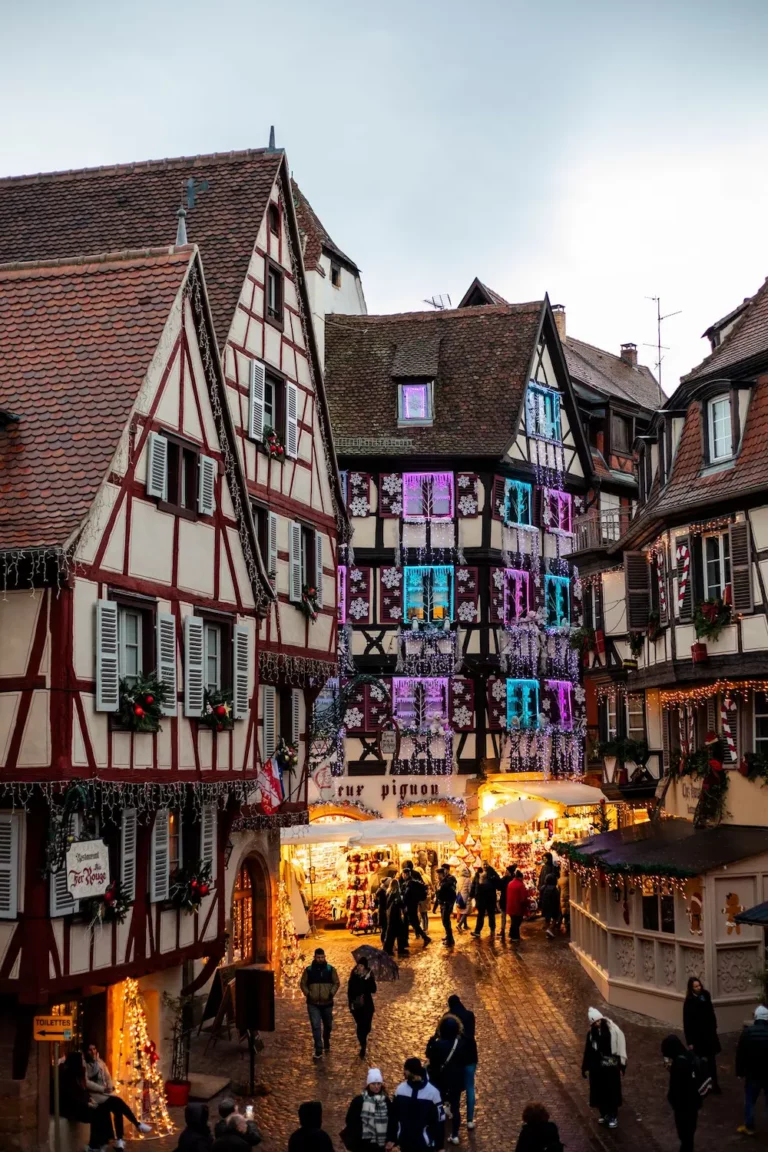
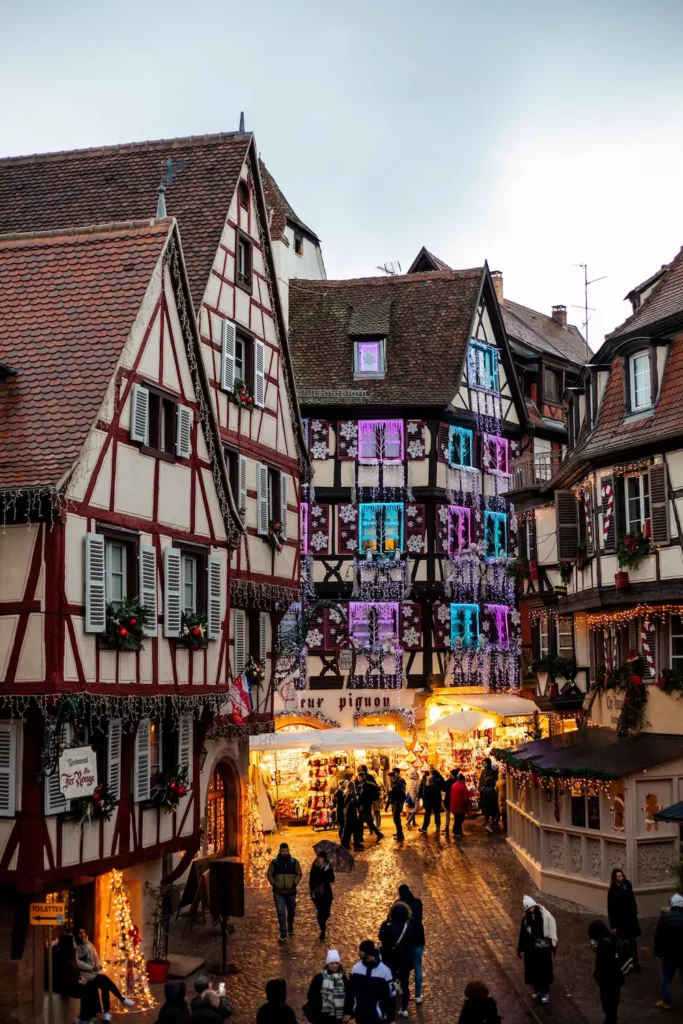
Strasbourg tops this entire index at 9.1, the current highest score. Colmar sits at 8.1 and might be the prettiest market setting in Europe (they do lack in some other ways though).
And then there's also Paris, which is a completely different conversation, and one I won’t be trapped into getting into right away.
Anyway, this is the full guide, in other words, why France, a bit of history (including the oldest-market fight I promised), how to pick yours, what to eat, which ones to skip, and a complete itinerary with the trains, the days, and the one booking deadline you can follow.
Why France? What Makes French Christmas Markets Different
The best Christmas corner of France is the least French-looking part of France.
Alsace is the bit of the country that spent centuries going back and forth between France and Germany (four times in 75 years, if anybody’s counting).
The houses are half-timbered and Germanic. The market in Strasbourg is called the Christkindelsmärik, which is a German name… because it was one when it started. Even the cookies are bredele and the little Saint-Nicolas brioches are mannala, Alsatian words that survived every border change.
And my favorite proof that this corner of France does Christmas properly…the biggest foreign crowds in Colmar are Germans and Swiss. The homeland of the Christmas market crosses the border to do its Christmas shopping here, which for a French market is its own kind of review, I think.
The drink is the other surprise. Vin chaud in Alsace is usually made with local white wine, not the anonymous red you get elsewhere, and the white version with citrus and spice is honestly better, trust me.
It surprises almost everybody the first time, too.
Then there's the food culture, and this is where France sort of pulls ahead of everyone.
Germany protects its sausage (and good for it).
France treats the market as an extension of the dinner table, where Colmar, for example, runs a whole gourmet market of nine chef-run chalets.
Strasbourg has a quay dedicated to foie gras, cheese, and wine tastings. When I score food on my official index, the French markets beat nearly everything, and it's not close (which is not surprising if you know anything about French cuisine).
Here’s also what a lot of people miss. Southern France does Christmas… a bit differently. Provence has santons (the little hand-painted nativity figures) and the thirteen desserts tradition, and the Aix-en-Provence santon fairs are lovely, in my experience of reading about them.
But they're a different animal from the mulled-wine-and-half-timber world of Alsace, and this guide is mostly the Alsace world.
A Short History of French Christmas Markets
The French Christmas market started as a piece of Reformation politics.
Strasbourg was a Protestant city in 1570, and the Protestants had decided that gifts should come from the Christkindel, the Christ Child, on Christmas Day, rather than from Saint Nicholas on December 6.
The market that year was the city's way of making that switch official. So the oldest market in France, and the one I've scored highest of anywhere, is basically a 450-year-old piece of Protestant marketing. I find that delightful, honestly.
Then the borders did what borders around here do. Strasbourg went French in 1681, German in 1871, French in 1918, German again in 1940, and French for good in 1945.
And through all of it, the Christmas customs just stayed Alsatian, which is why the region's markets feel like a dialect of German Christmas with a French accent, if that makes sense (and isn’t that like the best combo)?
About that "oldest in Europe" claim, since I promised, back when I was writing a German guide...
Dresden will tell you its Striezelmarkt has been running since 1434, and Dresden is right. Strasbourg will tell you the Christkindelsmärik has traded since 1570, longer than anywhere else in Europe, and Strasbourg is also right, sort of, depending on how you count continuous trading.
And you’ll, unsurprisingly, see both tourist offices deliver their version with utmost confidence.
Colmar, for the record, only dates its modern market to 1988. But what's old there is the raw material, like the bredele baking, the mannala brioches for Saint-Nicolas, and the half-timbered facades themselves, which residents dress up each year for a decorating competition, which is why every window looks art-directed.
And Strasbourg? It branded itself the Capital of Christmas, the Capitale de Noël.
Annoyingly, I think it actually has the receipts.
How Many Christmas Markets Are There in France?
Like for just about every country out there, I don’t think anybody knows the real number. The somewhat precise estimates for France run to "hundreds of marchés de Noël" across the country, and nobody maintains a central register (maybe I should do that). It certainly has a lower number of Christmas markets than Germany, which again, should not come as a surprise.
But what makes France different from Germany, and easier, at least in my experience, is that you don't have to choose a region, because France's Christmas geography has sort of already been chosen for you.
In Germany, Bavaria and Saxony and the Rhineland all have a claim and you naturally can’t do all of them in a single trip (or can you??).
In France, the good stuff sits in one corner, thirty minutes apart by train.
The rest of the country has markets, of course, some of them very good (Metz, we'll get to you at one point). But the region does the deciding for you, and I find that weirdly enjoyable, haha.
How to Pick Your French Christmas Market
Again, let me try and give you the framework I use when I score markets, and then a bit of information on each of those. The question that matters is the same as it’s always been… What do you want the trip to be?
|
If you want... |
Go to |
Why |
|
The best market in Europe, full stop |
Strasbourg (9.1) |
Ten markets across one medieval old town, a cathedral that stops you mid-sentence, and the 1570 pedigree. |
|
The postcard version |
Colmar (8.1) |
Six themed markets, canals, half-timbered everything. The most beautiful market setting in Europe, in my opinion. |
|
The quiet village |
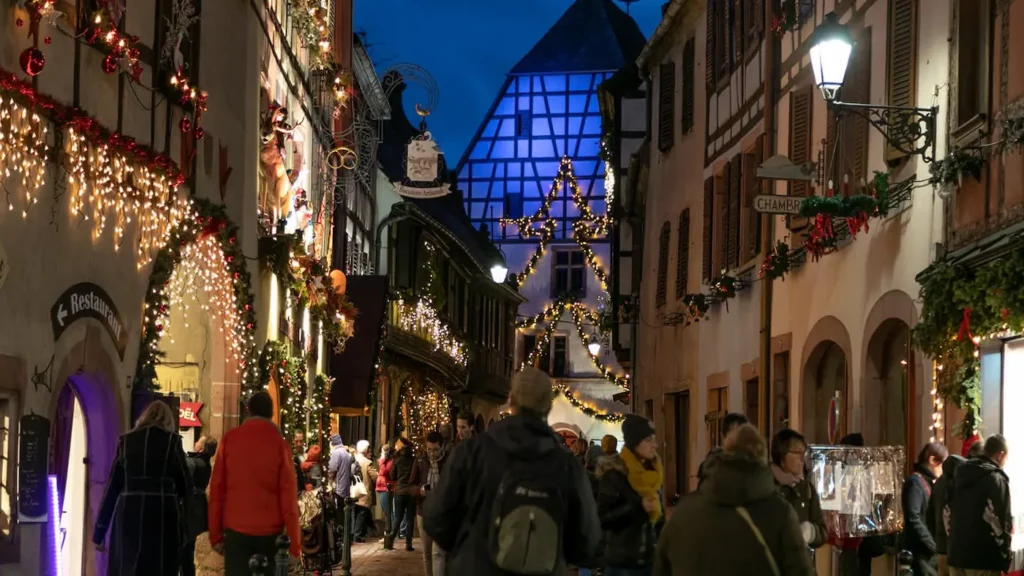
Kaysersberg (7.6) |
Medieval wine village, artisan-vetted stalls, four Advent weekends only. The short calendar keeps it humane. |
|
The storybook day trip |
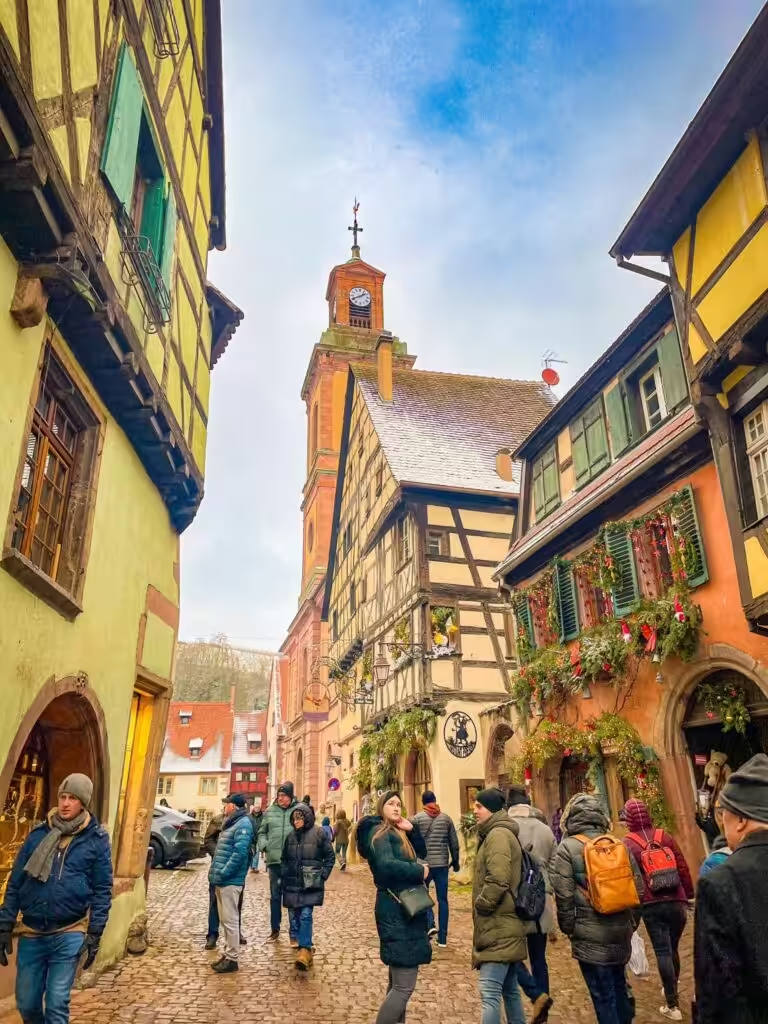
Riquewihr |
Walled wine village, not scored yet, on my list. Looks built for a Christmas film set because it basically is one. |
|
A big city, already there |
Paris (Tuileries) |
Go with expectations managed. It's more funfair than craft market, and that's fine if you know it going in. |
|
The sleeper city |
Metz |
Two million visitors a season, a lantern trail, and a floating Santa sleigh on the Moselle. Not scored yet, and I keep hearing about it. |
One thing before we go on. This guide can only carry so much, and the individual full reviews simply need to carry all the other information like dates, hours, hotels, every price I've checked, the whole scoring breakdown etc.
Every French market I've visited and scored has its own page, and I add new ones with every season. Browse this page (and the rest of the website, if you got time) honestly.
It's the better tool than this guide could likely ever be.
What You Must Eat and Drink at a French Christmas Market
Eating might be the entire point of choosing France over its neighbors, so let me try and walk you through it properly.
Order the white vin chaud, first, of course. I said it above and I'll say it here again.
Alsace mulls its white wine, with citrus and spice, and it's better than the red everyone defaults to, trust me.
Some stalls in Strasbourg carry twenty-plus flavor variations (don't ask me how many I tried). Your cup will likely cost about €3.50–5 with a small deposit, and the ceramic mugs at the Carré d'Or market are nicer than the plastic ones elsewhere, in case you're building a shelf (like yours truly).
Then you have the crémant-and-oysters move. Colmar's gourmet market runs nine chalets operated by actual chefs, and the €18 set of tarte flambée, vin chaud, and a glass of crémant d'Alsace is the best deal in the region, by far.
Crémant is the local sparkling wine, and drinking it beside a Ferris wheel in a medieval town is a very Alsatian evening, in the best way possible.
Tarte flambée is the anchor food. Thin blistered flatbread with crème fraîche, onions, and lardons, around €8–12, is another proper French Christmas market meal.
If you've done the German markets in the past (or at least read about them), this is France's answer to the bratwurst, and it's a better answer. There, I said it, okay??!
Then of course, you got the Bredele, the cookie ritual.
Alsace bakes dozens of varieties of little Advent biscuits (cinnamon, star anise, citrus, nuts), sold loose by weight, and every household has a tin situation going by mid-December.
You also have mannala in early December. The little men are sweet brioches baked for Saint-Nicolas on December 6. They are a part snack, part tradition, and if your trip lands on that weekend you'll see queues of people lining up to snatch them.
The rest of the roster and btw, they all matter, include a fresh kouglof from a real bakery, Munster cheese with some baguette, foie gras and charcuterie from the terroir market in Colmar (that's where the Christmas hamper gets filled), and roasted chestnuts because it's December and your hands are cold, and roasted chestnuts rock!
That’s about it!
Ooops, I almost forgot one very important thing…the Caves de Noël. Around Colmar, working winemakers open their cellars for Advent tastings, and a flight of Riesling in a 600-year-old cellar (that's the Hospices in Strasbourg) beats any souvenir bottle.
Alsace is a serious wine region that doesn't get enough international attention, in my opinion.
The Ones to Skip (and the Underrated Ones Worth the Detour)
Hmm, let's do Paris first, because Paris is where the expectations need the most managing.
The Champs-Élysées market in Paris doesn't exist anymore, so cross it off whatever list you're working from. The market moved to the Tuileries in 2018 after a dispute with the city, and the Tuileries version is where it currently lives.
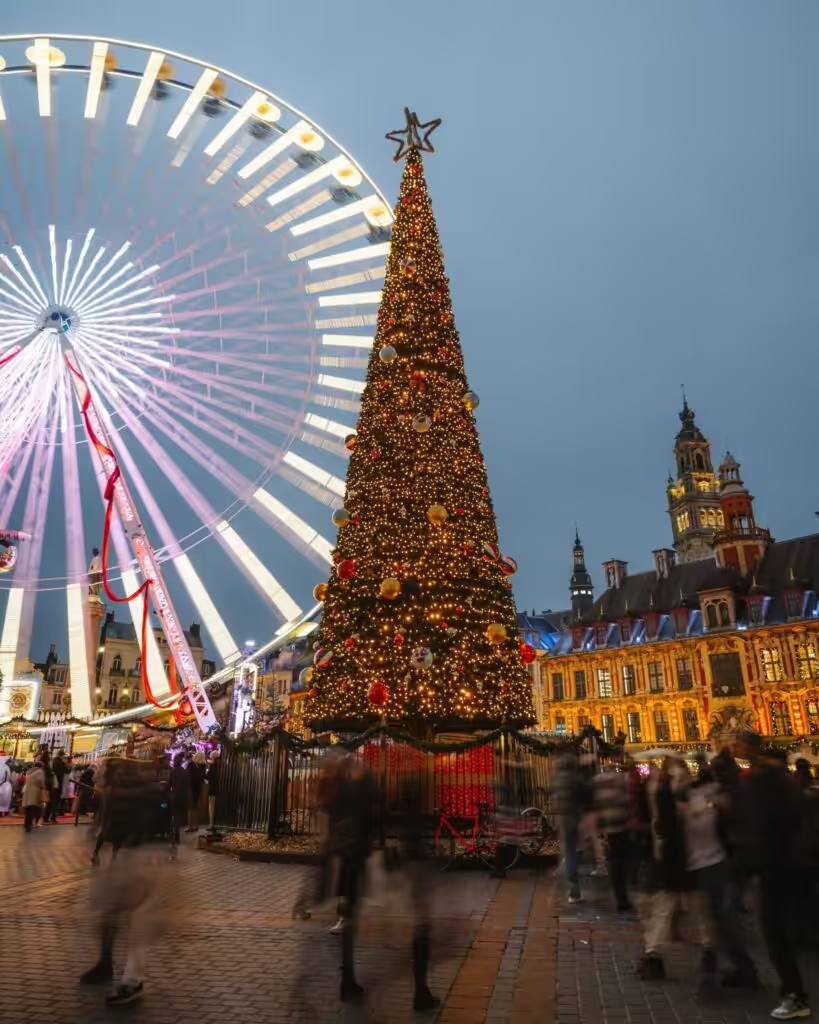
The Tuileries market, La Magie de Noël, is the biggest in Paris proper, and here's what I think about it. It's really a Christmas fair and not really a craft market, like the traditional German (or Alsatian) markets.
It has things like rides, funhouses, a Ferris wheel, a champagne igloo (a champagne igloo!). Kids will love it, of course, but if you go expecting Alsatian craft stalls you'll be disappointed, so go with kids, or go with the right expectations, or go for one vin chaud between the Louvre and the Concorde and just enjoy it for whatever it is.
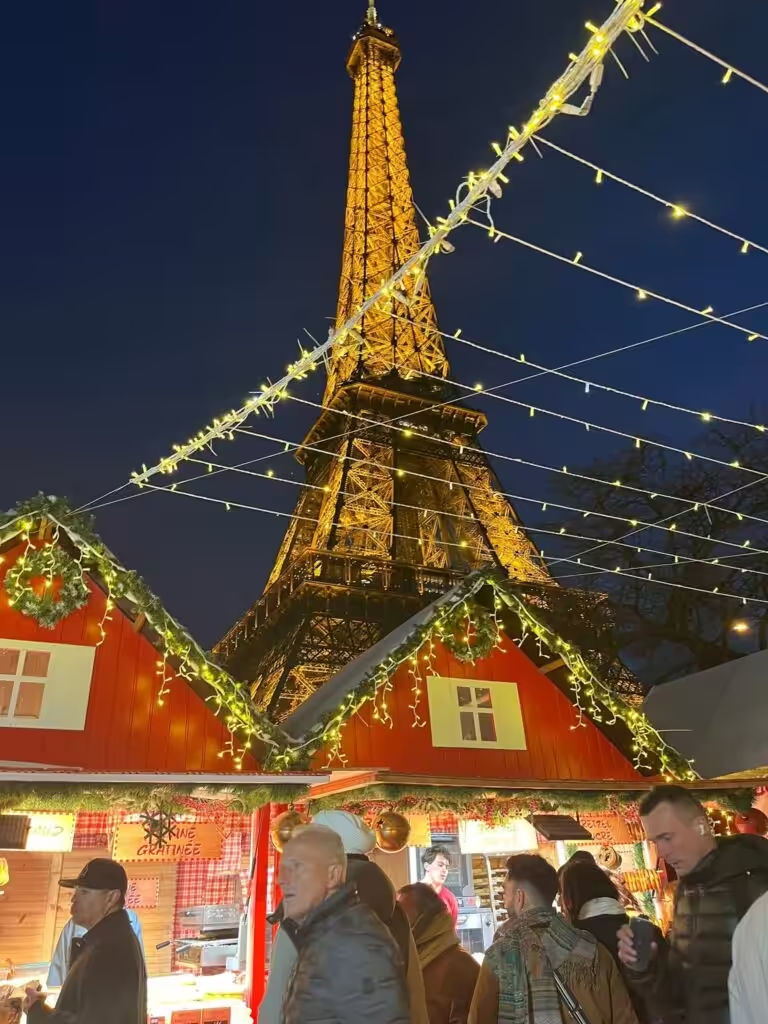
I'd also skip the Eiffel Tower market entirely. The streets around the tower are already an obstacle course on a normal day because of all of the tourists, and the market adds stalls to a space that I think has no room for them, mostly selling the same keychains you can find in any European city.
The tower is, of course, the attraction, and if you are in Paris, it’s unlikely you’ll miss it. But Paris is not a big Christmas market destination for this reason, among some others, of course.
As for the underrated spots, I think I got some good news, because the underrated list is a bit substantial.
La Défense Christmas market in Paris is better than its reputation, and its reputation is that it’s "a market in a business district, why would I."
About 250 chalets at the foot of the Grande Arche, cheaper than the central markets, a proper ice rink, and if you go on a weekday between 2 and 5pm, when the office crowd is back at their desks, the market can be very calm and enjoyable.
And naturally, you'd never stumble into La Défense, which is exactly why you can move around in it a lot easier than the one at the Eiffel tower.
On the other hand, Notre-Dame's little market deserves better than it gets too. It's small, a circle of artisan stalls in the Square René-Viviani, and this is only the second Advent since the cathedral reopened after the fire. A market in front of an 860-year-old cathedral that nearly didn't make it… the city earned that scene, for sure.
Another underrated move is using Colmar as an overnight stay when doing French Christmas, and I mean that. Most people day-trip this place, where they are in by late morning, out before the lights settle, and that’s it.
If you sleep in town, you will get the two hours a lot of people never see. I absolutely loved the empty 9:30 lanes of Petite Venise when the bakers pull the first kouglof, and the town at night with the day-trippers gone.
Metz, if you're on the eastern side of the country, is the sleeper city. Two million visitors a season and somehow it stays off most international lists. A lantern trail, medieval squares, and Santa's floating sleigh on the Moselle (the Moselle!).
You should also consider going for the wine villages via the Christmas shuttle from Colmar. Places like Eguisheim, Riquewihr, Ribeauvillé with its two medieval weekends of spit-roasts and minstrels are absolutely amazing. They are smaller, older-feeling, and each one is somebody's favorite village in the country, which is a very Alsatian thing for a region to be able to say.
Getting Between Them: Alsace Is a 30-Minute Problem
French Christmas market travel is embarrassingly easy, because a lot of it sits on one short train line.
|
Pairing |
Time |
|
Paris → Strasbourg (TGV) |
1 hr 45, from €25 booked early |
|
Strasbourg → Colmar (TER) |
30 min, ~€15 |
|
Colmar → Kaysersberg |
25 min by bus / shuttle |
|
Colmar → Basel |
~50 min, ~€17 |
|
Strasbourg → Basel |
1 hr 20 |
|
Strasbourg → Stuttgart (Germany) |
1 hr 20 |
|
Paris → Colmar (direct TGV) |
~2½ hrs, from ~€50 |
|
Paris → Metz (TGV) |
a short hop |
The Full Tour: A France Christmas Market Itinerary
The one trip I’d recommend to everyone when they ask me to just tell them what to do. It’s a 6-day long trip and one (absolutely beautiful) region.
Day 1 (Tuesday) - Paris. Arrive, drop bags, and spend the evening on the Paris that is actually a Christmas experience with the Galeries Lafayette windows and tree, the lights, and a slow walk past Notre-Dame, lit and reopened. If you have energy, one loop of the Tuileries market for the scene and a vin chaud, now that you know what it is. The real French Christmas actually starts tomorrow.
Day 2 (Wednesday) - TGV to Strasbourg (1 hr 45). Check in near the old town, then an easy first loop with the Petite France lanes, a first white vin chaud at Place Benjamin-Zix (the Meisenthal glass baubles are here), and the Christkindelsmärik arch at Place Broglie before the evening crowds arrive.
Day 3 (Thursday) - Strasbourg, fully and properly. The cathedral first thing, before the queues, then the Quai des Délices for lunch (foie gras, cheese, this is the market where locals actually eat), the Carré d'Or market with its ceramic mugs and the lit streets down Rue des Orfèvres, and Place Saint-Thomas whenever the crowds get loud. At dusk, the 30-metre Grand Sapin on Place Kléber. If it rains, the wine cellar at the Hospices, 600 years old, is the best bad-weather plan in the city.
Day 4 (Friday) - train to Colmar (30 min). Check in, then do what the day-trippers never do, which is to be in Petite Venise at 9:30 the next morning, and be in the squares at dusk tonight. The lights climb the half-timbered facades from about 16:30, and the Koïfhus craft market (15th-century customs house, heated, actual makers) is the shopping. Dinner at the gourmet market, the €18 chef-chalet set. Sleep in town! Khm, khm… that's not a suggestion.
Day 5 (Saturday) - the villages, by Navette. Yes, Saturday, and yes, even though I told you Colmar's Saturdays push 150,000 people. That's exactly why you won't be there. Take the weekend shuttle loop out to Kaysersberg (the connoisseurs' village, the artisan charter, the castle ruin) and stay for dusk, because sunset is around 16:30 and the half-timbered facades lit up against the night is the postcard. Work in Riquewihr or Ribeauvillé depending on your dates, and come back to Colmar for a late dinner when the coaches have gone.
Day 6 (Sunday) - Colmar morning, then home. The terroir market on Place Jeanne d'Arc for the hamper (foie gras, cheese, schnapps, the producers talk you through all of it), a final white vin chaud, and then either the TGV back to Paris (about 2½ hours) or the 50-minute run to Basel and a flight home from there. The Basel exit is the trick a lot of people will naturally miss.
The whole route is free to enter everywhere, and the eating does most of the damage to your wallet. An Alsace weekend for two runs about €420–830 all-in, and adding Colmar and the villages adds maybe €60–110 on top of a Strasbourg base.
December hotel prices in Strasbourg have gotten silly too (€276 a night on average), so staying in Colmar is often the value play now, which is a sentence I did not expect to write.
Are there tours that do this for you?
Yes, a few different kinds, here’s some more info:
-
The minivan wine-road tours from Strasbourg or Colmar are the best of them. A full-day loop through Eguisheim, Riquewihr, and Kaysersberg with someone else driving, around €80–120.
-
Walking tours are worth one evening in each city, especially the food tours in Strasbourg, where a guide shows you the tarte flambée and tells you what a mannala is before you have to ask.
-
River cruises exist on the Rhine and do call at the region, but I'll give you the same honest take as the Germany guide: they hand you the market in daylight windows, and these markets are at their best after dark. Cruising is for travelers who want December handled for them (nothing wrong with that, too). The trains, however, let you stay out until the lights go off.
-
And since we're free to talk about the neighbors too… Strasbourg is 1 hr 20 from Stuttgart, just across the river from Kehl in Germany, and about an hour from Baden-Baden, the Black Forest spa town that does a very elegant little market of its own. The three-borders day trip from Colmar (France, Germany, Switzerland in one loop) is also a very real thing you can book. If you want the grand tour, pairing Alsace with Bavaria is, in my opinion, the best two-country Christmas run there is.
So, Does France Do It Best?
I promised I'd show my work, so here's the ledger.
France takes the single best market in Europe. France also takes the most beautiful setting (Colmar, and it's not a close call), the quietest authentic version (Kaysersberg, four weekends a year and no 'made in China' on the stalls), and the food, which I'll defend against any country's sausage, however legally protected it may be.
Germany keeps the depth, though.
But here's the thing. If you gave me one Christmas market trip for the rest of my life, one only, I'd fly into Paris, take the 1 hr 45 TGV east, and I wouldn't tell anyone where I was going. I'd eat tarte flambée at the chef chalets, drink white vin chaud out of a ceramic mug, stand in an empty lane in Petite Venise at 9:30 in the morning, and watch the lights climb the timbers at half past four, because somebody has to.
Pick your region, go deep, and come back next year for the other one. The markets have been multiplying since 1570, and everything I've visited and reviewed is on this page, growing every season.