Disclosure: This blog is reader-supported, and some posts contain affiliate links. If you make a booking, I may earn a small commission, at no extra cost to you. Thank you for keeping me writing and doing what I love!
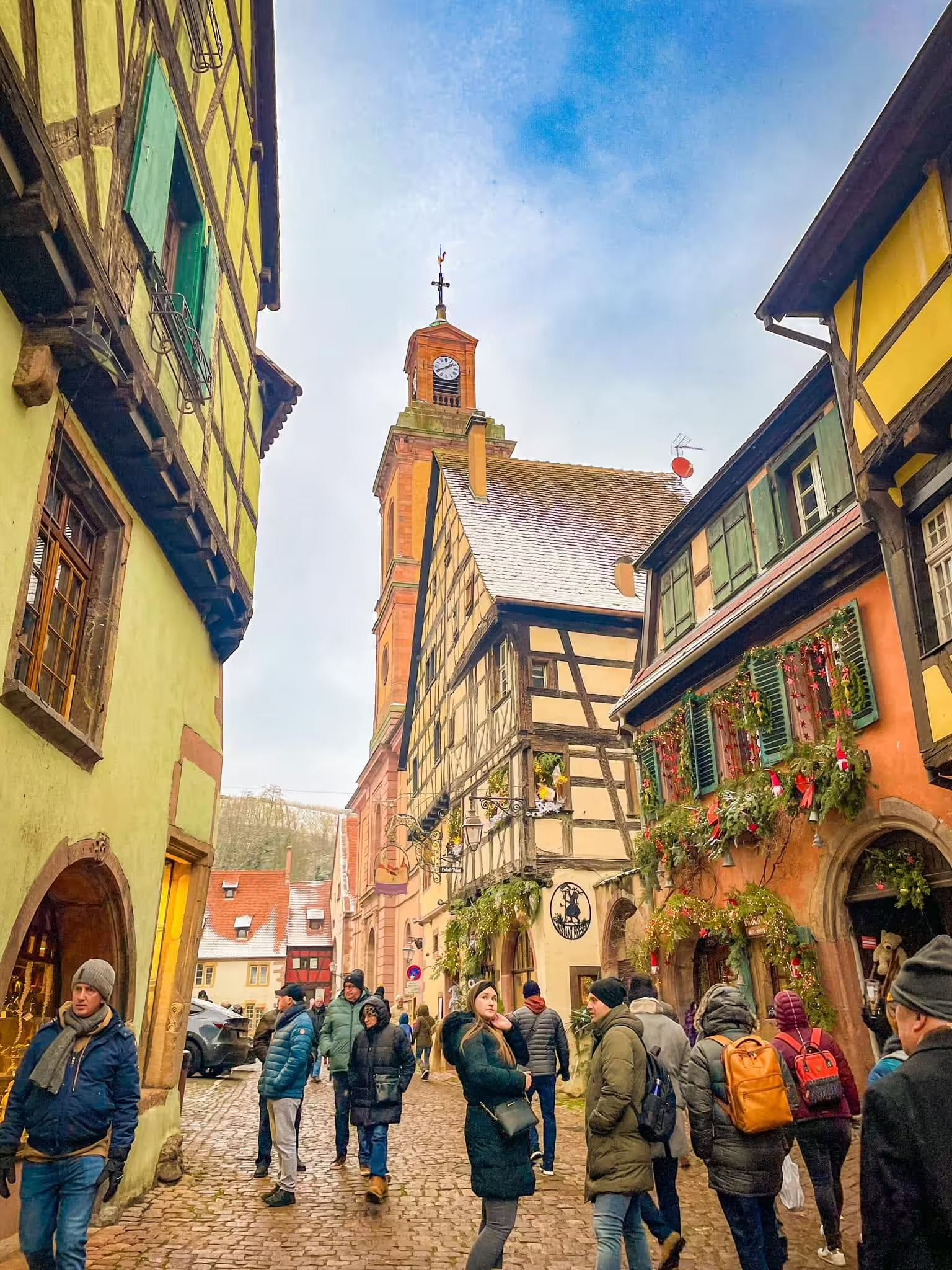
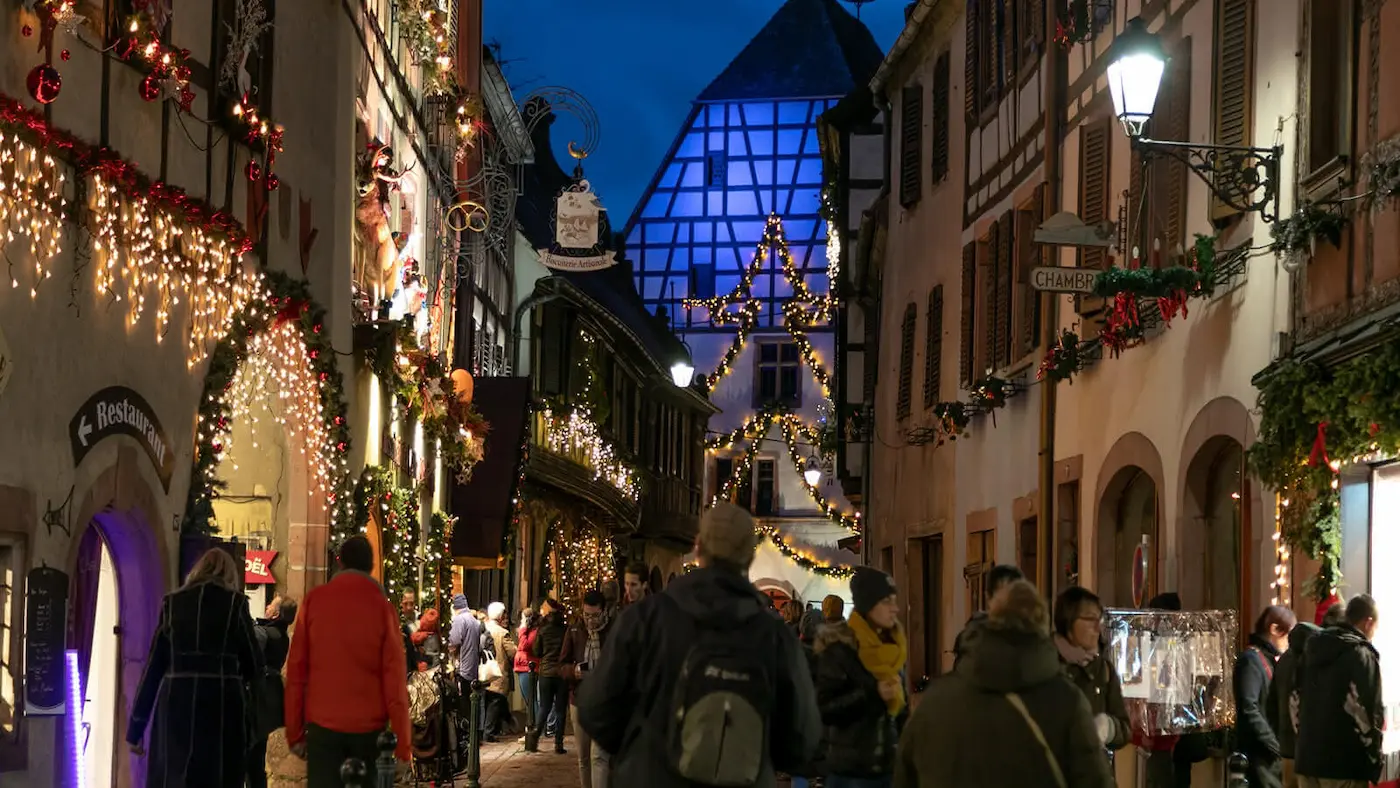
Picture the Alsace Christmas market of your imagination. Half-timbered houses tilted with age, a ruined castle on the hill, vines climbing the slopes behind, and the smell of mulled wine drifting down a cobbled lane.
That’s Kaysersberg.
And the catch that makes it better, not worse, is that its Christmas market only opens four weekends a year and it’s just the four weekends of Advent, and then it packs away until next December.
In a region that does Christmas bigger and louder than almost anywhere in France, Kaysersberg does it small, curated, and honestly… magical.
That’s exactly why I keep circling back to it in my daydreams.
Why the Kaysersberg Christmas Market?
Alsace is the heartland of French Christmas markets, where Strasbourg claims the oldest, Colmar goes the flashiest, and little villages up and down the wine route each throw their own. So why Kaysersberg?
Because in 2017, the French voted it their Village préféré des Français (their favorite village in the whole country) and it’s not hard to see why.
It’s a medieval wine town of fewer than 3,000 souls, wedged between the Vosges foothills and the vineyards, with a castle ruin watching over it from above.
It looks like a Christmas card before anyone puts up a single light.
What sets the market apart is a choice the tourism office makes on purpose which is to stay small, stay brief, and keep the mass-produced imports out.
They lean into it openly. Their line is that you “won’t find any ‘made in China’ here,” and they back it with a vetting charter that hand-picks every exhibitor, with artisans drafted in from all over France.
That changes the whole equation for me. When you look to buy something and you end up chatting to the person who actually made the thing in their hands, that is a much better feeling than buying mass produced products at a bunch of other Christmas markets we reviewed.
How to Get to Kaysersberg
Kaysersberg sits about 12 km (15 minutes) northwest of Colmar, right on the Alsace Wine Route. That proximity to Colmar is your friend.
- By train: the nearest TGV station is Colmar, with fast links from Paris, Strasbourg, and Basel. From Colmar, it’s a short bus or taxi ride up to Kaysersberg.
- By car: driving the wine route from Colmar through Riquewihr and Kaysersberg is half the fun: vines on one side, half-timbered villages on the other. Just know that parking in Kaysersberg on a market weekend gets tight fast.
- By plane: the closest airports are Strasbourg (SXB) and Basel-Mulhouse (BSL/EAP), both about an hour-ish away.
- The smart move, the Navette de Noël: a dedicated Christmas shuttle links Colmar ↔ Kaysersberg ↔ Riquewihr ↔ Eguisheim, so you can leave the car behind and hop between markets without fighting for a parking spot. If you’re market-hopping, this is the way.
Where to Stay (Kaysersberg or Colmar?)
Stay in Kaysersberg itself if you can. The town is tiny and accommodation is limited, but sleeping there means you get the place almost to yourself once the day-trippers clear out. And that’s honestly the magic you came for. The catch is that with only four market weekends a year, hotels fill months ahead, so you need to book early. The boutique Hôtel KLE, an old winemaker’s house done up with clean modern design, is the in-town option that gets recommended again and again.
Base in Colmar if you want more choice. Colmar has far more hotels, restaurants, and its own five markets on the doorstep, and it’s only ~10 minutes from Kaysersberg. You might miss the empty-at-night village vibe which is a fair swap if you’re planning a broader Alsace market tour.
My advice is that if the romance of the quiet medieval village is why you’re going, fight for a room in Kaysersberg. If you’re planning a broader Alsace Christmas market tour and don’t mind a short drive, Colmar is the practical base.
What to Eat & Drink (The Star of the Show)
Okay, here’s where a small Alsace market really earns its keep.
The Kaysersberg market is an excuse to stand outside in the cold with a steaming cup in your hands and eat your way through winter comfort food. Here’s what you can’t skip:
- Vin chaud (mulled wine): the anchor of every Alsace market, often made with local wine rather than anonymous red. Warm, spiced, exactly what your hands need at 4pm in December.
- Bredalas (bredle): the small spiced bredle biscuits that are the taste of an Alsatian Christmas: cinnamon, star anise, citrus, nuts, sometimes iced. Buy a mixed bag and snack as you stroll.
- Mannala: sweet bready “little men” traditionally baked for St. Nicholas’ Day (early December). Part snack, part tradition.
- Foie gras & Munster: Alsace does both, proudly. A slice of foie gras on fresh bread, or pungent Munster cheese with a hunk of baguette, is peak winter eating.
- Tarte flambée (flammekueche): thin, blistered flatbread with crème fraîche, onions, and bacon. Cheap, hot, and the best thing to eat standing up.
- Roasted chestnuts: the universal Christmas-market smell, done well here.
- Local Alsace wine. And don’t sleep on this. Kaysersberg sits in one of Alsace’s finest wine areas, and pinot gris is a local specialty. A glass of Kaysersberg-grown riesling, gewurztraminer, or pinot gris at a market stall is genuinely better wine than you’ll get at most European Christmas markets.
Rough ballpark on what to expect to pay (in euros):
- Mulled wine: €4–6
- A bag of bredle: €5–8
- Mannala: €2–4
- Tarte flambée: €6–9
- Roasted chestnuts: €4–6
- A glass of Alsace wine: €4–7
Reasonably priced for Alsace and the quality of what you’re eating is a clear step up from the standard bratwurst-and-crepe circuit.
What to Buy (Skip the Souvenir Tat)
Because every exhibitor in Kaysersberg is vetted, what’s on the stalls is what someone actually made. You’ll find Faline’s fabric hearts at Le Grenier Enchanté, a proper little shop right in Kaysersberg, alongside santons (hand-painted Provençal nativity figurines) from Santons et Crèches de Provence down south, hand-blown glass ornaments, ceramics, carved wood, and couronnes de l’Avent (Advent wreaths) from the local florists.
Some favorite finds worth seeking out:
- Fabric hearts and textiles: Faline’s work is the local signature.
- Santons: the traditional clay nativity figures, a southern France craft that travels beautifully.
- Hand-blown glass ornaments: delicate, colorful, genuinely lovely on a tree.
- Advent wreaths: made fresh by the local florists. The smell alone is worth it.
- Local wine & eaux-de-vie: take a bottle of Kaysersberg pinot gris home. It’s the real souvenir.
My advice is to buy one or two things you actually love rather than carting home a bag of “stuff.” These are real makers, and your euros go to real people, which, in a region that gets a lot of December tourists, matters more than it sounds.
Things to Do Beyond the Market (Kaysersberg Itself)
The town is small, and it repays slow exploring and if I had to point you to one thing beyond the stalls, it would be the Schlossberg at golden hour. But here’s the full list:
- Église Sainte-Croix (Holy Cross Church): the oldest parts date to the 13th century, with a carved altar from 1518. It’s also where the market’s Advent concerts are held each December, a tradition run by the volunteer Association Noël à Kaysersberg, who also stage a themed Christmas exhibition each year. Check the official program for the current season’s concert dates and exhibition theme.
- Château de Kaysersberg (the Schlossberg): the ruined 13th-century castle on the hill above town. Climb up for the panorama over the rooftops, the vines, and the Vosges. Free, and the best photo in town.
- The fortified bridge (1501): a medieval bridge straddling the River Weiss, with the castle rising behind it. One of those scenes that doesn’t look real.
- The Albert Schweitzer museum: Kaysersberg is the birthplace of Albert Schweitzer, the theologian, organist, and jungle doctor who won the 1952 Nobel Peace Prize. A small but fascinating stop if you have an hour.
- Walk the wine route: the Kaysersberg valley holds seven Alsace Grands Crus. A short vineyard walk above town puts you among the vines with the castle behind you. Do it at golden hour before the market opens.
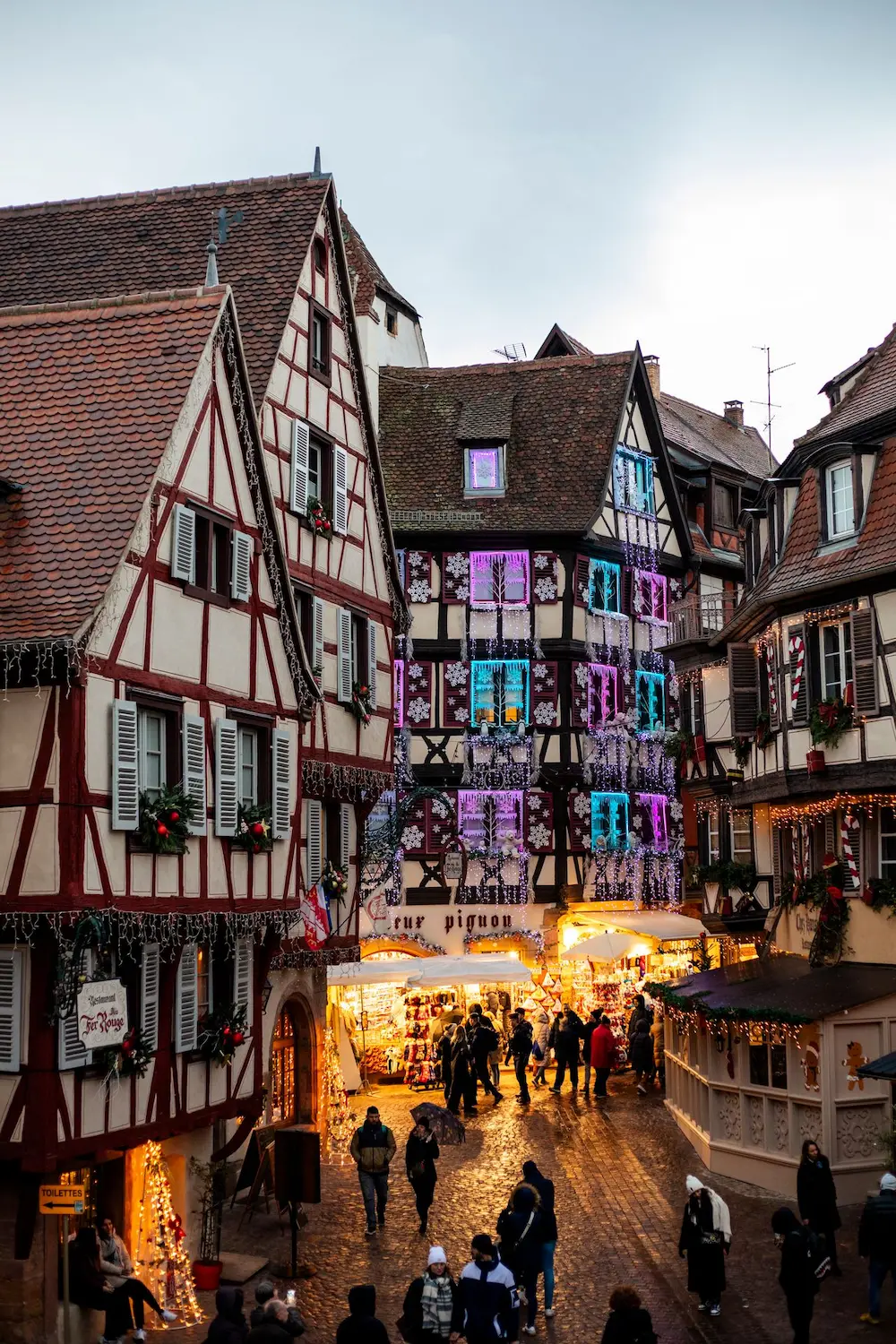
Honestly, the best “activity” in Kaysersberg is just wandering. The whole medieval center gets decorated and lit for Advent, and once the day-trippers leave, the lanes go quiet and the half-timbered facades glow. That’s the moment you came for.
Pair It With the Other Alsace Christmas Markets
Since Kaysersberg is tiny, and its market is only four weekend, the smart play is to use Kaysersberg as the charming, authentic anchor and hop the other markets around it. They’re all within a short drive (or the Navette de Noël):
- Colmar’s markets (~10 km): Colmar runs five Christmas markets, including the children’s market in Petite Venise, the gourmet market at Montagne Verte, and the one at the Koifhus. Bigger, flashier, more crowds which is the perfect contrast to Kaysersberg’s intimacy.
- Riquewihr (next door): the “Pearl of the vineyard,” a staggeringly pretty walled wine village with its own small market. Pair it with Kaysersberg in a single day, easily.
- Eguisheim (20 min south): another concentric-circle village, voted Village préféré in 2013, with an intimate market of its own. If you loved Kaysersberg, you’ll love this one too.
- The smaller valley markets: if you’re already in the Kaysersberg valley, catch Ammerschwihr’s Les lumières de l’Avent (which opens the season with a lantern walk and a visit from Saint Nicholas) and Orbey’s Marché de Noël des Orbelais, where the local specialty is a Pays Welche spirit called Ogey which is something you won’t find at any other market.
And again, take the Navette de Noël to link Colmar, Kaysersberg, Riquewihr, and Eguisheim car-free. It’s the calm, eco-friendly way to market-hop, and it skips the worst of the December parking chaos.
Practical Tips for Visiting
A few things worth knowing before you go:
It’s only open four weekends so book early
This is the big one. With just four market weekends a year, accommodation in and around Kaysersberg gets snapped up months ahead. If you want to sleep in the village itself, start looking the moment you decide to go. Don’t say I didn’t warn you.
Go at dusk
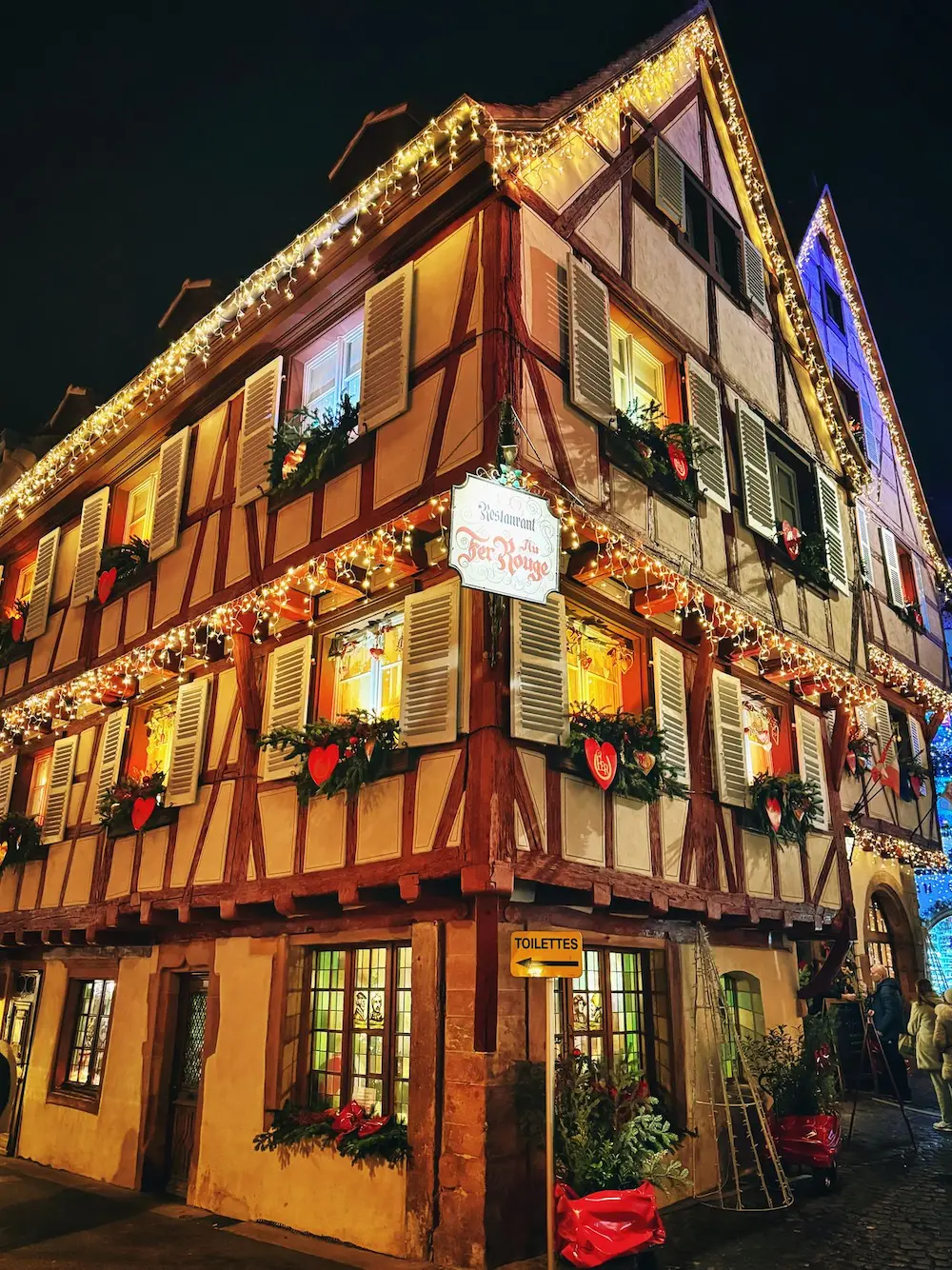
The market is open from 10am, and daytime is lovely and quiet for browsing. But the illuminations switch on as it gets dark (sunset in December is around 4:30pm), and the half-timbered facades lit up against the night is the whole postcard. Time your visit to catch the transition where the late afternoon into evening is the sweet spot.
Dress for the cold
Alsace in December sits around 1–6°C (34–43°F), and it regularly dips below freezing once the sun goes down. Layers, a warm coat, gloves, a scarf, and shoes with grip (those cobbles get slippery) are non-negotiable. You’ll be standing outside for hours.
Stay overnight if you possibly can
The day-trip crowds thin dramatically by late evening, and the town you get after they leave is completely different from the one at 2pm. Quiet, lit, cold, magical. If you can, stay one night. It’s the difference between “we visited a market” and “we experienced Kaysersberg.”
Bring both cash and card
Most stalls take cards now, but a few of the smaller artisan and food stalls are cash-only. Grab some euros when you land and you’re covered either way.
Go early on weekends
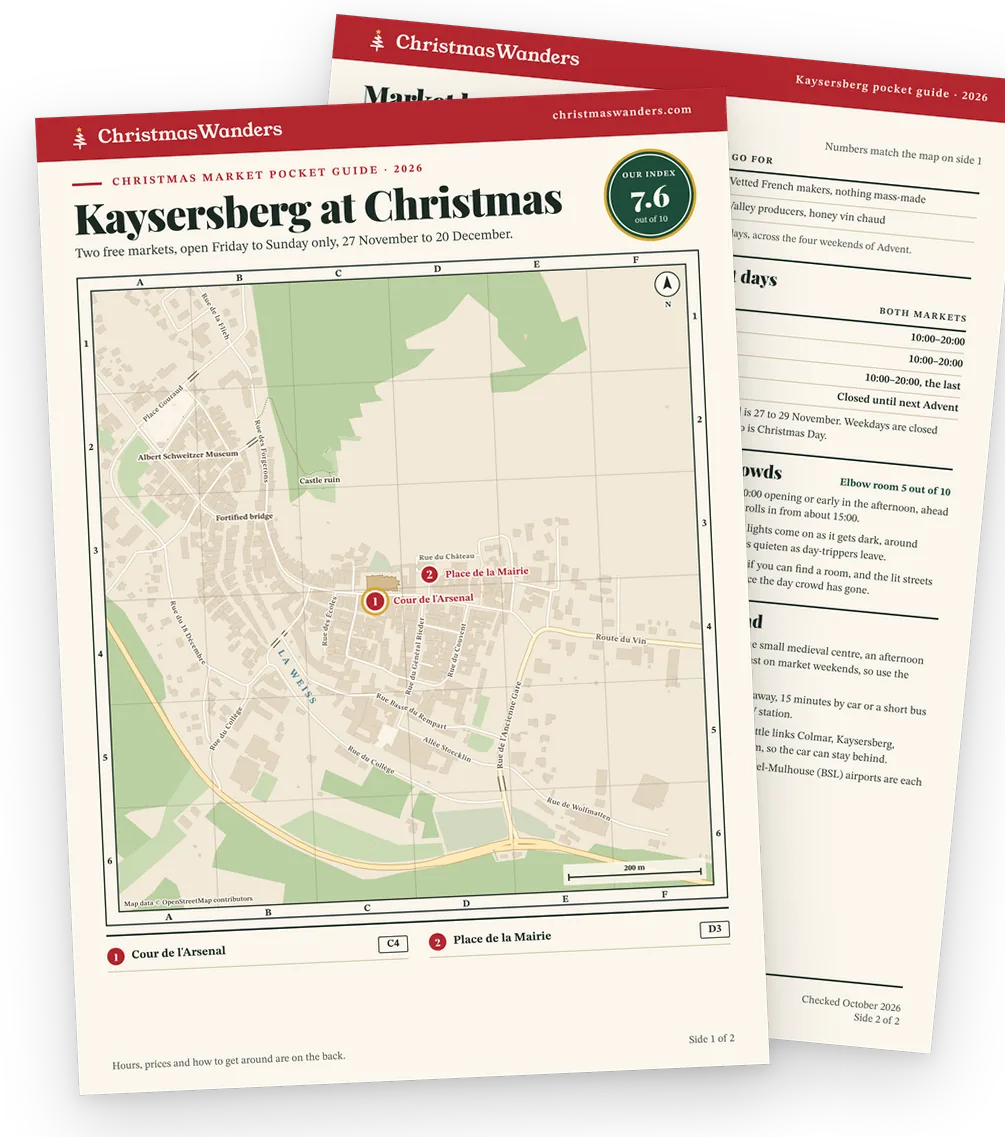
Because it’s only open Friday to Sunday, weekends are the only option. And they get busy. Arriving near opening (10am) or earlier in the afternoon beats the peak crowds that roll in from about 3pm onward.
Support the real makers
A responsible-travel note, because I can’t help myself: the whole point of this market is that it’s artisan-vetted. So please, buy from the people who made it. The fabric heart, not the cheapest ornament. The glass ornament, not the mass-produced star. The glass of local wine, not the generic. Tourism is a load-bearing part of an Alsatian village’s winter economy. Make yours count for the people who actually live and make there.
Is the Kaysersberg Christmas Market Worth It?
If you’re picturing a sprawling, all-day shopping marathon, you’ll be disappointed. Kaysersberg’s market is deliberately small, deliberately curated, and deliberately brief. You can wander the whole thing in an afternoon.
Set that expectation, and it becomes the most authentic Christmas market experience Alsace offers. A medieval wine village, voted France’s favorite, lit up for four weekends only, with real artisans selling real things and vin chaud in your hands.
Pair it with Colmar and Riquewihr and you’ve got the perfect small-and-big Alsace Christmas tour.
It’s the kind of place that sneaks up on you. You come for a market, and you leave quietly obsessed with the village.