Disclosure: This blog is reader-supported, and some posts contain affiliate links. If you make a booking, I may earn a small commission at no extra cost to you. Thank you for keeping me writing and doing what I love!
If you’ve only ever heard of Nuremberg and Dresden when it comes to German Christmas markets, you’re missing the most fun one of all.
Cologne pulls in roughly 4 million visitors to its Christmas markets each winter making it the most-visited market city in Germany, edging out even Dortmund and Berlin.
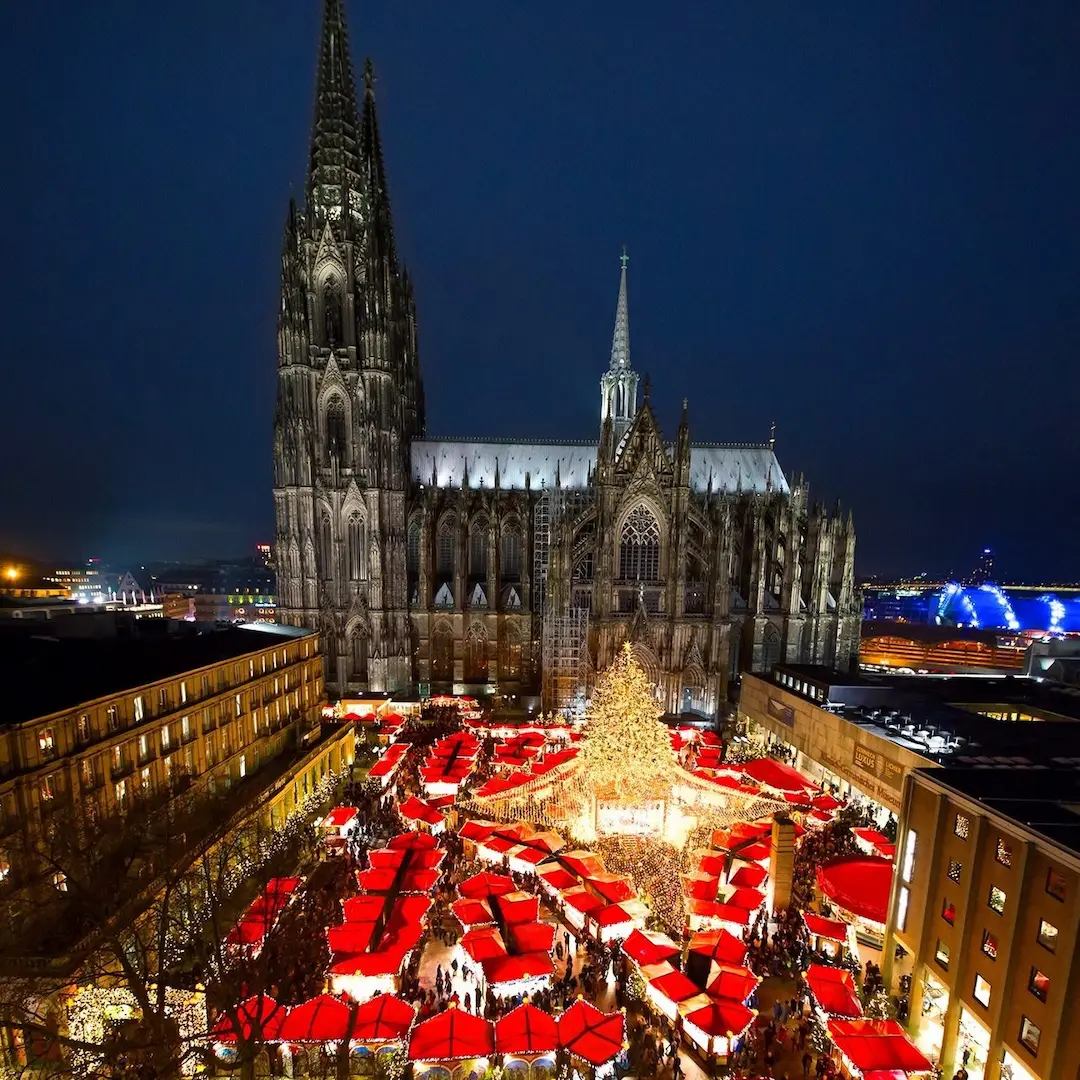
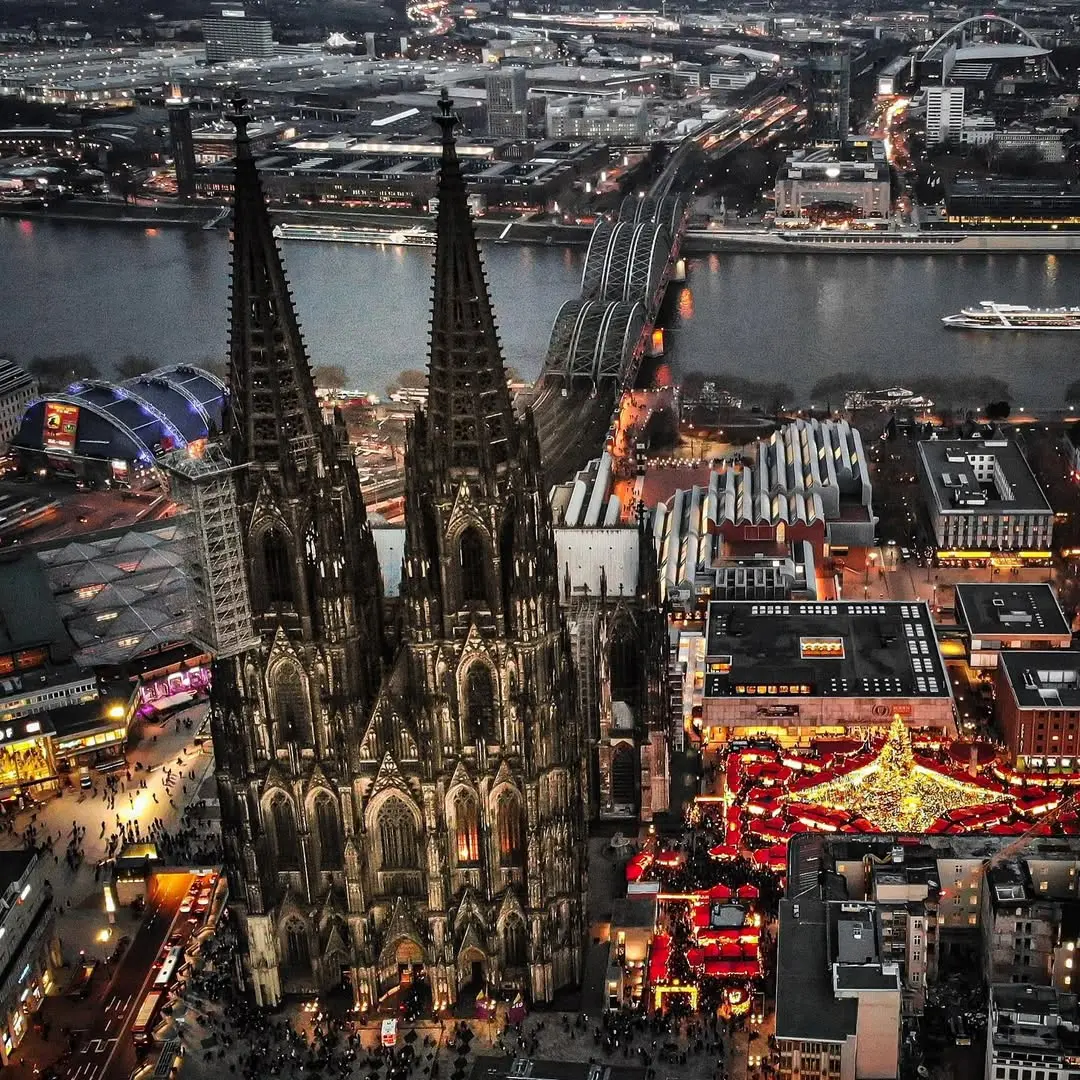
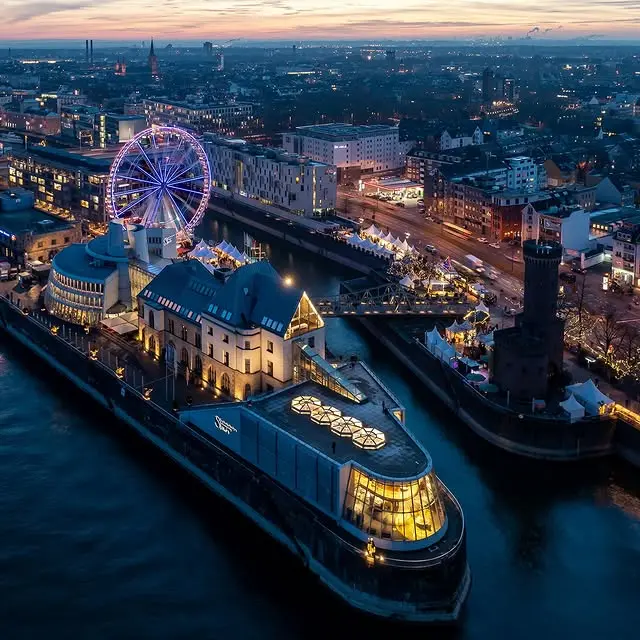
And while Nuremberg has the Christkindlesmarkt pedigree and Dresden has the oldest market in the world (the Striezelmarkt, dating to 1434), Cologne often wins on sheer density. They have half a dozen themed markets packed into a walkable Old Town, all with the Cologne Cathedral (Kölner Dom) looming overhead like the world’s most dramatic festive backdrop.
Why Cologne Is Germany’s Christmas Market Capital?
Here’s a fun fact most people don’t know. Cologne actually got a late start on the Christmas market tradition. While Dresden was holding its Striezelmarkt back in 1434 and Nuremberg since 1628, Cologne’s first Christmas market only opened in 1820, per the Cologne Tourist Board.
But what Cologne lacks in age, it makes up for in scale and variety.
Instead of one big market in the main square, Cologne runs a constellation of themed markets scattered across the Old Town and beyond, all presided over by the city’s local folklore figures, the Heinzelmännchen (house gnomes who, legend has it, did all the city’s work overnight until a curious tailor’s wife scattered peas on the stairs to catch them).
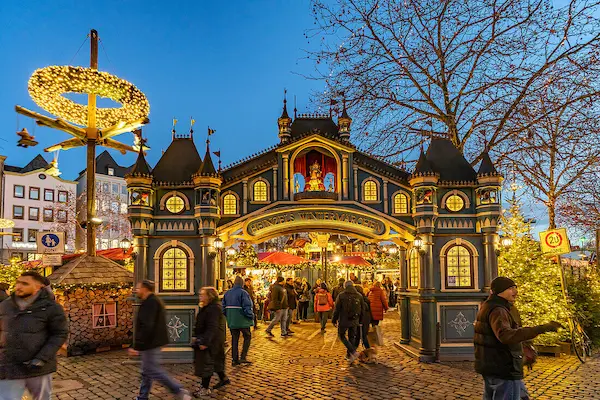
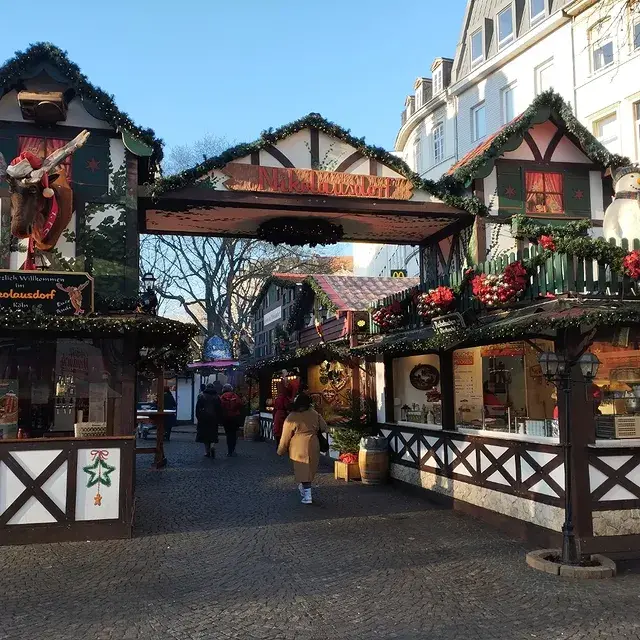
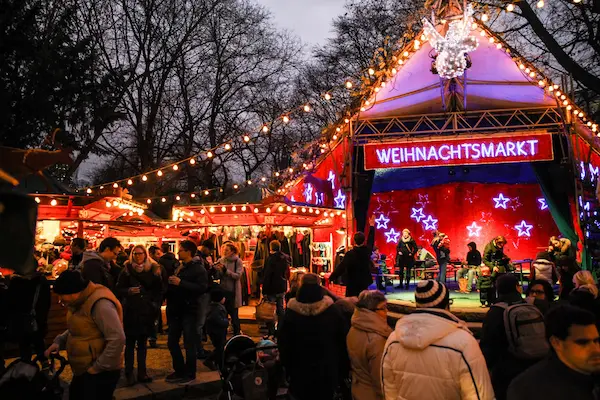
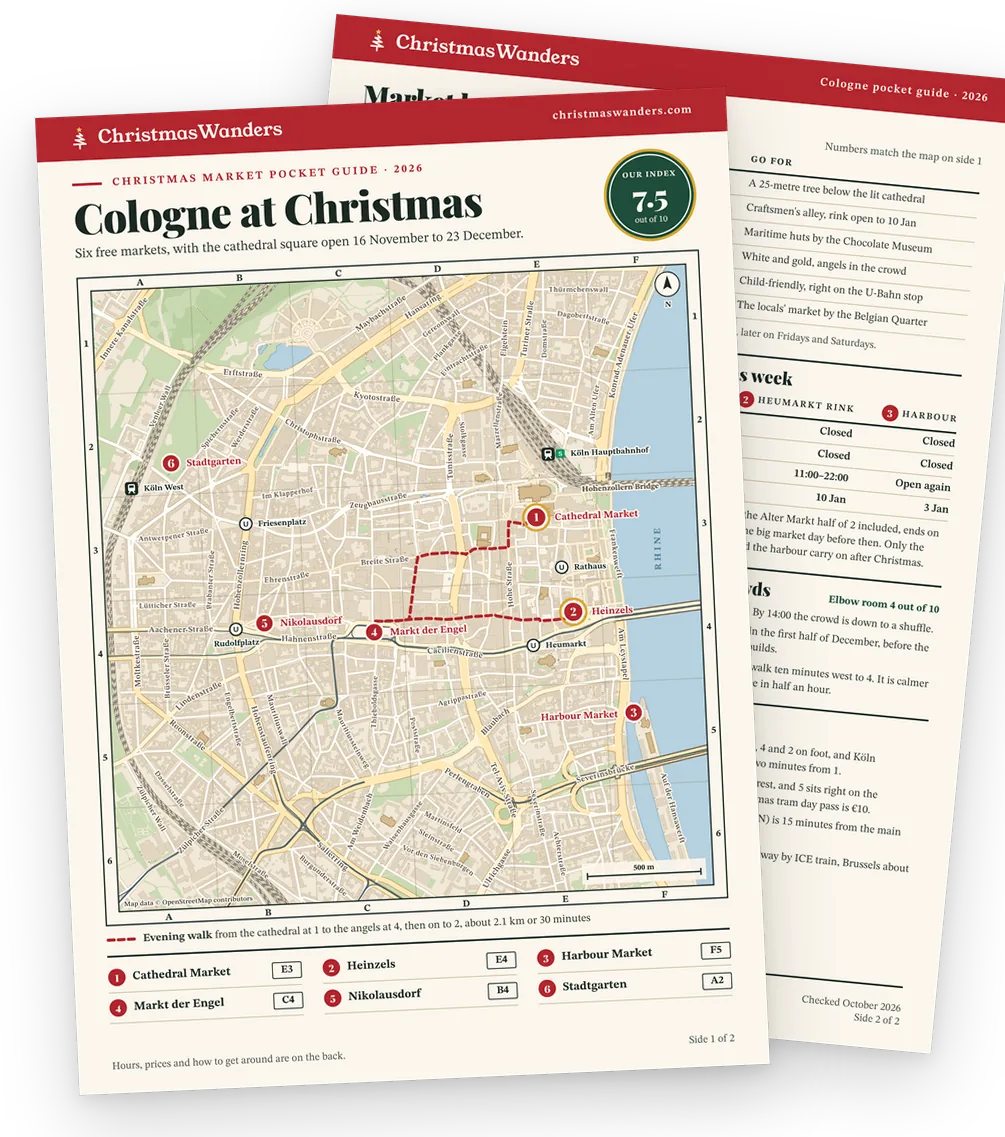
You’ve got markets themed around angels, fairy-tale figures, mariners, and the Heinzelmännchen themselves, each with its own design language, food focus, and crowd.
The backdrop doesn’t hurt, either, if I am being honest. Cologne Cathedral was the world’s tallest building from 1880 to 1890 and is still the tallest cathedral on earth. Seeing its twin spires lit up at night over the market stalls is one of the more cinematic Christmas scenes in Europe.
In short, Cologne is the most modern, most diverse, and most fun of Germany’s big-market cities.
When to Visit the Cologne Christmas Markets
The Cologne Christmas markets typically open around mid-November and they run through to December 23, though the Hafen market stays open until January 3 and the Heinzels ice rink on Heumarkt until January 10 (both closed on 24 and 25 December). Otherwise the city goes quiet for Christmas itself, then comes back to life for Carnival season in February (Cologne’s other huge festival, but that’s a different guide!).
If you have flexibility, I’d suggest aiming for the first or second week of December. Here’s why:
- The markets are fully up and running but not yet at peak tourist chaos.
- Weekdays are noticeably quieter than weekends, especially at the Cathedral market which can get shoulder-to-shoulder by mid-December.
- You avoid the last-weekend-before-Christmas crunch when German domestic travelers descend.
Cologne in December is cold though and frequently rainy (rarely snowy, despite the postcard impression). Average highs hover around 5°C/41°F, with damp cold that gets into your bones. That’s why you need to pack warm layers, a decent waterproof, and proper shoes with grip.
How to Get to Cologne
Cologne is one of the easiest German cities to reach, which is part of why the Christmas markets get so busy.
- Fly into Cologne Bonn Airport (CGN) – 15 minutes by S-Bahn (line S13) to Köln Hauptbahnhof, the main station right next to the Cathedral.
- By train – Cologne is on the ICE high-speed network. Frankfurt in ~1 hour, Brussels in ~2 hours, Amsterdam in ~2.5 hours, Berlin in ~4.5 hours. If you’re coming from elsewhere in Europe, the train is genuinely the better option because the station drops you walking-distance from the markets.
- By car – Possible, but I’d skip it. The Old Town is walkable and parking is expensive. Park at a park-and-ride on the edge and tram in.
What to Eat & Drink at the Cologne Christmas Market
German Christmas market food is one of the great winter food traditions, and Cologne does it really well with a few local twists.
Here’s what to eat and drink at the Cologne Christmas market:
- Glühwein (mulled wine) – The mandatory starter. You’ll pay a few euros for the drink plus a Pfand (deposit) of around €3–5 on the mug, which you get back when you return it. Collect the mug as a souvenir by not returning it. (You’re basically paying the deposit price to keep it.)
- Kinderpunsch – The non-alcoholic version, a hot spiced fruit punch. If you’re driving or just not drinking, this is your friend.
- Reibekuchen – German potato pancakes, served with applesauce or (sometimes) smoked salmon. A Cologne market staple. Crispy, greasy, perfect.
- Bratwurst – The classic. You’ll find these at every market, but the quality varies so look for the stalls with the longest local lines.
- Gebrannte Mandeln – Candied toasted almonds. Smells incredible, tastes better. A standard bag runs around €5–7.
- Maroni – Roasted chestnuts. Less sweet than the almonds, very warming.
- Lebkuchen & Stollen – German gingerbread and Christmas bread. Often sold as decorated gingerbread hearts on ribbons (cheesy, but a great photo).
- Kölsch – Cologne’s local beer, and the only beer that legally has to be brewed in the Cologne region to be called Kölsch. Served in small cylindrical glasses by a Köbes (the traditional waiter). Light, crisp, and dangerously easy to drink.
- Halver Hahn – A local pub snack: a rye roll with butter and medium-aged Gouda, plus mustard. Sounds simple, is secretly great. Try it in a Brauhaus (traditional brewery pub) rather than at the market itself.
Where to Stay in Cologne for the Christmas Markets?
For a Christmas market trip, you want to be central. The Old Town is walkable, but it gets cold and crowded so being able to pop back to your hotel to warm up or drop shopping bags makes a real difference.
Best neighborhoods for Cologne Christmas market visitors:
- Old Town (Altstadt) / Around the Cathedral – The most convenient option and you can walk to every central market in 10 minutes. Slightly pricier but definitely worth it for a short trip.
- Belgian Quarter – Trendy, design-led, just west of the Old Town. A 10–15 minute walk to the markets, but with cooler cafés, bars, and boutiques nearby. My pick if you want to balance market time with normal city time.
- Ehrenfeld – Cologne’s street-art and hipster neighborhood, which is only a 10-minute tram ride from the center. Cheaper, more local, and with great (really great!) food. Best for repeat visitors or longer stays.
- Deutz (east bank of the Rhine) – Across the Hohenzollern Bridge from the Cathedral. Cheaper than the Old Town, and you get the iconic walk across the bridge (lined with love locks) every time you head to the markets.
Getting Around Cologne
Cologne’s Old Town is very walkable, which is one of the main reasons it works so well as a Christmas market destination. You can hop from the Cathedral market to the Market of Angels to Heinzels Wintermärchen on foot in under 20 minutes total.
When you do need to go further (out to the Harbour market or Ehrenfeld), you can use the U-Bahn / Stadtbahn network. Cologne also offers the KölnCard, which gives you free public transport plus discounts at museums, tours, and restaurants and it’s very worth it if you’re museum-hopping.
A very interesting options includes The Christmas Market Express, a mini-train operated by Wolters Bimmelbahnen that hops between markets across the city.
It’s touristy, sure, but it’s a nice way to rest your feet between stops, and the route hits all the major markets. Great for families with tired kids.
Beyond the Markets – Things to Do in Cologne in December
You’ll want to break up the market-hopping with some actual Cologne sightseeing. Here’s what to prioritize:
- Climb the Cologne Cathedral tower – 533 steps, no elevator, but the view over the city (and down at the market) is worth it. Book a timed ticket in advance.
- Walk the Hohenzollern Bridge – The love-lock bridge across the Rhine. Best at dusk, walking back toward the Cathedral with the lights coming on.
- Museum Ludwig – Cologne’s modern art museum, with one of Europe’s best Picasso collections. Right next to the Cathedral. Perfect cold-weather escape, if you ask me.
- Imhoff-Schokoladenmuseum (Chocolate Museum) – On the Rheinauhafen, next to the Harbour market. Extremely fun, especially with kids, and you get free chocolate samples.
- Advent cruise on the Rhine – The Cologne Tourist Board runs Advent cruises on the Rhine, which is a lovely way to see the city from the water with a hot drink in hand.
- A traditional Brauhaus dinner – Skip the market food one night and have a proper Cologne dinner in a Brauhaus (brewery pub). Try Himmel un Ääd (heaven and earth black pudding with mashed potato and apple sauce) or Rheinischer Sauerbraten (marinated pot roast).
Is Cologne Worth It for Christmas?
Yes, and especially if you’ve already done the more famous German markets.
What Cologne does better than anywhere else in Germany is variety in a walkable footprint.
You can do six genuinely different Christmas markets in two days without ever getting in a car, all under the shadow of one of the most dramatic cathedrals in Europe.
That’s hard to beat.
If you only have time for one German Christmas market city, Nuremberg or Dresden probably win on pure tradition. But if you want the experience of Christmas markets while wandering, drinking, eating, hopping from one vibe to the next, doing it all on foot, and finishing in a proper Cologne Brauhaus with a Kölsch… Cologne is the better trip.
I hope this guide helps plan your Cologne Christmas market trip!