What makes Austrian Christmas markets special?
I think Austria beats any other country in terms of settings. Austria does the "market as backdrop" trick better than anyone and if you look for photos as a proof, you’ll notice the same thing.
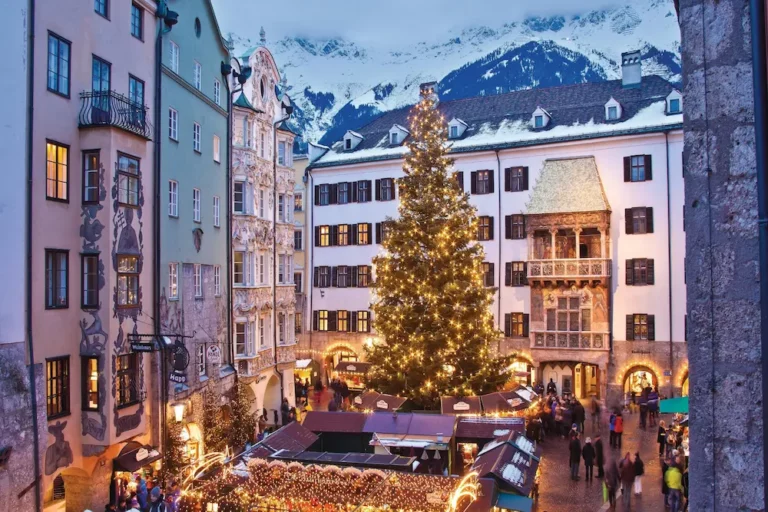
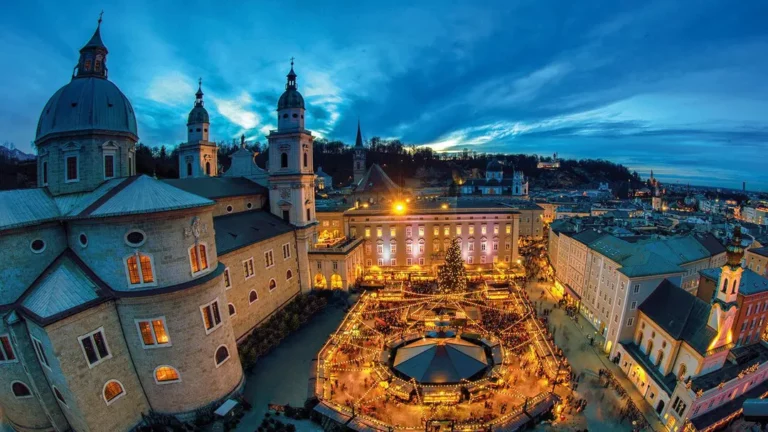
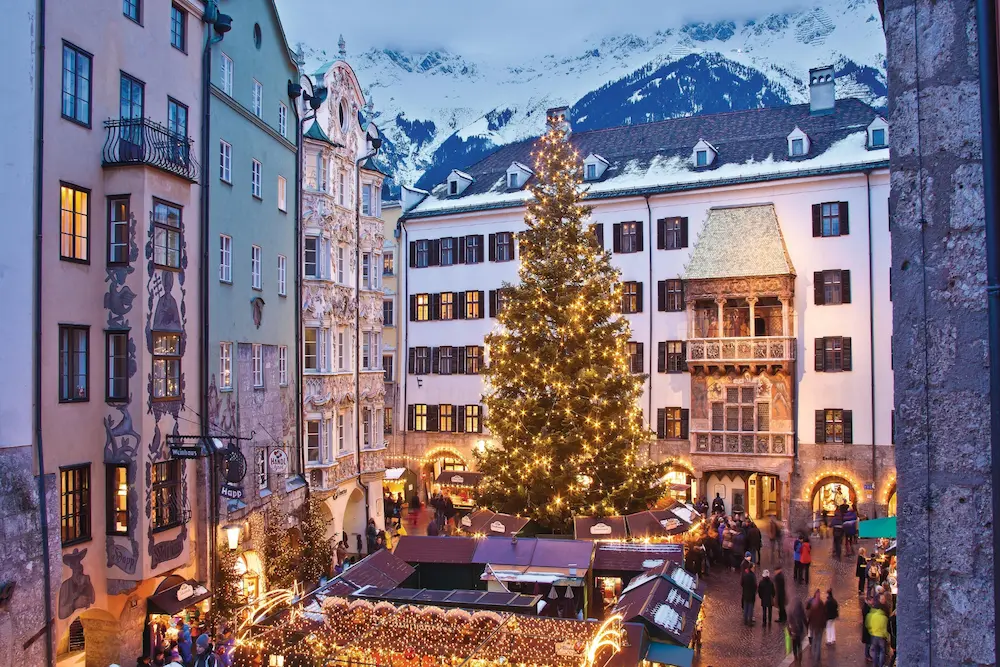
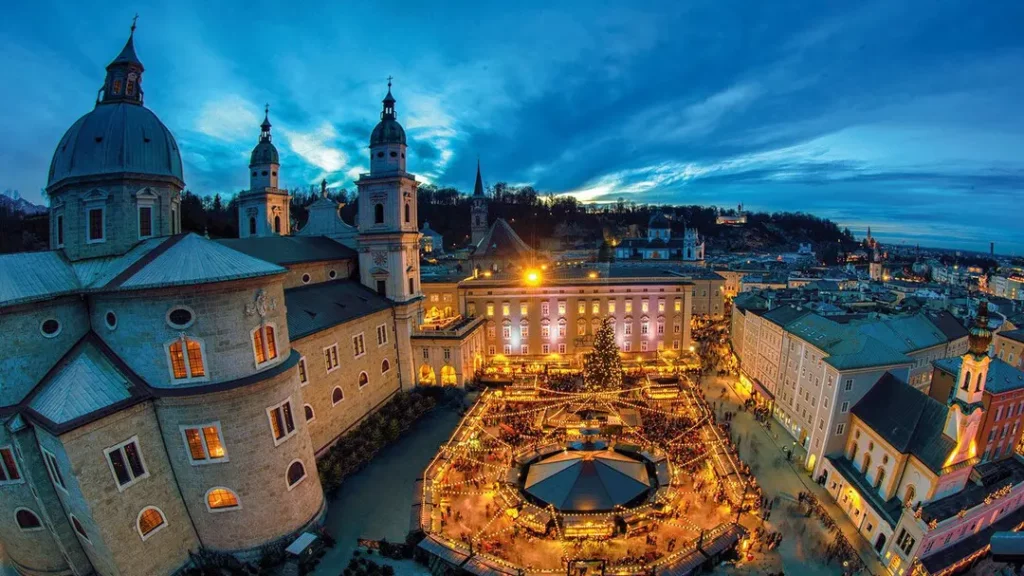
For example, Schönbrunn and Belvedere in Vienna are literally palace forecourts, Salzburg's Christkindlmarkt sits under the fortress, and Innsbruck's stalls are framed by actual mountains.
The second thing that makes Austrian Christmas markets special is that Advent is still treasured and not just treated as a shopping window, built to extract money from tourists. You can see choir singing every night in Salzburg, Advent concerts all over Vienna, and the whole Silent Night heritage (the carol was first performed in Oberndorf, near Salzburg, in 1818).
You also get a lot of the weird Alpine stuff you don't get in Germany, like Krampus runs and Perchten processions, grown men in fur and carved horns charging through town making noise, like cute cultural things like that. Genuinely startling the first time, but more than enjoyable, in my experience.
History of Austrian Christmas markets
The history is actually more interesting than the marketing version you can hear everywhere, mostly because the marketing version is partly a myth.
Every guidebook I ran into tells you Vienna's Christmas market dates to 1296, when Duke Albrecht I granted the city the right to hold a "December market."
It's a great story and it's repeated everywhere, but Vienna's official city historians explicitly debunk it.
What Albrecht granted was permission for a Dezembermarkt, a winter provisions fair, where people stocked up on meat, firewood, and dried goods before the cold set in.
There was nothing Christmassy about it. The surviving medieval accounts show these December fairs happening, but no Christmas market in anything like the modern sense, and the historians are clear that the precise origin just can't be fixed from the fragmentary records.
The first Vienna market that was actually about Christmas shows up much later: a "Nikolo-, Weihnachts- und Krippenmarkt", which is a Nicholas, Christmas, and nativity-crib market, documented on the Freyung in 1722.
That name tells you what these markets were for: St. Nicholas figurines, Christmas supplies, and the carved crib scenes that were a genuine obsession in Catholic Austria.
Salzburg has its own claim to antiquity, and it's better supported than Vienna's.
A market on the Domplatz is documented from around 1491, which makes it one of the oldest in the German-speaking world. Even older than Nuremberg's by documentary evidence, though Nuremberg got more famous much faster.
For centuries it wasn't called a Christkindlmarkt at all either. It was the Tandlmarkt, the "trinket market," held around St. Nicholas Day in early December. The renaming and the move to its current spot on Residenz- and Domplatz is a 20th-century thing.
The 19th century is when the markets start looking recognizable, however.
In the Biedermeier period the stalls were filled with toys, gingerbread, and decorations rather than winter provisions. Although there's a detail I love, which is that a huge share of the toys sold at Viennese Christmas markets in the 1800s were imported from Nuremberg. The "local craft" emphasis is more recent than anyone likes to admit.
By the mid-20th century Vienna's Christmas market had shriveled to a shadow of itself, shuffled between locations.
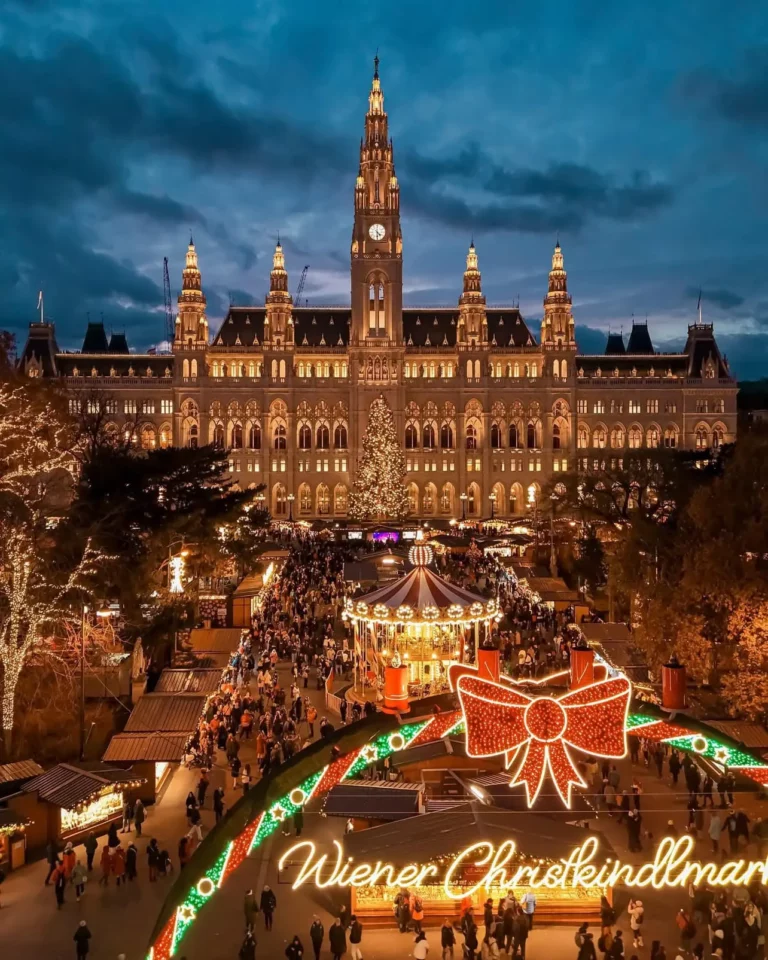
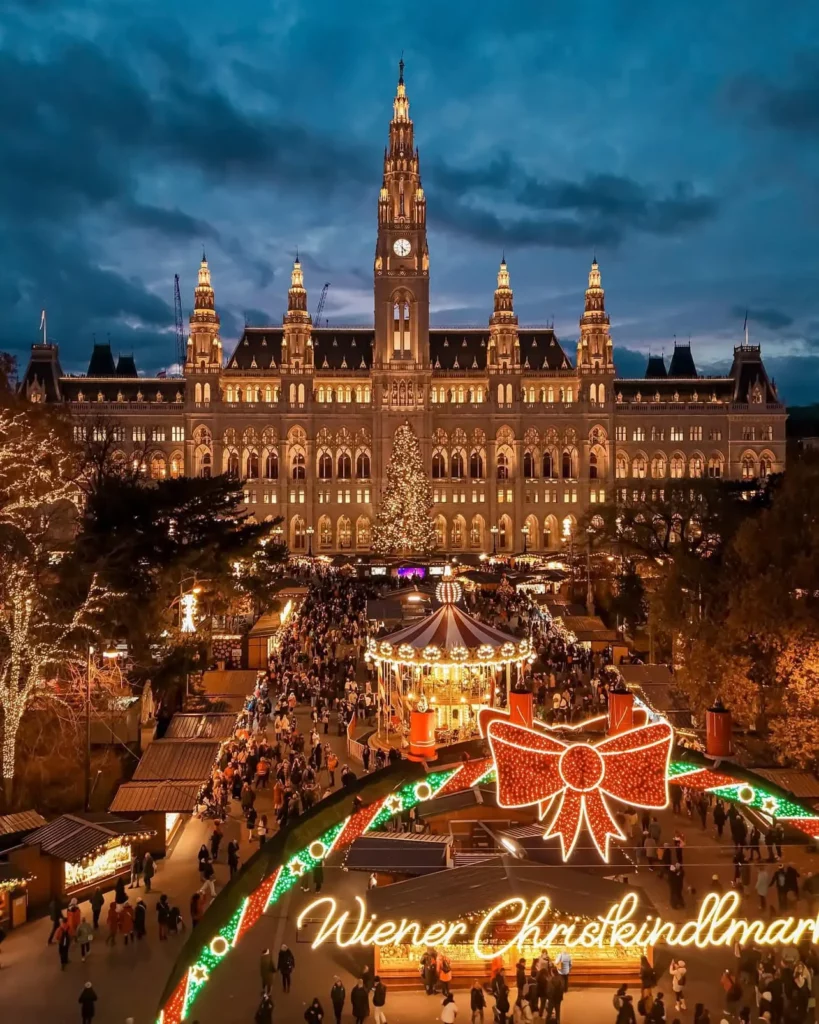
The revival is surprisingly recent and surprisingly deliberate. In 1975 the city moved the Christkindlmarkt to the square in front of the Rathaus, the grand neo-Gothic city hall, and gave it a permanent monumental home.
That's the market that now draws three million visitors a season.
Everything else followed the Rathausplatz success. Neighborhood markets spread through Vienna in the 80s and 90s with Spittelberg in its narrow Biedermeier lanes, the Freyung revival, Schönbrunn putting a market in the palace forecourt in the 90s, the juried artisan market at Karlsplatz that exists partly as a quality backlash against the big ones.
Innsbruck built its market under the Goldenes Dachl. The whole "twenty markets per city" landscape people visit now is essentially a phenomenon of the last forty years, built on a genuine but much scruffier older tradition.
So Austria's Christmas markets sit on real medieval and early-modern foundations, but the thing you visit today is mostly a 1970s-and-after construction, which is a romantic revival that worked so well people now assume it's eternal. Which, honestly, is the best kind of tradition.
The invented ones that stick are the ones that answer to something people actually wanted.
Where to go in Austria?
If you're choosing cities rather than individual markets, the shortlist is Vienna, Salzburg, and Innsbruck, in that order of certainty, with Graz as the dark horse.
Now, Vienna is the obvious one and it earns it, though not for the reason most brochures lead with.
The scale and size matter, of course, but what actually makes Vienna special is that you're never doing just one market. You're always doing an evening full of them.
And another real argument for Vienna is that the markets are only half the trip.
You have world-class museums, the coffee house culture that is genuinely at its best in winter, concerts every night, and palaces to retreat into when your hands go numb.
This matters more than people expect, because market fatigue is real and it sets in around day two everywhere.
Vienna is the city where day three is still full.
It's also the easiest trip logistically, direct flights from everywhere and a metro system that makes the whole thing frictionless.
In my opinion, Salzburg is the most atmospheric, and I'd argue it's the best single city if you're only doing one.
It's smaller and older-feeling, and the market sits in the baroque old town directly under the fortress, with carol singing every evening, so the whole thing feels composed rather than assembled.
It also has the deepest Christmas DNA of anywhere in the country. One of the oldest documented markets in the German-speaking world, the Silent Night heritage twenty minutes away in Oberndorf, and Krampus runs in early December if you time it right, which you should, because watching a horde of fur-clad demons charge through a baroque square is not an experience you forget.
Beyond the market Salzburg is genuinely rich with the fortress, the Mozart…everything, an old town that's a UNESCO site and it is absurdly pretty under snow.
The caveat is that Salzburg is small and it knows it's popular, so the center jams hard on December weekends and hotel prices spike brutally. That’s why you should go midweek, or go in the last week of November when the market is open but the crowds haven't arrived yet.
Innsbruck is the one I'd push on people who find Vienna and Salzburg too polished.
The markets themselves are fine, good rather than great, but the setting is absurd. You're standing in a medieval old town under the Goldenes Dachl with two-thousand-meter peaks rising directly behind the rooftops, and you can take a funicular from the city center up into actual alpine terrain in twenty minutes.
It has the strongest folk-tradition presence of the three, real Tyrolean character rather than imperial grandeur, and it doubles as a ski-adjacent trip if that's your thing.
If your idea of Christmas involves mountains rather than palaces, this is the pick. The honest limitation is that it's a smaller city with less to do after dark, and two days more than cover it.
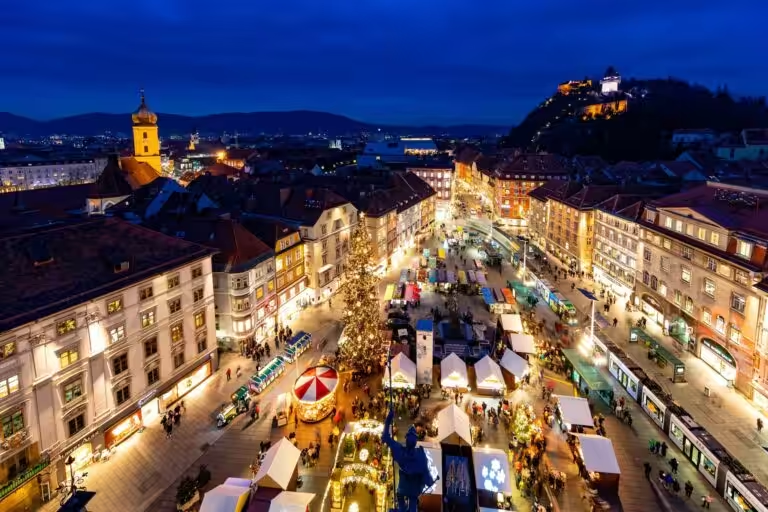
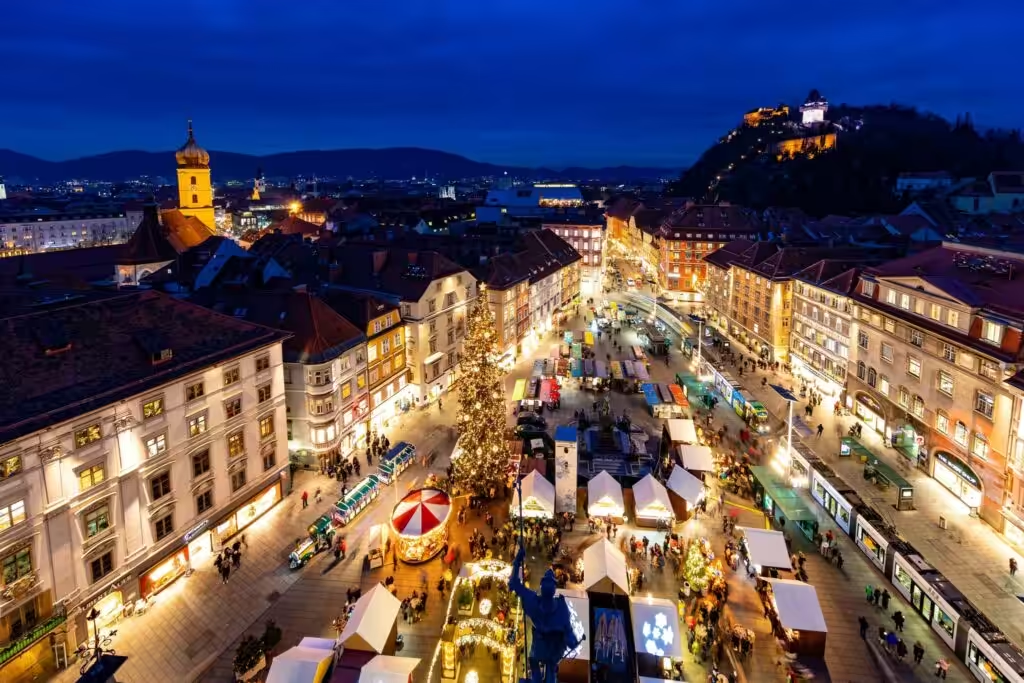
And finally, Graz deserves a mention because it's the connoisseur's answer. Austria's second city, a beautiful Renaissance old town, markets that feel local rather than staged, and a famous giant advent calendar projected onto the town hall every evening.
Austrians themselves will tell you Graz does Christmas best, and they're half right: it's the most authentic big-city version, the one where you're surrounded by people who actually live there rather than tour groups.
But it's harder to reach, and if you're flying in from abroad for one Christmas trip, it doesn't beat the top three on total experience.
It's the right choice for a second visit, not a first.
As for the ones I'd skip, Linz tops that list. It is perfectly nice and completely skippable because the markets are generic and the city doesn't compensate for it in any way.
Klagenfurt and Villach are regional and pleasant but definitely not worth building a trip around. And then there's Hallstatt, which I mention specifically because everyone seems to be asking about it.
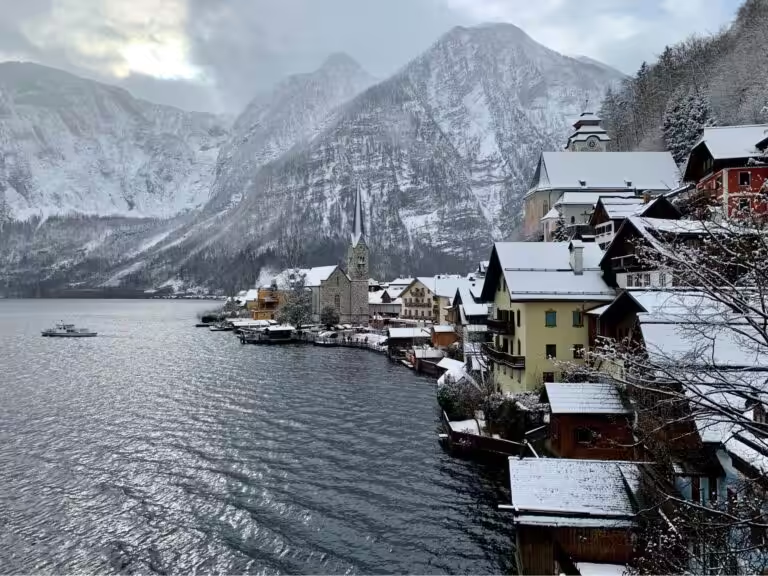
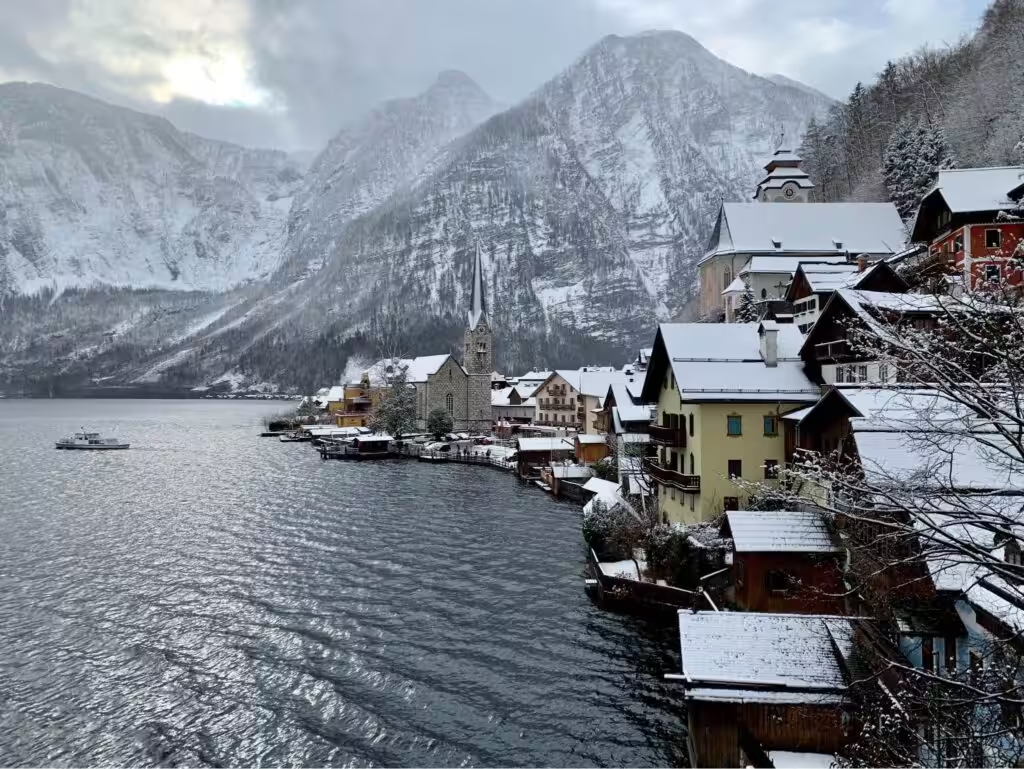
The village is definitely one of the most beautiful places in Europe, but its Christmas market is a single-day event on December 8th, and in December generally it's a cold, half-shut village drowning in day-trippers who came for the same Instagram photo you're taking.
Go in October instead, when it's still gorgeous and you can actually breathe.
Should you combine multiple Austrian Christmas markets?
Yes, you probably should but keep in mind that people who do eight, ten, fourteen markets in one trip almost uniformly say they wouldn't do it again.
The rule I like is to combine cities for the contrast but never for the count. And Austrian cities happen to be perfect for this, because each of the big three is a completely different genre.
Vienna is the imperial one. Grand, monumental, museums and coffee houses, markets as one act in a bigger show. Salzburg is the baroque one, intimate, composed, carols under the fortress. Innsbruck is the alpine one, medieval streets with actual mountains behind the rooftops.
Pair any two and you get a trip with a shape to it. Pair two cities of the same genre and you get diminishing returns, which is exactly why Vienna plus Graz, say, is a weaker combo.
The classic pairing is Vienna and Salzburg, and it's classic for a reason: maximum contrast, about two and a half hours apart on the Railjet, each city covering the other's gaps.
Vienna gives you scale and depth beyond the markets, Salzburg gives you the atmosphere Vienna can't quite fake. Four or five days split between them is the standard recommendation, and it's the right first trip.
The best-value pairing, though, is Salzburg and Innsbruck. Two hours apart by train through gorgeous country, two cities that share almost no DNA, and both compact enough that two days each actually covers them.
You get baroque city plus alpine city, the Silent Night heritage plus the strongest folk traditions, and you spend less on hotels than you would in Vienna. If I were planning it for a friend with four days, this is the one I'd hand them.
One last timing note, because combos live and die on the calendar. The sweet spot is the last week of November through the first week of December when everything's open, crowds haven't peaked, and if you land in Salzburg around December 5th and 6th you catch the Krampus runs, which alone justifies the trip.
Whatever route you pick, cap yourself at two or three markets per city and let the cities themselves fill the rest. The markets were never the whole point. They're the excuse to be in these places in winter, when they're at their best.
Maybe crossing a border too?
Central Europe is absurdly dense and everything runs on the same rail network, so going from Austria to another country is a smart move. There are no border checks, no logistics drama, you just fall asleep in one country and wake up in another.
And the same principle that makes Austrian city combos work applies even harder across borders. You're buying contrast, and national market cultures are genuinely different.
The most natural cross is Germany, specifically Bavaria. Munich is ninety minutes from Salzburg by train so it’s actually closer to Salzburg than Vienna is, and this is why the Munich airport trick works so well.
Munich's markets are a proper contrast, bigger and louder and running on beer-hall energy rather than Austrian coziness, with the medieval market at Wittelsbacherplatz as the standout.
Even easier is Berchtesgaden, thirty minutes from Salzburg, a small Bavarian market town that makes a perfect half-day.
And if you're willing to stretch, Nuremberg's Christkindlesmarkt is the most famous market in Germany. It is three hours from Munich, so it's a detour rather than a combo, but it's the one German market that justifies a detour.
The connoisseur's cross, though, is Italy. Unexpectedly, I know, but hear me out… South Tyrol.
Bolzano is two hours from Innsbruck over the Brenner Pass, one of the great scenic rail rides in Europe, and when you arrive you're in Italy… except you're not, really.
South Tyrol is German-speaking, was Austrian until 1919, and its Christmas market is Austria's market culture transplanted into Italy, which means you get the Austrian stall tradition plus Italian food, Italian coffee, and Italian prices in the restaurants.
Bolzano runs Italy's best Christmas market, full stop, and Merano nearby is the prettier, sleepier alternative.
This combo also has the best food logic of any pairing on this list: glühwein and Krapfen in Innsbruck one day, cappuccino and speck dumplings in Bolzano the next.
Budapest is the strongest eastern add-on, two and a half hours from Vienna by train.
The Budapest markets around St. Stephen's Basilica and Vörösmarty Square are excellent and genuinely distinct with chimney cake instead of gingerbread, goulash in bread bowls, everything noticeably cheaper than Austria.
But the real argument for Budapest is that sitting in the outdoor pools of the Széchenyi thermal baths while snow falls on your head is one of the great winter experiences in Europe, and no Austrian city can match it.
Then there's Prague at Christmas, the elephant in the room. Four hours from Vienna, so it's not a casual hop, but the Vienna–Prague–Budapest triangle is probably the most famous Christmas route in central Europe for a reason.
Zurich (Switzerland) is three and a half hours from Innsbruck through the Arlberg, gorgeous ride, lovely markets, but Swiss prices will mug you.
And Slovenia is the sleeper where Ljubljana does the most artistic light displays in the region, the riverside setting is beautiful, and it pairs naturally with Graz if you're doing the southern route.
But it doesn't fit the northern rail axis, so it's a different trip entirely.
If I had to pick one border cross, I would do Salzburg to South Tyrol via Innsbruck. Two countries that feel like one culture, the best train ride of the bunch, and the only combo where crossing the border actually improves the food.