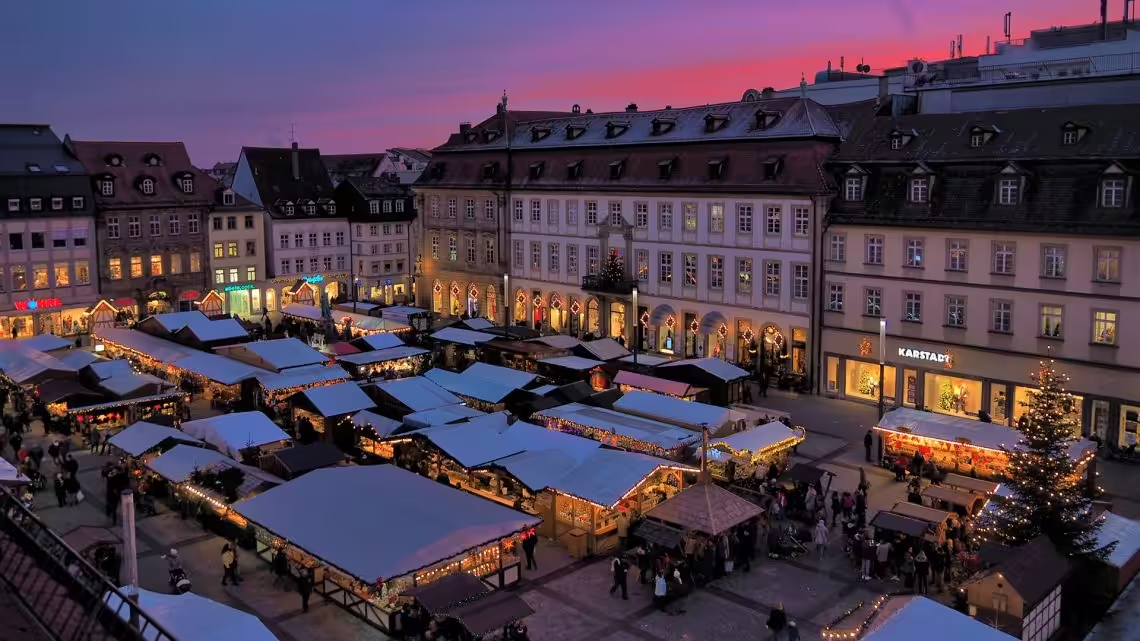
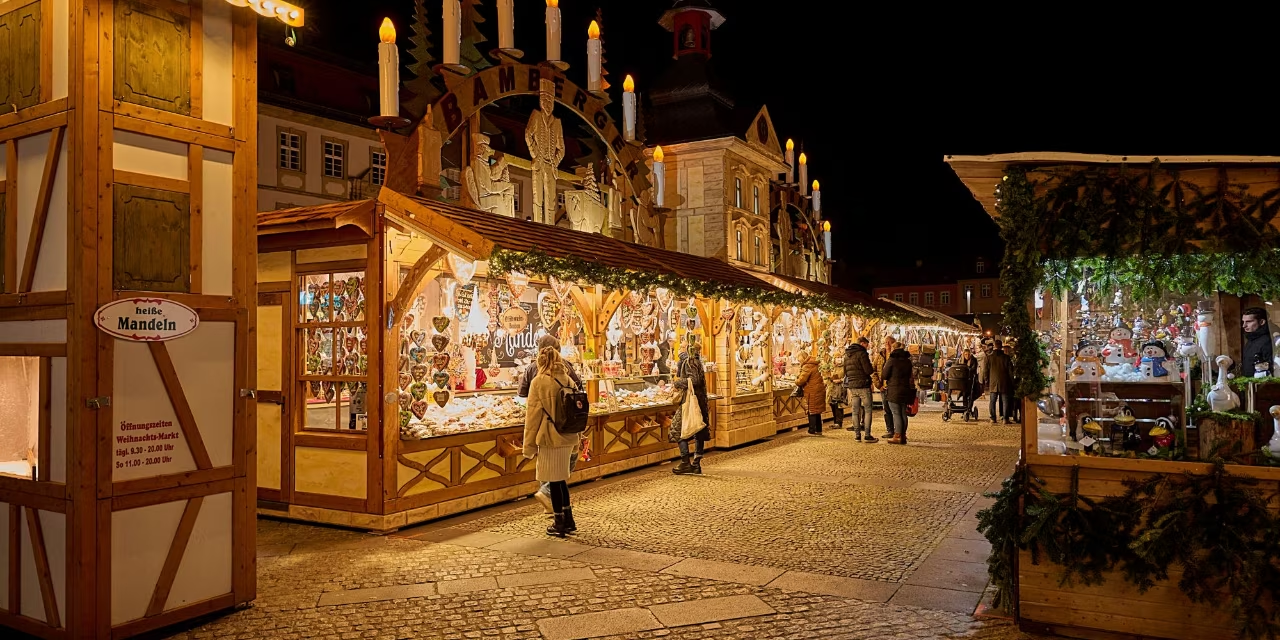
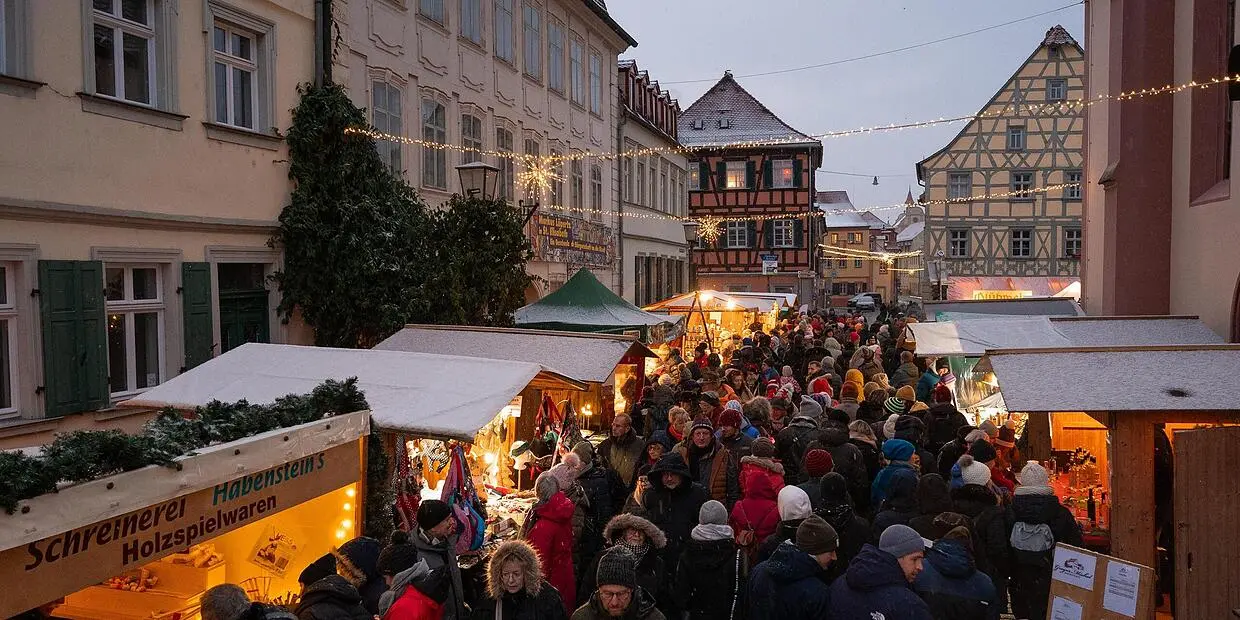
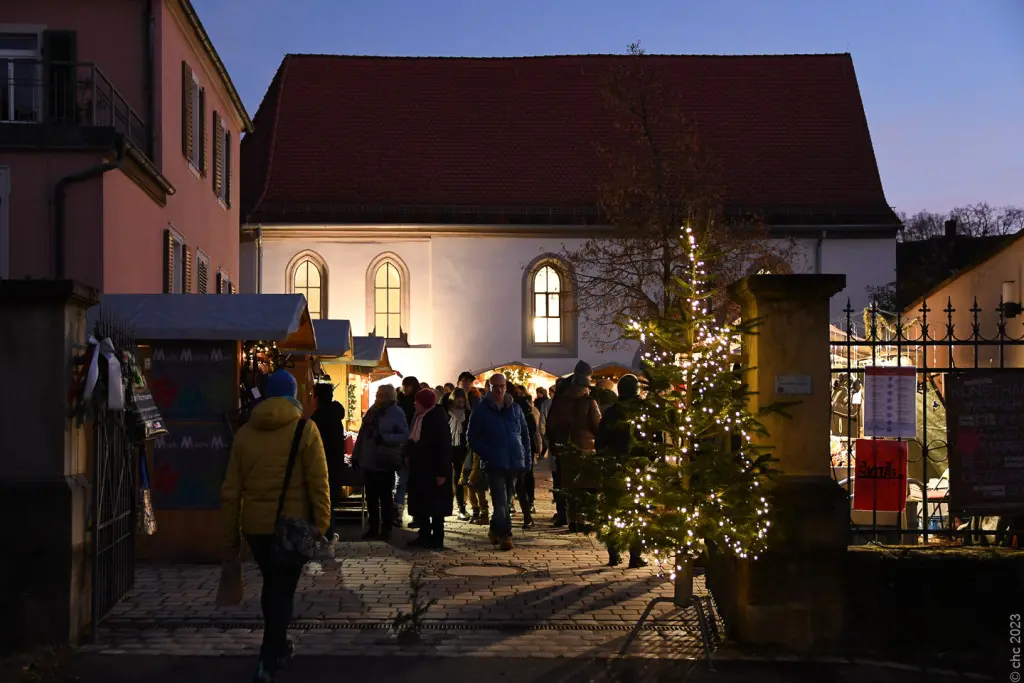
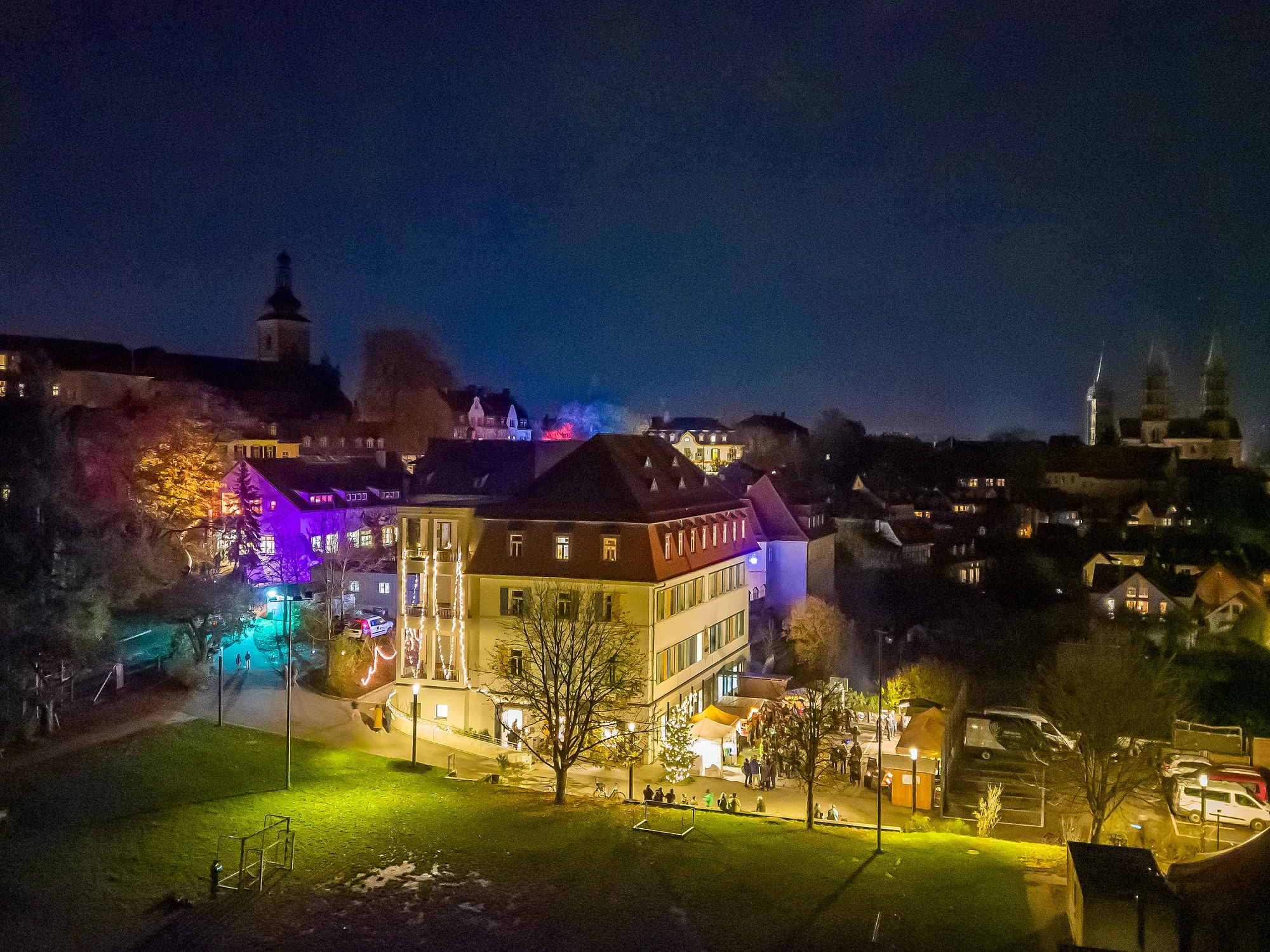
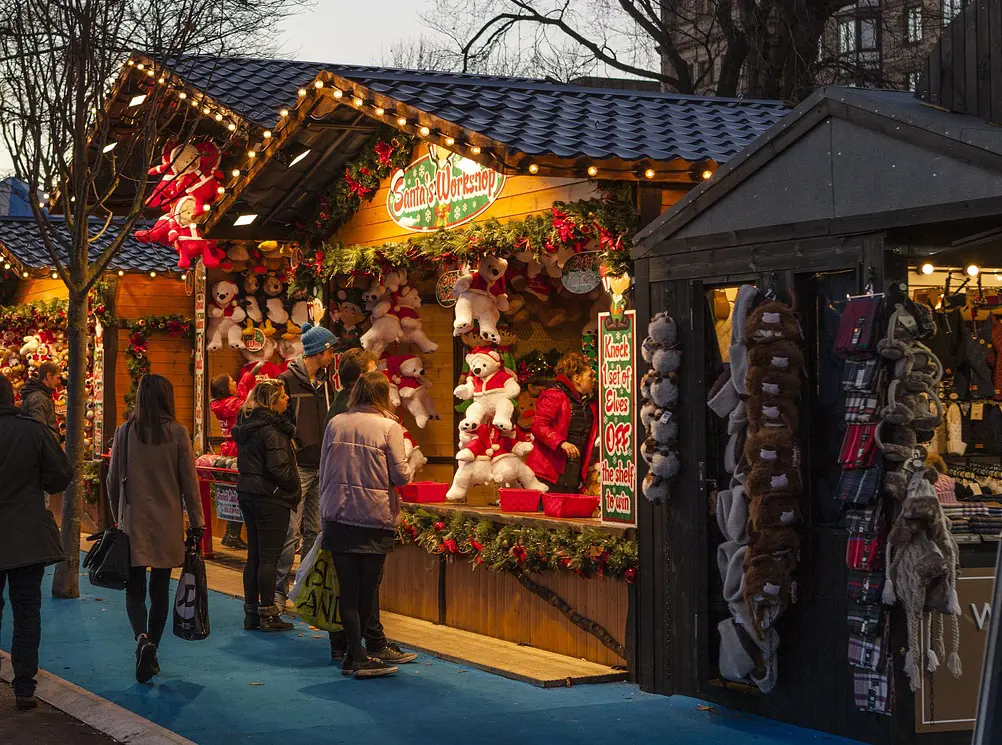
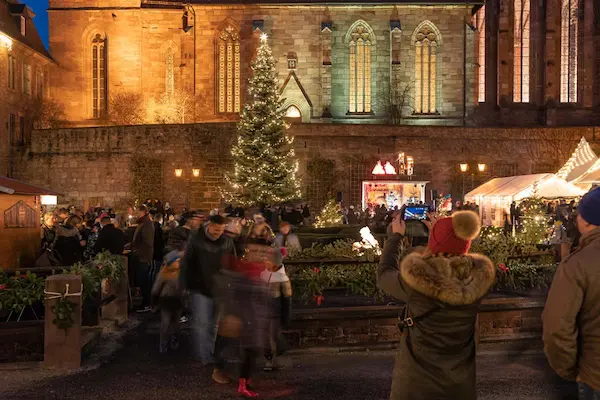
Bamberg’s Christmas market takes about ninety minutes in total, and that’s about it.
However, I am still telling you to stay at least two or three nights.
And I know that sounds like a contradiction, so let me try and explain what most people do with Bamberg, Germany.
They usually take the 35-minute train up from Nuremberg’s Christkindlesmarkt, go in and photograph the Old Town Hall hanging over the river, eat one Schäufele, walk the fifty-odd wooden huts on Maxplatz, and catch the 18:00 train back. That’s it, five hours tops. Bamberg is done.
And they’re not wrong, exactly, either. The market in Bamberg is arguably pretty small and it doesn’t have the usual additions like a Ferris wheel, it has no ice rink, no red-and-white striped spectacle, nothing like that.
So if you’re measuring Bamberg by its stalls, most German cities win that race, especially the close ones like Nuremberg.
But in my experience Bamberg does Christmas incredibly well with nativity scenes. There are around 36 of them, scattered through churches, chapels, museums and a castle, some with 200 figures, some four centuries old, and the scenes inside them change as December goes on.
They stay up until Epiphany, and a good many until Candlemas on 2 February. For one, that makes Bamberg the only town in the region with a curated Christmas still standing in the gap week between the 23rd and New Year. And two, it means the “market” you came for is the least interesting Christmas thing in the city.
And of course, there’s the beer (and not the regular German kind). Bamberg’s winter drink isn’t Glühwein (though you’ll find that too).
It’s a smoked beer that tastes, depending on who you ask, like a campfire, liquid bacon, or the best thing you’ve ever put in a mug, poured from a wooden cask in a tavern that’s been doing it since 1405.
So I think you should not make the mistake of treating Bamberg as a five-hour stop. Here’s everything that matters in more detail. 🎄
Bamberg Christmas Market 2026: Dates, Hours, and Where It Actually Is
The Bamberger Weihnachtsmarkt runs Tuesday 24 November to Wednesday 23 December 2026. It always ends on the 23rd. Never Christmas Eve, unlike Nuremberg, which trades until 14:00 on the 24th.
Opening hours:
| Day | Hours |
| Monday–Thursday | 09:30–20:00 |
| Friday & Saturday | 09:30–21:00 |
| Sunday | 11:00–20:00 |
| Opening night (Tue 24 Nov) | ceremony around 18:00 |
Yes, the Christmas market in Bamberg is open on Sundays, with a lazy 11:00 start. And if you’re a night-market person: in 2025 the city let the stalls trade until 22:00 on all four Advent Saturdays as part of new “long shopping nights”.
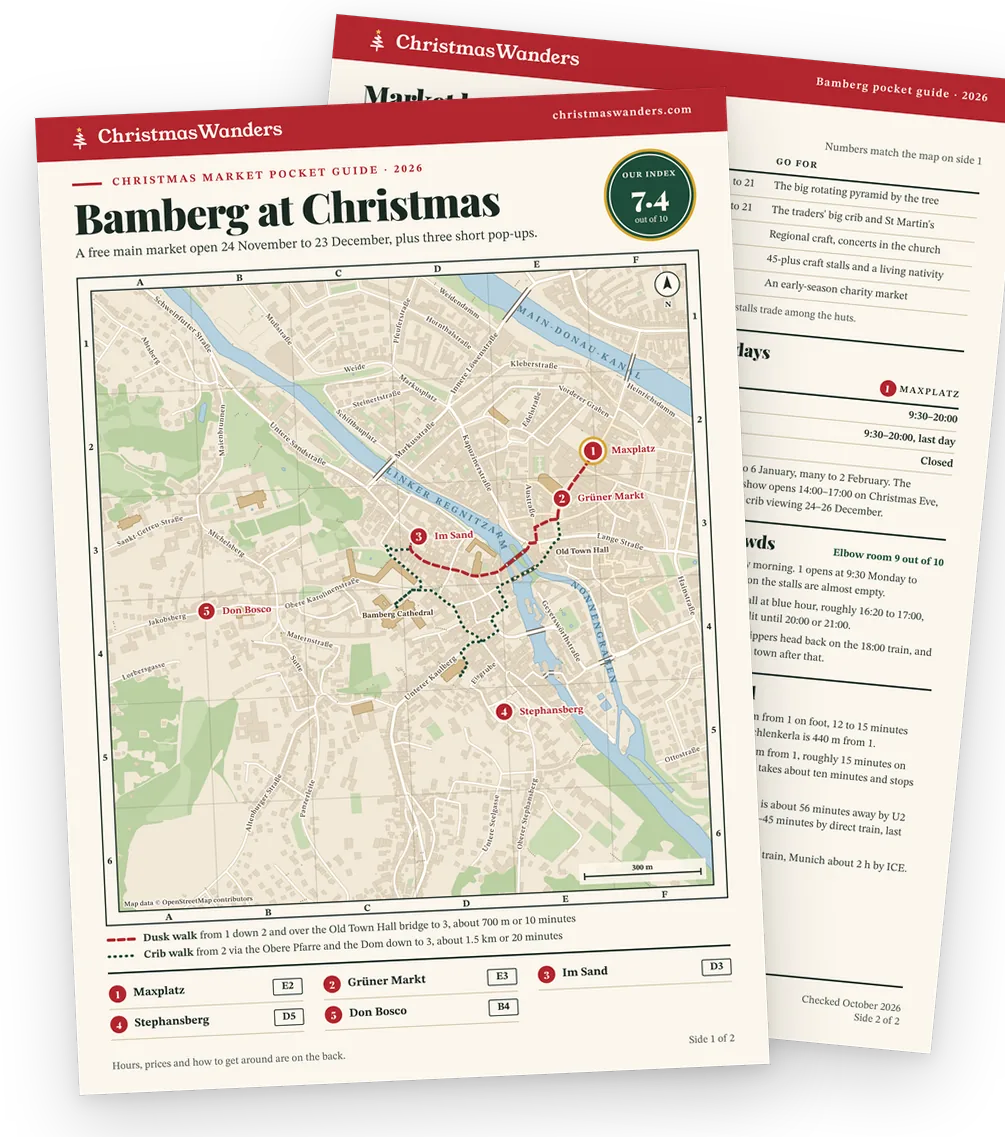
Now, where is it? Every guide says “Maximiliansplatz,” and that’s true but incomplete. The market is a ribbon, not a square and it starts on Maxplatz (the big square in front of the New Town Hall), runs down the Grüner Markt shopping street past the baroque St. Martin’s church, and finishes at the Obstmarkt by the Neptune fountain, which locals call the Gabelmoo, the “fork man,” for his trident.
The huts share the street with the Grüner Markt’s year-round produce stalls. Hence the cabbages between the candles that some visitors report.
The centrepiece is the Weihnachtspyramide. Bamberg only got its big rotating Christmas pyramid in 2023; it’s a private passion project of a local showman family, and the city now calls it the market’s single biggest draw. Beside it stands the tree, an 11-metre fir cut from the city’s own forest in 2025. A nice touch, of course, in a town that still owns its woods.
Bamberg also has a Christkind. Nuremberg’s is a gold-winged teenager who reads a prologue from a church balcony and Bamberg’s is a real, annually chosen girl aged 10 to 14 from the city or district, picked by Stadtmarketing Bamberg.
In 2025 it was ten-year-old Frieda Schegg from Stegaurach. She opens the market with the Lord Mayor on the first Tuesday evening, alongside the Don Bosco brass band and a children’s choir, and the tradition goes back decades. A small-town ambassador role rather than a theatrical one, which is very Bamberg.
As for other things happening on the square, you have St Nicholas visiting on 6 December (around 14:00 in 2025, handing out chocolate), and at the Gabelmann fountain there’s a “Baum der Hoffnung,” a tree of hope, where anyone can hang a bauble for a €1-plus donation, where every cent goes to the local food bank.
What’s sold at Bamberg’s Christmas market is a standard German-market mix with glass baubles, wooden toys, honey, leather goods, Moravian stars, plus food.
The regional stuff lives in the food huts (Franconian bratwurst, smoked trout from an organic farm, Franconian wine) and in the satellite markets I’ll get to next. Obviously, nobody’s flying to Bamberg for the ornaments.
The Other Christmas markets in Bamberg
Bamberg’s satellite markets are weekend-only pop-ups. In Nuremberg everything runs all month while in Bamberg the dates decide whether you see them at all.
| Market | 2026 dates | Where | Why go |
| Adventsmarkt im Sand | Fri 27 – Sun 29 Nov | Around the Elisabethenkirche, Obere Sandstraße | The regional-craft market with real atmosphere |
| Adventsmarkt am Stephansberg | Sat 12 – Sun 13 Dec | Around St. Stephan and the Johanniskapelle | 45+ artisans, a living nativity, kids’ programme |
| Don Bosco Winterzauber | Sat 7 – Sun 8 Nov | Jakobsberg | Early-season charity market |
| Bamberger Weihnachtsmarkt | 24 Nov – 23 Dec | Maxplatz → Grüner Markt | The main one |
The Adventsmarkt im Sand is the one I’d plan a trip around. It runs only on the first Advent weekend, in the Sand quarter, Bamberg’s oldest and most atmospheric pub street, around a medieval church.
Around 30 exhibitors selling regional produce and proper craft, blacksmiths at work some years, concerts inside the Elisabethenkirche.
The Stephansberg market is the craft-heavy one on the third Advent weekend, up the hill around the Lutheran church of St. Stephan.
More than 45 stalls (glassblowing, ceramics, paper art, textiles), opened by the church brass band with the mayor, a full music programme, marionette theatre for children, and, per the parish’s own page, a living nativity with a donkey and sheep. If you’re travelling with kids, this is the Bamberg weekend to pick.
The Krippenweg Is Bamberg’s Real Christmas (And It Runs Until February)
Bamberg calls itself the Krippenstadt, the nativity town, and for once, I think the marketing actually undersells it.
The habit of building elaborate cribs here is roughly 400 years old. The Jesuits started it during the Counter-Reformation as a teaching tool for people who couldn’t read, and by the 18th century Bamberg’s churches were commissioning figures by the dozen.
Then, during the secularisation of the early 1800s, nativity scenes were banned and removed from churches. Some survived because parish priests hid them. The crib in the Obere Pfarre still contains 18th-century figures that outlived the ban that way.
The organised trail is much younger. The Bamberger Krippenweg turned 40 in December 2024, and today it links around 36 stations in the old town, the outer districts and the surrounding county. Churches, chapels, museums, a school, the tourist office, the castle on the hill. Across them, the regional tourism board counts more than 400 individual scenes.
And you need to know that Bamberg’s church cribs are not static. They get rebuilt through the season to follow the story, with Annunciation, Visitation, the search for lodging, then the Nativity itself around Christmas Eve, then the Magi, the flight into Egypt, the presentation in the temple, the twelve-year-old Jesus, and finally the wedding at Cana in late January. St. Martin’s crib on the Grüner Markt changes scene every one to two weeks.
Which explains the single most common Krippenweg complaint. Travellers who build their trips around the nativities keep saying that several of the churches or places that were supposed to have them either did not or were closed or had pieces missing.
What they almost certainly saw on an early-December afternoon was a crib mid-transformation, showing the Annunciation instead of a manger, in a church that closes its cribs during services.
Make sure you go knowing that!
The other Franconian quirk I love is that the scenes are often set in Franconia.
At St. Elisabeth in the Sand quarter, the Three Kings arrive in front of the Gasthof Blaue Glocke, an inn a few doors down the same street.
At St. Otto the backdrops are replicas of buildings from the parish. The big market crib on the Grüner Markt is a half-timbered Franconian farmhouse with near-life-size figures.
The cribs go up around the first Sunday of Advent (for 2026, the tourist-office crib opens 19 November, the market’s big crib on 24 November, the Cathedral’s and most churches’ between 27 and 29 November). Most stay until 6 January 2027. Many run to 2 February, Candlemas, the day Bavarian churches traditionally take the Christmas down.
The Obere Pfarre kept its crib up into late February last season. A handful (St. Gangolf, St. Jakob, Maria Hilf) are year-round.
The two “nativity museums” everyone conflates. Bamberg has two, and they are different things:
- Bamberger Krippenmuseum, Obere Sandstraße 23. A private collection of historic cribs from the 18th to 21st centuries, from all over the world. €6 admission, children up to 5 free. Thursday to Sunday in Advent, then daily from Christmas Day to Epiphany, closed on Christmas Eve. It’s 150 metres from Schlenkerla, which is convenient.
- Krippenausstellung in der Maternkapelle, Maternstraße 10. Run entirely by volunteers of the Bamberger Krippenfreunde, who’ve mounted a Christmas crib exhibition here since 1930. Around 35 to 40 scenes, rebuilt from scratch every year, free with a donation box. Open on Christmas Eve and New Year’s Eve from 14:00 to 17:00, which almost nothing else in Bavaria is.
Bamberg also does something I’ve never seen anywhere: Lenten cribs.
The same association shows Passion scenes at Easter (28 March to 12 April 2026), a form they say is unique in Germany. Not a December thing, but it tells you how seriously this town takes small figures in boxes.
A six-stop Krippenweg you can finish in one afternoon
This is the route I recommend everyone to walk, finishing it with a beer of course:
- Großkrippe der Marktkaufleute, Grüner Markt (in front of Galeria). The market traders’ half-timbered nativity house with near-life-size figures, on the market itself from opening day to 6 January. Zero effort.
- St. Martin, Grüner Markt. The only Bühnenkrippe (stage crib) in town: over 15 m², up to about 200 figures, scenes swapped every one to two weeks. Mon–Wed 10:00–18:00, Sat 09:00–18:00, Sun from 12:00.
- Obere Pfarre, Frauenplatz 1. The star. One of Franconia’s great baroque cribs, about 33 m², over 180 figures, many of them 18th-century survivors of the ban. Daily 09:00–18:00, and it runs the longest of any station. There’s a hidden cat somewhere in the scene, put there for children to find.
- Bamberger Dom, Domplatz. Crib figures from around 1970, but the real Christmas object here is the Veit Stoss Nativity altar of 1523, one of the great works of late-Gothic German carving, permanently in the cathedral. Winter hours Mon–Fri roughly 09:00–17:00, Sat to 16:30, Sun from 13:00; no viewing on 24–26 December.
- Gucklochkrippe, Kunigundenkapelle, Domstraße 3. A peephole crib you view through a window, daily 08:00–17:00. Thirty seconds, and oddly the one people remember the most.
- Krippenmuseum or Maternkapelle (see above), depending on the day, then 150 metres to Schlenkerla.
If you’d rather have someone walk you through it, the tourist office runs a “Weihnachtszauber Bamberg” crib tour on Saturdays, Sundays and holidays at 13:30 from Advent to 6 January: 90 minutes, €15, €11 reduced, children up to 6 free, meeting outside the Tourist Information at Geyerswörthstraße 5. Booking required.
You’ll end that walk in the Sand quarter, which is convenient, because it’s time to talk about the beer.
Smoked Beer Is Bamberg’s Glühwein
Smoked beer is what all beer tasted like before 1818.
That’s the year an English engineer named Daniel Wheeler patented a kiln that kept smoke out of the malt for the first time.
Before that, malt was dried over open fires, so every beer in Europe carried some smoke.
Industrial malting was cheaper and cleaner, so the smoke kilns closed everywhere. Except at Schlenkerla, which never stopped drying its malt over beechwood, and still does, in its own maltings. Bamberg just refused to quit, for some reason, and it became this beautiful piece of history.
The taste is somewhere between “ashtray licker” to “liquid bacon,”. To me, as someone who really enjoys beer, this smokey beer is worth the trip alone.
Schlenkerla (Dominikanerstraße 6) is where you start. The house was first documented in 1405, the Trum family has run it for six generations, the beer is still poured by gravity from oak casks, and it’s the last brewery in Bamberg lagering in the medieval rock cellars under the Stephansberg. The name means roughly “the little dangler”: in Franconian, schlenkern is to walk crookedly, like a drunk, and the nickname stuck to a 19th-century owner whose horses bolted and left him with a swinging gait. The brewery’s real name, Heller-Bräu, is used by nobody.
It opens at 09:30 every day of the year, with a morning pint on offer from opening. A 09:30 smoked beer on a dark December morning, in a room with a tiled stove and communal tables, is a very specific kind of happiness.
Bock season is October and November, not December. Bamberg’s big ritual is the Bockbieranstich, the ceremonial first tapping of each brewery’s strong winter beer. By the time the Christmas market opens, the ceremonies are over. December is the drinking season, not the tapping.
Schlenkerla’s Urbock moves from cask to bottle in December. The 6.5% smoked bock is on the wooden barrel from October to late November and from December into early January it’s served from the bottle in the tavern. Still excellent but not exactly the same.
The actual Christmas beer is on the keg. Schlenkerla’s Eiche is an 8% doppelbock made with oak-smoked malt instead of beech, and the brewery describes it as “a double bock for Christmas,” served from the wooden keg only during Christmas time, starting on the first Sunday of Advent. If you get one smoked beer from wood in December, that’s it.
Spezial closes at 14:00 on Saturdays. Bamberg’s other historic smoked-beer brewery, Brauerei Spezial on Obere Königstraße (first documented 1536, Merz family since 1898, subtler smoke, its own malthouse), keeps old-fashioned hours with full days Monday to Friday and Sunday, Saturday morning only.
That street, by the way, holds the best single Bamberg beer fact I came across. In the early 1800s, Obere Königstraße alone had 22 of the city’s roughly 70 breweries. Today two survive, Spezial and Fässla, facing each other across the road, a two-minute walk from the station.
The Bierkellers, Bamberg’s famous hillside beer gardens dug over the lagering cellars, are shut. They’re a summer institution.
The exception is the Spezial-Keller on the Stephansberg, which keeps a cosy winter restaurant (Tuesday to Sunday, Monday closed) and advertises Glühwein and Rauchbier on a terrace looking across the whole World Heritage skyline to the Michaelsberg. Best beer-with-a-view in the city, and in December you’ll have it mostly to yourself.
The Franconian Brewery Museum on the Michaelsberg, 1,850 exhibits in the old monastery brewhouse, is open 1 April to 31 October only. A brewery museum in the self-declared beer capital of the world, shut for the whole beer-drinking season, is either a scandal or a very Franconian joke.
Mahrs Bräu and Keesmann face each other in the Wunderburg district, a fifteen-minute walk from the centre, and neither makes smoked beer.
Mahrs’ aU (ungespundet, “unbunged”: a low-carbonation cellar beer, cloudy and soft) has become, for many Americans, the classic Franconian lager.
Keesmann, across the road, was founded in 1867 by a butcher who passed his brewing exam at 51 and makes a Pils that’s 92% of its output.
Most people come to Bamberg for the smoke and leave talking about the cloudy yellow one.
The local unit is the Seidla, a half-litre mug, and in the brewery taps it costs about €4. So does a Glühwein at the market, which is below the German average of €4.54 in 2025.
That’s all I’m going to say about Glühwein prices, because you’re in Bamberg and the point is the Seidla.
Smoke needs food though and Bamberg’s answer is an onion.
What to Eat: The Bamberger Zwiebel, Schäufele, and the Two Hörnla
The Bamberger Zwiebel is the one dish that belongs to this town and nowhere else, and its origin story is better than the dish.
It’s a big onion, hollowed out, stuffed with minced pork and smoked pork, roasted for about 45 minutes, topped with a slice of fried bacon and the onion’s own lid, and served in a gravy made with a quarter-litre of Schlenkerla smoked beer.
That much you’d guess.
What I didn’t expect, is that the dish was promoted in a 1960s civic competition to find something that represented Bamberg as both a beer city and a gardeners’ city. An onion from the market gardens, a sauce from the brewery. It’s been on the menu at Schlenkerla every day since.
Schäufele (locals say Schäuferla) is the Franconian Sunday roast. Pork shoulder with crackling, caraway, a potato dumpling (a Kloß here, not a Knödel), and gravy made from the pan. Schlenkerla does it, but so does Scheiners am Dom on the Katzenberg, which a local source told me was the best in town. Brauhaus zum Sternla, which brews in Bamberg’s oldest inn (foundation stones from 1380), built its entire pitch on “a Schäuferla and a Seidla.”
Blaue Zipfel are bratwurst poached in a vinegar, wine and onion broth until they turn faintly blue. Yes, blue. The tourism office publishes the recipe, which calls for 16 Bamberg grilling sausages for four to six people. These are full-size bratwurst, not Nuremberg’s finger-length Rostbratwürste. Lighter than it sounds, and the right thing after two Seidla.
Then there’s the Hörnla confusion, which trips up half the guides. Bamberger Hörnla is the name of two different things – a heritage fingerling potato, waxy and nutty, protected by the EU as a regional speciality and nearly extinct because it’s so laborious to grow, and a crescent-shaped butter pastry. Both are little horns, hence the name. If a menu says Hörnla, ask which.
At the market itself, the food is good but not necessarily distinctive.
Franconian bratwurst, roast chestnuts, candied almonds, baked apples, that organic smoked trout, a soups-and-stews hut, and, inevitably, lángos and churros.
Bamberg Beyond the Market: What’s Open (and Closed) in December
Bamberg’s old town has been a UNESCO World Heritage Site since 1993 with 142 hectares and roughly 2,400 timber houses.
However, it’s not one old town but three. The Bergstadt on the hills is the bishops’ city (cathedral, palaces, monastery).
The Inselstadt on the island between the two arms of the Regnitz is the burghers’ city (market, shops, Little Venice).
And the Gärtnerstadt to the east is a district of working market gardens inside the city limits, which UNESCO names in the listing.
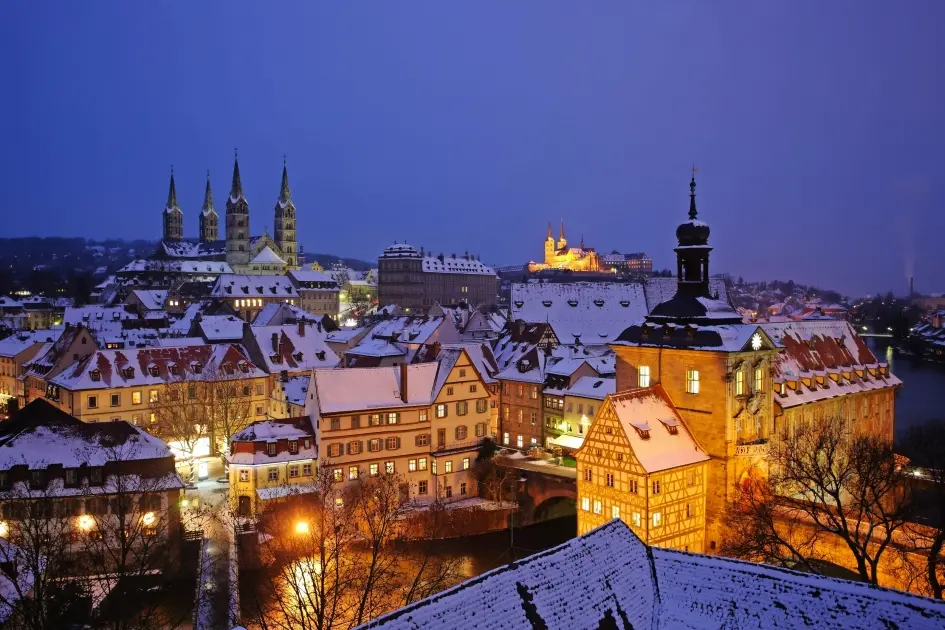
The Old Town Hall is the hinge between the first two. It sits on an artificial island in the river because, legend has it, the bishop refused the citizens any land, so they drove stakes into the Regnitz and built on that. It carries the bishop’s coat of arms on one side and the city’s on the other.
Now, Bamberg was bombed nine times in 1944–45, and 378 civilians died, but only 4.4% of the city was destroyed. Most of the damage sits east of the river and the medieval core came through.
Here’s what that gives you in December, with the closures that matter, and then the detail on each.
| Sight | December status |
| Cathedral (Dom) | Open; winter hours ~09:00–17:00, Sun from 13:00; no tours 24–26 Dec or 1 Jan |
| Old Town Hall (Altes Rathaus) | Exterior only; interior closed until further notice |
| Neue Residenz & Rose Garden | Daily 10:00–16:00; two wings closed for renovation; closed 24, 25, 31 Dec, 1 Jan |
| St. Michael’s abbey church | Reopened May 2026 after 13 years; Fri–Sun & holidays 11:00–16:00; terrace always open |
| Altenburg castle grounds | Free, year-round; restaurant Wed–Sun |
| World Heritage Visitor Centre | Free; closed 24–26 Dec |
| Franconian Brewery Museum | Closed 1 Nov–31 Mar |
| Regnitz boat trips | Closed until mid-March |
The Cathedral is the one you’ll spend longest in.
Completed in 1237, four towers, and a statue that people walk straight past because it’s mounted high on a pillar and looks small. It’s the Bamberger Reiter, a horseman carved around 1230, actually 2.28 metres from hooves to crown.
Nobody knows who he is, though. The leading theory is King Stephen of Hungary, but other candidates include Emperor Henry II and, in a 2014 proposal I find hard to resist in December, one of the Three Magi from a lost nativity group.
The Nazis used the anonymous rider as their ideal German man. Claus von Stauffenberg’s cavalry regiment was named after him too. Same statue.
Also in the Dom is the tomb of Pope Clement II, the only papal grave north of the Alps, which sits behind the bishop’s throne in the west choir and is only visible on a tour (Mon–Sat 10:30 and 14:00, Sun 14:00 in winter).
Tilman Riemenschneider’s tomb for Emperor Henry II and Kunigunde, fourteen years in the carving. And the Veit Stoss altar from the crib route above, which is the reason to come in December rather than June.
The Old Town Hall is currently exterior-only. The tourism office states plainly that interior access is not possible right now, which closes the rococo hall and the porcelain collection. The outside is still a nice photograph, with trompe-l’œil frescoes so convincing that one cherub’s leg was carved to stick out of the wall.
Little Venice (Klein Venedig), the row of fishermen’s houses along the Regnitz, is at its best in August, when it’s decorated for the Sandkerwa festival. In December it’s grey, bare and reflective.
The Rose Garden behind the Neue Residenz is free and is Bamberg’s best viewpoint. It’s also open 10:00 to 16:00 in winter, and the sun sets at about 16:17 all month.
You cannot watch the sunset from Bamberg’s best viewpoint in December. Go at 15:00 for the low golden light instead, then walk down to the Old Town Hall for blue hour.
St. Michael’s is the 2026 story. The abbey church on the Michaelsberg was sealed at the end of 2012 for danger of collapse and reopened on 1 May 2026 after a €82.9 million restoration.
The church is only open Friday to Sunday and holidays, 11:00 to 16:00, and restoration of the chapels and grounds continues. The terrace in front, with the best view in the city, was open right through the closure and still is. The ceiling inside, the “Heavenly Garden,” is painted with hundreds of plants in botanical order, and it’s worth timing a weekend for.
The Altenburg, on the highest of Bamberg’s seven hills (the “Franconian Rome” nickname comes from those hills, each with a church on top), is a 30–45 minute climb or a ride on bus 910. The 13th-century keep still has an iron fire basket at the top that once signalled 20 km to the next castle; E.T.A. Hoffmann retreated to one of the wall towers in 1812; and there’s a Franconian crib in the chapel every Advent, so it’s a viewpoint and a Krippenweg station at once. The grounds are free and open year-round.
The Gärtnerstadt deserves a paragraph, because it’s the strangest UNESCO monument in Germany, because it’s a working vegetable district.
Bamberg’s gardeners once exported liquorice root across Europe where trainee master gardeners had to dig up a liquorice root undamaged to pass their exam.
Of more than 500 horticultural businesses that existed around 1900, about 30 remain, and inner-city horticulture went onto Germany’s intangible heritage register in 2016.
In December the plots are bare or under fleece, so this is a district you read about and walk through rather than admire. But that’s why there’s an onion in the Zwiebel.
The dusk walk that actually works
A local guiding company publishes a route I’d copy: Maxplatz → Grüner Markt → Old Town Hall at blue hour (roughly 16:20–17:00) → Obere Brücke → Sandstraße → up to Domplatz and the Neue Residenz → finish in the courtyard of the Alte Hofhaltung, which is quiet in winter and where they suggest setting up for long-exposure photographs. Then back down to the market, which is lit until 20:00 or 21:00.
And then there are the stories the plaques don’t tell.
Three Bamberg Stories Worth Knowing Before You Go
1. The man who wrote The Nutcracker lived here. It wasn’t written here.
E.T.A. Hoffmann arrived in 1808 as musical director of the Bamberg theatre, failed at that within months, and stayed on until 1813 as stagehand, set painter, composer and reluctant singing teacher to the daughters of local society.
He lived in the narrow house on what’s now Schillerplatz, opposite the theatre that carries his name.
Nussknacker und Mausekönig was written and published in Berlin in 1816, three years after he left. The person who invented the Nutcracker spent five formative, mostly miserable years in this town.
2026 is his 250th birthday year, and Bamberg has been marking it since January. The historic Marionettentheater stages his Sandmann and Der goldne Topf and opens a Christmas fairy tale from 30 November. A puppet Sandman in a dark Franconian December is exactly the right register.
2. A world-class orchestra founded by refugees.
The Bamberger Symphoniker were formed in 1946 by German-speaking musicians expelled from Prague and the Sudetenland, who met colleagues in Bamberg who’d also fled. Their first concert was on 20 March 1946, so 2026 is their 80th year.
The orchestra’s management describes them as the only orchestra of world renown not based in a major city, and claims almost 10% of the local population subscribes to a concert series. In a town of 77,000.
The Konzerthalle’s December 2026 calendar has a Nutcracker ballet with narrator on 5 December, the Symphoniker’s family Advent concert on 13 December, their Silvesterkonzert on 31 December (two performances) and a New Year’s concert on 1 January 2027, per the venue’s calendar. If you’re in town on a concert night, go.
3. The winter that burned.
Bamberg was one of the four largest witch persecutions in Germany.
Estimates range widely, but the confirmed cases peak at 167 in 1629 alone, and German sources count at least 884 people executed between 1612 and 1631.
The prince-bishop built a purpose-made witch prison, the Drudenhaus, with 26 cells and a line from Virgil over the door. The mayor, Johannes Junius, was tortured into confession and smuggled out a letter to his daughter that’s now one of the most quoted documents of the whole European persecution. It ended in 1632 when the Swedish army arrived.
The Archbishop of Bamberg formally begged forgiveness in 2007. The building is gone, but a self-guided walk puts its site as stop one, and standing in the fog-bound Regnitz valley in December, you’re standing in the exact weather that started it.
Getting to Bamberg
Bamberg is on the ICE line between Munich and Berlin, and on a half-hourly regional shuttle from Nuremberg. Getting there is easy.
| From | Time | Notes |
| Nuremberg | 34–45 min | ~60 direct trains a day; RE about 45 min, ICE about 35 |
| Würzburg | 1 h – 1 h 15 | twice hourly |
| Munich | ~2 h | ICE every two hours, from about €29 |
| Frankfurt | ~2 h 15 | ICE to Würzburg, then regional |
| Berlin | ~2 h 40 | direct ICE |
| Coburg | 20–45 min | ICE 20 min, regional ~45 |
| Forchheim | 15–20 min | S-Bahn |
| Rothenburg | 2 h+ | two or three changes; do it from Nuremberg |
The station is not in the old town. It’s about a kilometre, or 15–20 minutes on foot, to the Grüner Markt, and closer to 25 to the cathedral, over cobbles, with a luggage-unfriendly rise at the end.
Bus 901 to “Schranne,” takes about ten minutes and drops you just below the cathedral square.
Don’t bring a car though. The old town is a pedestrian zone with expensive garages (Maxplatz, under the market and Geyerswörth, by the tourist office).
On the four Advent Saturdays public transport is free across the city, and there’s Park & Ride at Heinrichsdamm and Kronacher Straße for 50 cents a day with a free shuttle every 15 minutes.
The only real argument for a car is the Fränkische Schweiz in winter, when the rural buses drop to a few runs a day.
For all the day trippers, you need to know that the last trains back to Nuremberg leave around 23:40, and there are no night trains.
Which brings up the question the travellers argue about most: sleep here, or sleep in Nuremberg?
Bamberg vs Nuremberg vs Rothenburg vs Regensburg (Verdicts, Not Diplomacy)
Here’s the table, then the arguments.
| Bamberg | Nuremberg | Rothenburg o.d.T. | Regensburg | Würzburg | |
| Market size | ~50 huts | ~180 booths | ~60 stalls | 5 markets, 200+ stalls | mid-size |
| Visitors | high six figures | ~2 million | heavy, tour-coach | moderate | moderate |
| Entry | free | free | free | 4 free + palace €6.50–13.50 | free |
| From Nuremberg | 34–45 min direct | — | ~90 min, 2 changes | ~1 h–1 h 10 | ~51 min |
| December hotels | cheap | expensive | mid | mid | mid-high |
| Beyond the market | UNESCO city, cribs, 9 breweries | castle, museums, WWII history | walled town, night watchman | UNESCO city, Danube | Residenz, wine |
| Open after 23 Dec? | cribs to 6 Jan/2 Feb | market to 24 Dec 14:00 | no | no | no |
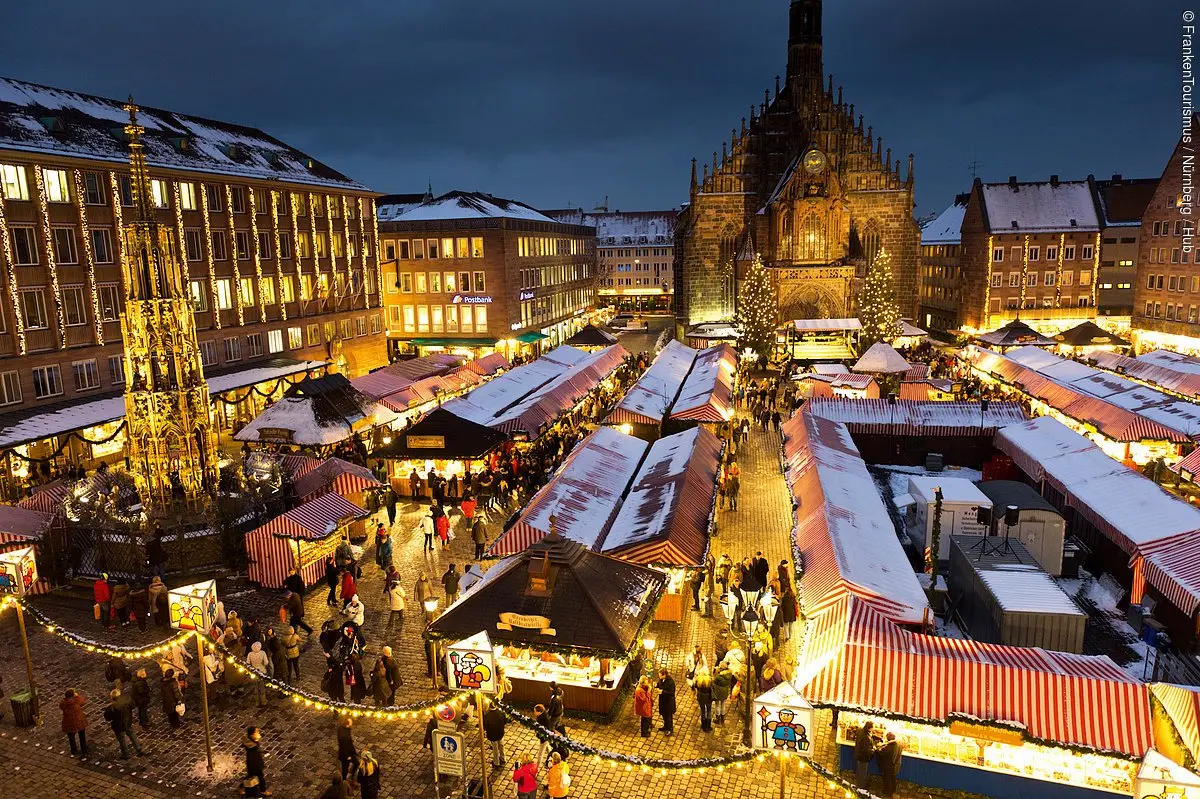
Bamberg vs Nuremberg. Complementary and not competitive. Nuremberg’s Christkindlesmarkt has about 180 booths, two million visitors, the Christkind’s prologue from the Frauenkirche balcony, and a Feuerzangenbowle the size of a hot tub; it’s the template every other German market is measured against, and I’ve written about it in full.
It’s also, on a Saturday night, crowded to the point of people not being able to move for prolonged periods. Bamberg is the breathing room 35 minutes up the line. You should do both and sleep in the one that suits you.
Bamberg vs Rothenburg. The big American dilemma, and the sharpest framing I found is a statistic. Rothenburg has about 10,000 residents and roughly 600,000 hotel nights a year, so, as there are about 10 tourists waking up in R’burg every morning vs. 6 locals.
Bamberg has 77,000 people and 832,000 hotel nights. Rothenburg is a town for tourists and Bamberg is a town with tourists in it.
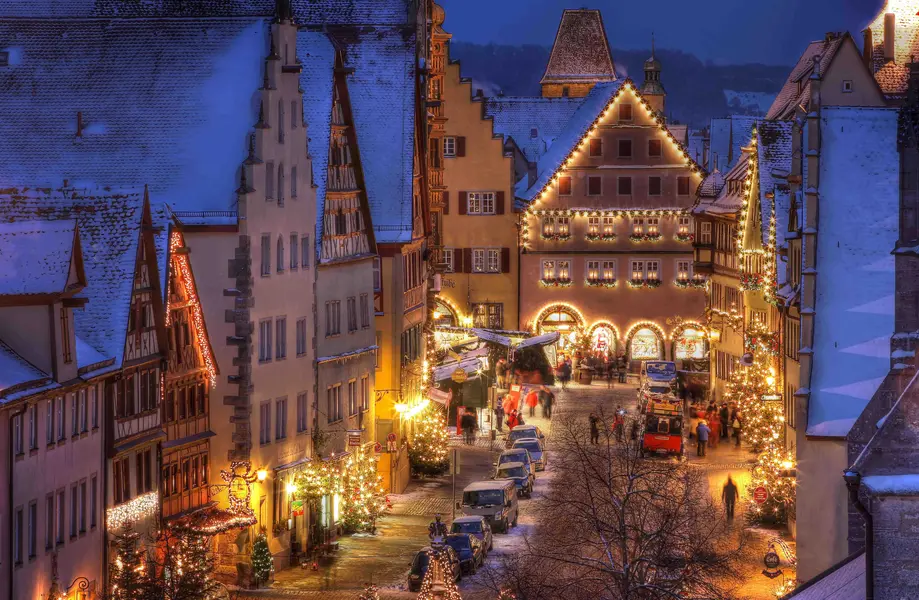
Rothenburg also, in fairness, has a walled medieval townscape Bamberg doesn’t, the famous Night Watchman tour, and white Glühwein. For beginners I recommend Rothenburg but the logistics tilt hard to Bamberg.
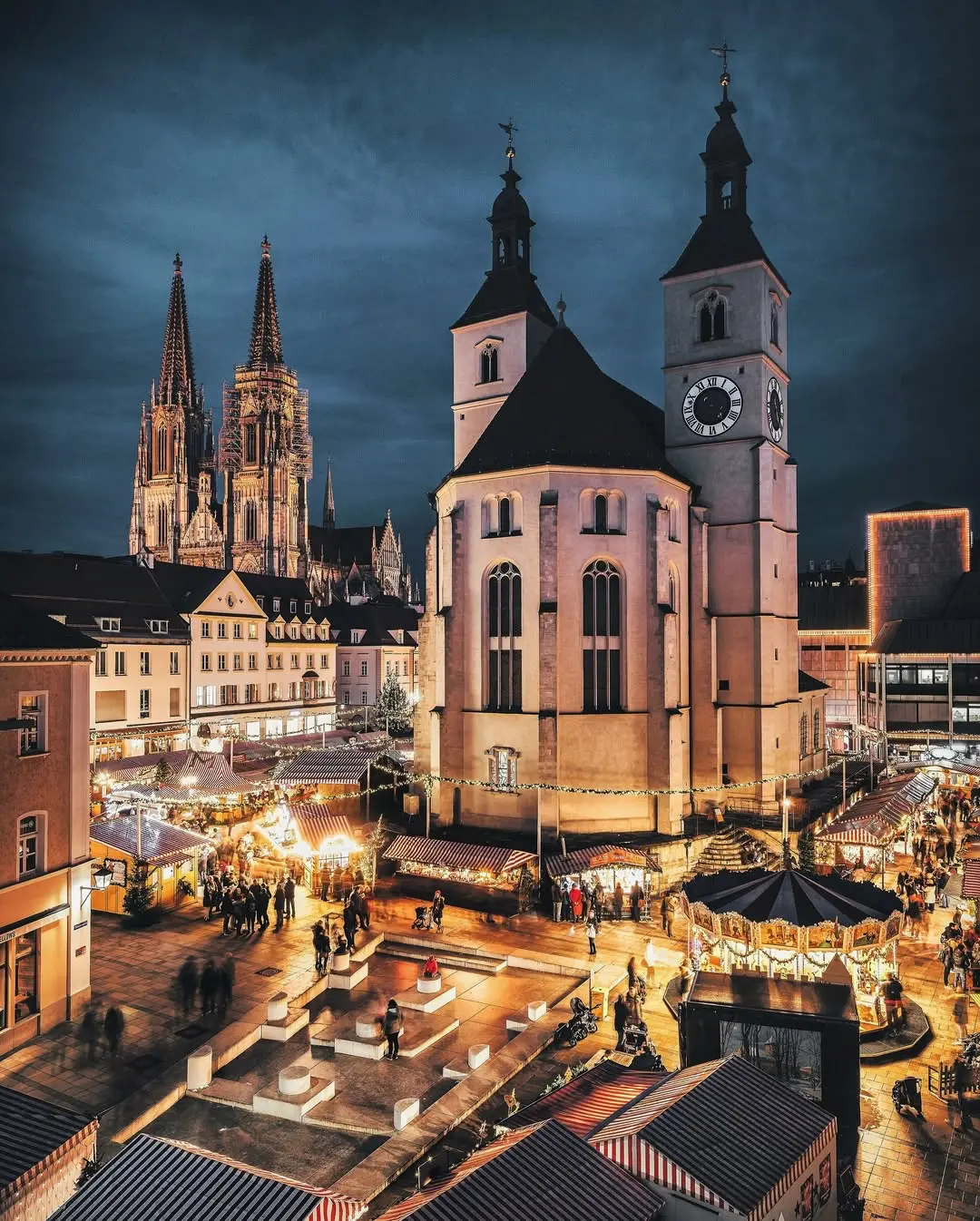
Bamberg vs Regensburg. Both are UNESCO old towns that came through the war. Regensburg has the Danube, the Stone Bridge, five markets in a two-kilometre walk, and the torchlit palace courtyard at Thurn und Taxis, which charges €6.50 on a Monday and €13.50 on a Saturday (my Regensburg guide has the ticket maths).
Regensburg is flat, which matters if anyone in your group has mobility issues where Bamberg is seven hills and cobbles. Regensburg is 1 h+ from Nuremberg and Bamberg is 40 minutes (not a big difference). On the markets themselves, Regensburg wins. On beer, Bamberg isn’t a contest. Pick Regensburg if the market is the point, Bamberg if the evening is.
Bamberg vs Würzburg. Würzburg has the Residenz (also UNESCO) and it’s wine country, Bocksbeutel and Silvaner. A lot of people prefer Würzburg’s market to Bamberg’s, and an ideal split might be one night in Würzburg, the whole second day in Nuremberg… then continue to Bamberg for 2 nights. That’s a good trip, if you ask me.
Coburg, Dresden, Erfurt. Coburg is the small-market cousin (bratwurst grilled over pine cones, a Christkind on Sundays) and makes a lovely afternoon from Bamberg. Dresden and the Erzgebirge win outright on handmade Christmas craft so if wooden pyramids and incense smokers are your thing, that’s a different trip, and my Dresden Christmas market guide is where to start. Erfurt gets the same praise for its old town and is three hours away.
And against Vienna, Prague, Strasbourg and the rest?
In Vienna, Strasbourg, Colmar and Budapest, the Christmas market is the trip.
Bamberg is the inverse – it’s a city with a market attached. If you’re building a European Christmas-market holiday around scale and spectacle, Bamberg isn’t on that list and shouldn’t pretend to be.
But a lot of people think Nuremberg, Munich and Vienna are too large… that’s why Salzburg, Bamberg, Budapest and Bratislava are picks for people who hate crowds.
In my honest opinion, I think Bamberg is the Prague you can walk across in twenty minutes, with better beer and a tenth of the people.
Should Bamberg Be Your Base?
People usually lean toward day-tripping from Nuremberg, and the case is fair, because Nuremberg has the airport, the big museums, and easier trains to Rothenburg and Regensburg.
But again, if you are a smaller spot, looking to enjoy beer and time with locals, you can stay in Bamberg, do a day trip to Nuremberg, and visit some of the small towns in the area that all have their own microbreweries.
The geometry also backs the Bamberg base. Bamberg, Nuremberg and Würzburg form a triangle where every leg is 45 minutes to an hour and a quarter, so basing in the small one costs you nothing in train time and saves you money on the hotel room.
Forchheim and Coburg are closer to Bamberg than to Nuremberg. The one place Bamberg loses is Rothenburg, which needs two or three trains so if Rothenburg is non-negotiable, base in Nuremberg or Würzburg.
The fair objection I heard many times is boredom, because people have a hard time trying to find things to do there after the first day (maybe because they haven’t read this post).
So, Is Bamberg Worth It? (My Final Thoughts)
Yes. Just not for the reason you’d search for it.
The Bamberg Christmas market is fifty huts and ninety minutes, and if that’s all you came for, I understand the shrug.
What Bamberg actually does at Christmas is older, stranger, longer and more local than most other Christmas markets.
Come if you’ve already done the famous one, or if your trip runs past the 23rd and every other market has gone dark. And stay the night. Bamberg is a different town after 18:00, and that’s the town you want.
If you go, let me know in the comments which crib had the cat, and whether the Eiche was on the wooden keg. And if you’re still deciding between cities, every market on the Index is scored on the same six things, so you can compare them properly.